


Gaming
SA brands should plug in their controllers
A new Sea Monster report maps the scale, habits and commercial value of South Africa’s gaming audience, writes JASON BANNIER.

South Africans have already made gaming part of everyday digital life. However, brands and marketers are still playing catch-up.
An estimated 26.5-million people, about 42% of the population, are gamers. The finding comes from The State of Gaming in South Africa 2026, a new report by Cape Town-based Sea Monster Entertainment. SA is the continent’s largest games market by revenue, with the market projected to grow to $333-million by the end of this year.
The figures support an argument running throughout the report: gaming should no longer be treated as a specialist interest outside mainstream media.
“South African consumers have already made gaming part of everyday digital life,” says Arthur Goldstuck, CEO of World Wide Worx and editor-in-chief of Gadget, in the report. “The lag is on the marketing side. Brands still tend to approach it as a niche interest, yet gaming now combines audience scale, loyalty and depth of engagement in ways many traditional channels would envy.
“That is why this feels like a watershed moment, as gaming stops being treated as a curiosity and starts being recognised as a core media environment. The brands that move in with some understanding of the culture will find real opportunity. The rest will be left wondering how they missed out on an obvious gap in the market.”
Gaming fits in a pocket
South Africa has an estimated 22-million to 23-million mobile gamers. The report places the PC audience at about 4.9-million and the console audience at around 2-million.
Mobile accounts for 91% of total player spending. Smartphone penetration above 81% is cited as a major reason games have become accessible to a wider audience.
The reliance on mobile devices is reflected in Online Retail in South Africa 2026 research by World Wide Worx, which found that 57.9% of online shoppers use smartphones, more than double the 26% who use laptops.
The State of Gaming in SA goes further into how that mobile audience plays. Local data shows games being woven into short, frequent moments throughout the day, alongside creator content and communities on platforms including TikTok and YouTube.
The report examines who makes up SA’s gaming audience, challenging some of the assumptions around who plays and how they engage. A further analysis looks at age, gender, income, education and geography, as well as how digital gamers compare with the wider population.
Where brands are already playing
The marketing lag does not mean brands are absent from gaming. Recent activity shows some of the ways companies are already reaching gamers.
Comic Con Africa has developed into one of the country’s biggest meeting points between gaming and wider pop culture. The 2026 edition, held last week, brought gaming and esports together with comics, cosplay, anime, technology and other entertainment at the Johannesburg Expo Centre in Nasrec.
Toyota South Africa Motors has built a longer-term presence around those communities. The Toyota Gaming Engine has become a regular fixture at Comic Con events, spanning mobile, console and sim racing competitions. The carmaker renewed its Comic Con Cape Town partnership this year.
The MTN Shift Gaming Experience has taken competitive and casual gaming into shopping centres, turning malls into meeting points for communities that would otherwise interact largely online. The programme expanded across eight shopping centres in 2026.
Competitive gaming has a growing tournament presence. Acer backed the 2026 African Gaming Championship in Cape Town, supplying gaming hardware for competition across titles including Valorant, Fortnite, EA FC 26, Call of Duty Mobile, Tekken 8 and Brawlhalla. Several competitions were livestreamed with South African casters.
Gaming events can reach audiences far beyond the venue. Gamescom 2026 in Cologne drew players, publishers, developers and hardware companies into its exhibition halls, while Opening Night Live was broadcast through the Gamescom website, YouTube and Twitch.
Lenovo’s Esports World Cup partnership placed Legion hardware across competition arenas, training facilities, broadcast studios and festival spaces, with branding also appearing throughout tournament broadcasts.
Those examples cover only part of the landscape explored in the report, which looks at routes ranging from advertising and creators to esports, loyalty programmes and branded gaming experiences.
Beyond selling games
The report’s case studies show how gaming is being applied by companies outside the gaming industry.
Nando’s PERi-Playground turned time spent waiting in restaurants into a gamified experience incorporating rewards, geo check-ins and vouchers. Pick n Pay’s Smart Hopper applied a game to its Smart Shopper loyalty programme.
Gaming is being used for education. Sea Monster secured a King’s Trust International entrepreneurship project spanning six countries earlier this year, building on game-based learning work developed in South Africa.
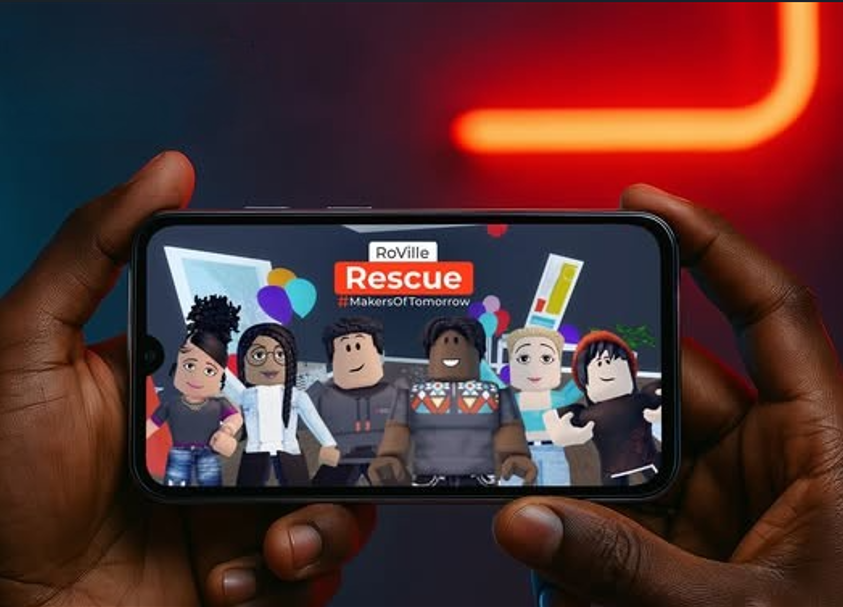
Another case study in the report looks at Nedbank’s Chow Town. The Roblox game places players in charge of a virtual restaurant while teaching financial and entrepreneurial concepts.
Together, the examples show that reaching gamers can take several forms, from advertising and sponsorships to loyalty and education. Millions of South Africans are already playing, mostly on devices in their pockets. The question for businesses is how they choose to meet them there.
* Download The State of Gaming in South Africa 2026 report here.