



People 'n' Issues
For the blind, SA must practise morality it preaches
South Africa owes blind readers the rights it so readily champions on the world stage, writes ARTHUR GOLDSTUCK.
South Africa’s government should apply the moral principles it invokes internationally to human rights at home. This is not even about complex issues like coming up with workable policies for protecting foreigners or vulnerable communities.
It is as simple as stopping delays in joining an international treaty that helps blind people obtain books in accessible formats.
Instead, Blind SA has had to take trade, industry and competition minister Parks Tau to court over a decision that keeps South Africa outside that agreement, more than 13 years after its adoption.
Blind SA, represented by public-interest law centre Section27, has instituted proceedings in the Gauteng Division of the High Court in Pretoria, challenging Tau’s decision to delay South Africa joining the Marrakesh Treaty until the Copyright Amendment Bill becomes law.
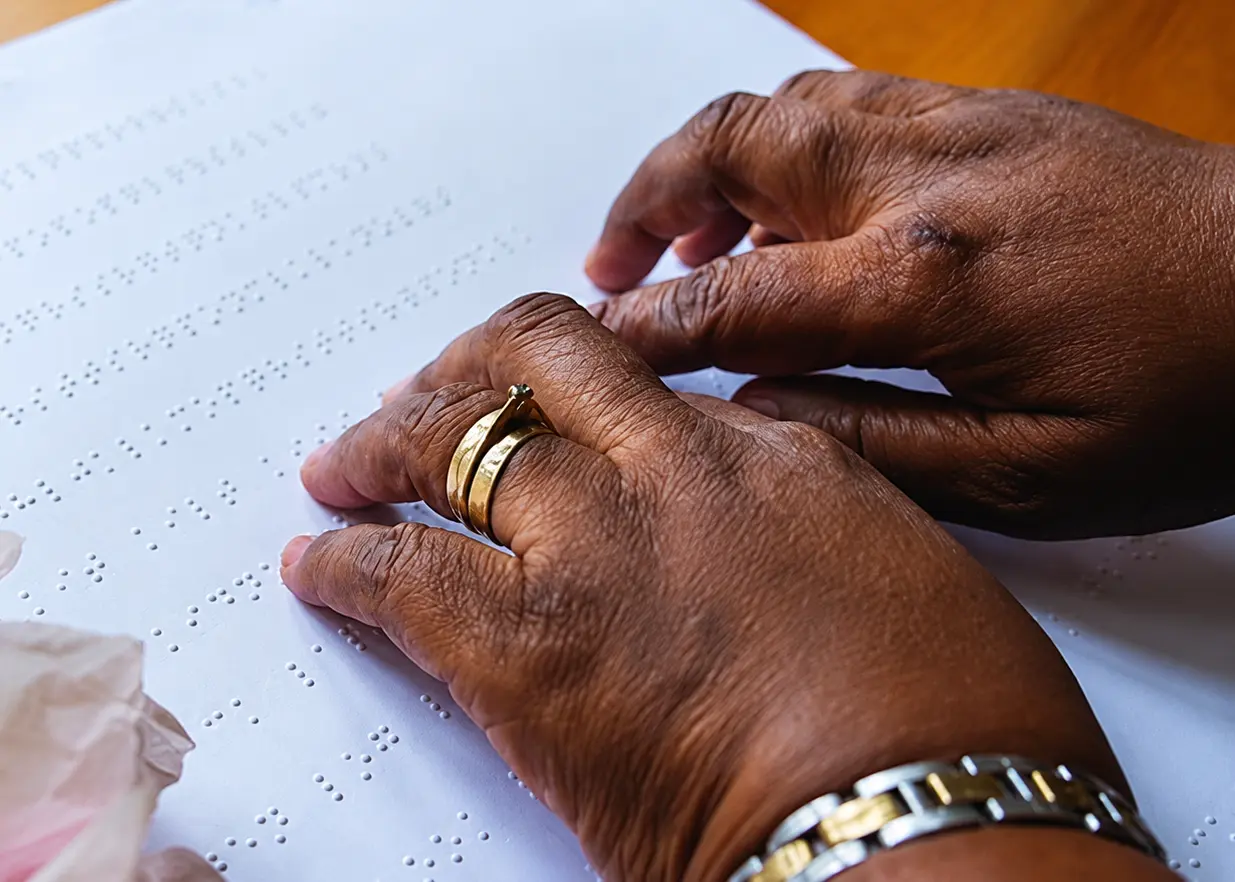
For blind and visually impaired readers, the delay restricts access to international digital libraries containing books adapted for their use. Blind SA estimates that just 1–7% of published works are available in accessible formats, such as braille or large print.
“The Minister’s decision leaves access to international digital libraries in limbo, despite a Constitutional Court order providing for key copyright exceptions,” the organisations said in their statement announcing the case.
The Marrakesh Treaty provides a legal route for sharing accessible copies of published works across borders. A book adapted in one participating country can be supplied to eligible readers in another through the treaty’s arrangements. South Africa’s continued absence leaves local readers dependent on more limited access while accessible collections grow overseas.
The World Intellectual Property Organisation (WIPO), which administers the treaty, reported last month that it covers 132 member states. Its Accessible Books Consortium’s Global Book Service now has a catalogue of more than 1.2-million titles in accessible formats. Participating organisations can also give eligible readers direct access to more than 500,000 books through a beneficiary application.
Those collections include audio and electronic text alongside braille and large print. Sharing an existing accessible edition saves another library the expense of producing it again. WIPO says a single Canadian audiobook transferred to Vision Australia when the treaty took effect in 2016 saved the Australian organisation an estimated $2,000 in reproduction costs.
South Africa expressed its intention to join the treaty following its adoption on 27 June 2013. A government claiming moral authority should be embarrassed that an organisation representing blind people has to go to court to get this commitment fulfilled.
According to Blind SA and Section27, Tau maintains that South Africa can lawfully join only after legislation amending the Copyright Act has been enacted. His position follows advice from the Department of International Relations and Cooperation and the Department of Justice and Constitutional Development.
Blind SA argues that the Constitutional Court has already supplied the relevant provisions through its ruling of 7 May 2025 in Blind SA v President of the Republic of South Africa.
The court ordered that section 19D be read into the Copyright Act. In practical terms, the order made those provisions part of the law while the country awaits the Copyright Amendment Bill coming into force.
Section 19D provides specified copyright exceptions for accessible-format copies, including provisions for cross-border exchange in accordance with the Marrakesh Treaty. It also includes attribution requirements and safeguards against misuse, particularly when copies are transferred internationally.
The court’s order provides for section 19D to remain effective until the bill comes into force. Blind SA argues that this has already dealt with the relevant legal barriers to joining the treaty, making the minister’s decision to wait based on an incorrect interpretation of the law.
The High Court will have to consider those competing legal positions. The government also owes the public an answer to a simpler question: what has it done to secure access for readers who have already waited so long?
The treaty also covers people with other print disabilities, including physical disabilities that prevent them from holding or manipulating a book.
WIPO says joining the treaty is one part of delivering access: countries also need effective implementation and participation by organisations serving people with print disabilities. The legal arrangements enable the exchange, while participating libraries and other authorised bodies connect the available books with the people who need them.
Blind SA is asking Tau to develop a reasonable plan for tabling the treaty in Parliament and to take reasonable steps to implement it within a reasonable period. It also wants a copy of the plan and regular updates on progress.
If the government believes further legal work is necessary, it should identify that work and set deadlines for doing it. Linking access to the eventual completion of a broader bill leaves blind readers paying for the state’s delays.
A government asking the world to respect human rights must accept scrutiny of its own decisions. Its treatment of blind readers supplies a practical test of the morality it preaches.
As the organisations put it, “The case seeks to remove barriers, create opportunities and enable members of the blind community to live the lives they choose.”