


Photo courtesy Comic Con Africa.
Arts and Entertainment
Comic Con Africa: Cosplay meets commercials
A Creality 3D printer matched Comic Con’s hands-on spirit, while big brands mixed fun with gimmicky activations, writes JASON BANNIER.

A 3D printer may have been one of the most appropriate pieces of technology launched at Comic Con Africa last week. The wider show drew a sharper line between hands-on creativity and corporate promotion.
The Creality K3 debuted at South Africa’s biggest pop-culture and gaming convention last week. The flagship device was revealed earlier this month at IFA 2026. South African pre-orders opened with the local launch.
“The K3 is special because it has four nozzles and one shared extruder,” George Huang, Creality go-to-market manager, told Gadget. “The device can print four colours at one time. The printer speed is very fast.”

Creality K3 3D printer. Photo: JASON BANNIER.
Creality’s previous multi-colour system used one nozzle and one extruder, requiring filament to be unloaded and replaced when changing colours. The K3 instead switches between separate nozzles. Huang told Gadget that the K3 can automatically swap between nozzles in 4.8 seconds.
The design is unusual among consumer multi-colour printers, where several filaments commonly share a single nozzle. Creality says the approach reduces printing time and wasted filament, while allowing different colours and materials to be used in the same object.
The Chinese brand is distributed in South Africa by SMD Technologies. Huang told Gadget that while many European and American brands in the 3D-printing market focus on high-priced industrial machines, Creality makes 3D printers and scanners for consumers.

Inside the Creality K3 3D printer. Photo: JASON BANNIER.
For Comic Con, this technology has an obvious use beyond being another gadget on display. Cosplayers already go to formidable lengths to assemble costumes, and 3D printing offers another way to turn digital designs into helmets, armour, props and smaller components. Parts that are difficult to shape by hand can instead be modelled on a computer, printed, then sanded, painted or combined with more traditional materials.
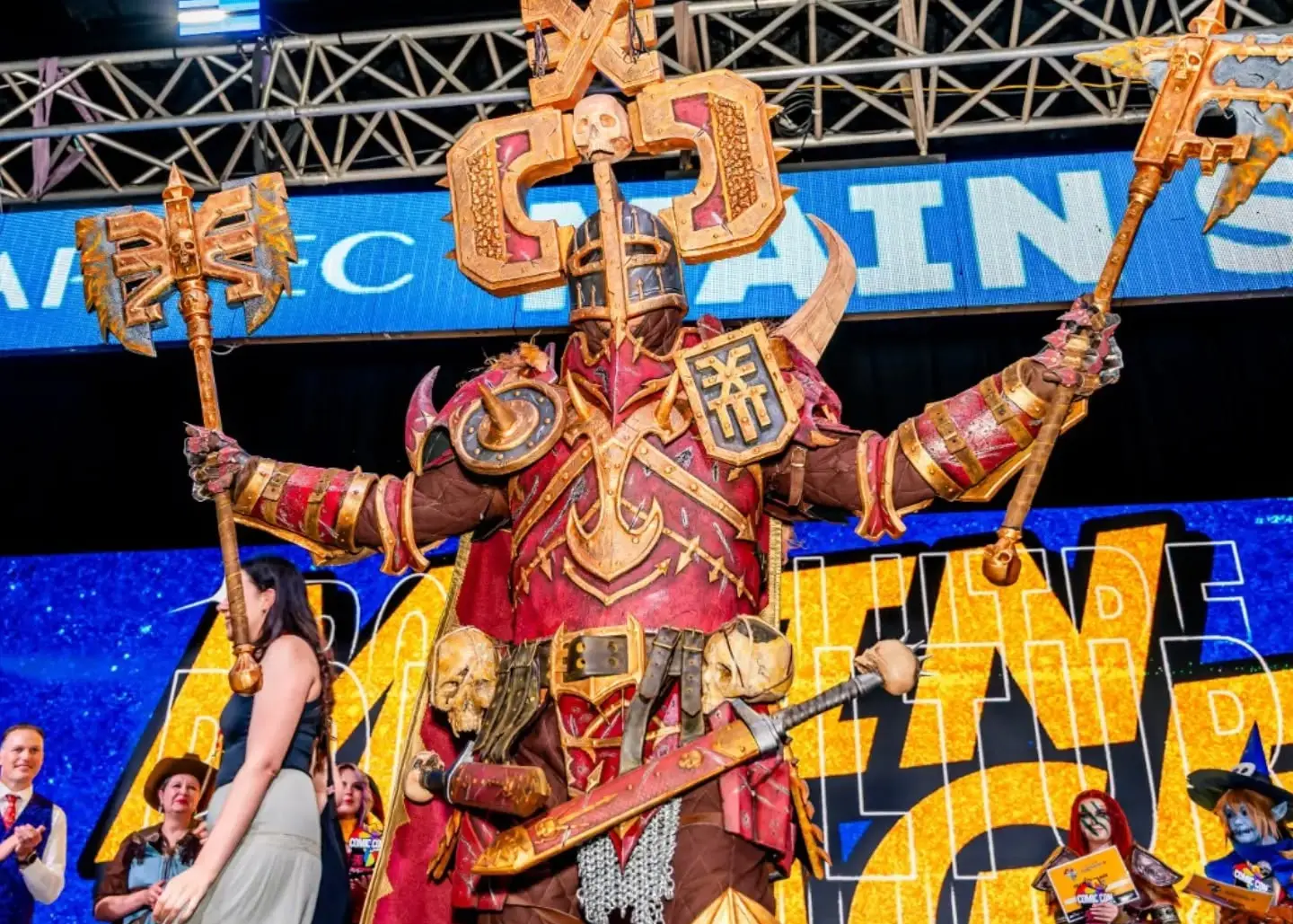
Cosplay sits at the heart of Comic Con, with elaborate costumes turning the show floor into a parade of characters and creativity. That energy was clear this year, as it was last year. Comic Con’s first on-stage cosplay presentation, Thursday’s casual cosplay competition, gave attendees a taste of the creativity that would dominate the four-day event. The top three costumes portrayed Pinkie Pie from My Little Pony, Sally from The Nightmare Before Christmas and Dr Robotnik from Sonic the Hedgehog, in first, second and third place respectively.

The top three cosplayers in Comic Con Africa’s first casual cosplay competition. Photo: JASON BANNIER.

Cosplayers show off their outfits during the competition. Photo: JASON BANNIER.
Creativity stretches beyond cosplay
Comic Con Africa’s Artist Alley was the heartbeat of the convention. More than 200 vendors occupied the area, with local and international artists selling original work and taking commissions. Creators Corner added discussions and workshops covering comics, illustration, storytelling and turning creative work into a business.
The concentration of creativity made Creality’s launch feel well matched to the convention. Similar announcements did not define the rest of the show. Despite the number of technology, gaming and retail brands across the halls, the event leaned far more heavily on existing products and brand activations than on new launches for Africa.
Visitors come for comics, anime, gaming, celebrities, cosplay, collectibles and the communities around them. However, previous editions have shown that new products and creative projects can fit naturally into that mix.
At Comic Con Africa 2024, Cooler Master revealed the availability of the Shark X gaming PC. Local comic Imbokodo and board game Mystic Maneuvers also debuted at the convention. Those launches covered very different products, but each gave visitors something they had not already encountered elsewhere.
A year later, Acer Africa debuted the AiTV 4K streaming box. The device was partly designed in South Africa and represented the computer maker’s first move into the streaming-box category. South Africa also received the product before the wider international rollout.
Product launches are not the only way brands add to Comic Con. Toyota returned as an official event partner in 2026 with a large Toyota Gaming Engine presence. The stand offered Gran Turismo 7 on full-motion racing rigs, alongside Street Fighter, EA Sports FC, Brawlhalla, Clash Royale and Subway Surfers. The stand featured daily competitions and prizes.
The car maker moved closer to Comic Con’s creative side. A new Carsplay competition challenged fans to dress as Toyota vehicles, with judging based on creativity, craftsmanship, interpretation and stage presence. Cardboard and homemade materials were encouraged alongside more elaborate builds.
The approach built on Toyota’s Gaming Engine presence last year, but gave the 2026 stand a stronger link to the creativity happening elsewhere at the convention.
Brands compete for attention
Capitec occupied an even bigger role as headline sponsor of Comic Con Africa and Comic Con Cape Town under a three-year agreement.
The bank’s Fandom Force HQ section included gaming pods, an augmented reality experience, a surfboard challenge and a punching bag machine. Clients with a Capitec credit card could access discounts from participating exhibitors, while a Super Fan area beside the main stage offered seating, charging stations and a dedicated viewing zone.
Ruddy Gatare, Capitec brand manager, told Gadget: “Comic Con is a special place. It’s big and relevant to a lot of our different clients. There is something for you, no matter what you are into at Comic Con.”
For a bank with little obvious link to gaming or pop culture, the challenge was to turn sponsorship into participation rather than signage. Capitec at least gave fans reasons to stop. Other brands offered less reason to linger.
Commercial brands are essential to an event of Comic Con Africa’s scale, but the creators around them set a high bar. Cosplayers build costumes, artists sell original work and developers show games. The brands that fit most naturally into that environment add to the experience rather than simply compete for attention with louder, shinier displays.
* Jason Bannier is a data analyst at World Wide Worx and deputy editor of Gadget.co.za. Follow him on Bluesky at @jas2bann.