



Arts and Entertainment
Africa’s SF future is
waiting to be filmed
South African filmmakers have the stories and a production base capable of taking them to global screens, writes ARTHUR GOLDSTUCK.

African science fiction is ready for far more than the occasional alien in Johannesburg. South Africa has generations of stories that fit fantasy and science fiction naturally, and a film industry capable of building their worlds on screen.
Two of the country’s leading filmmakers want to see that potential used.
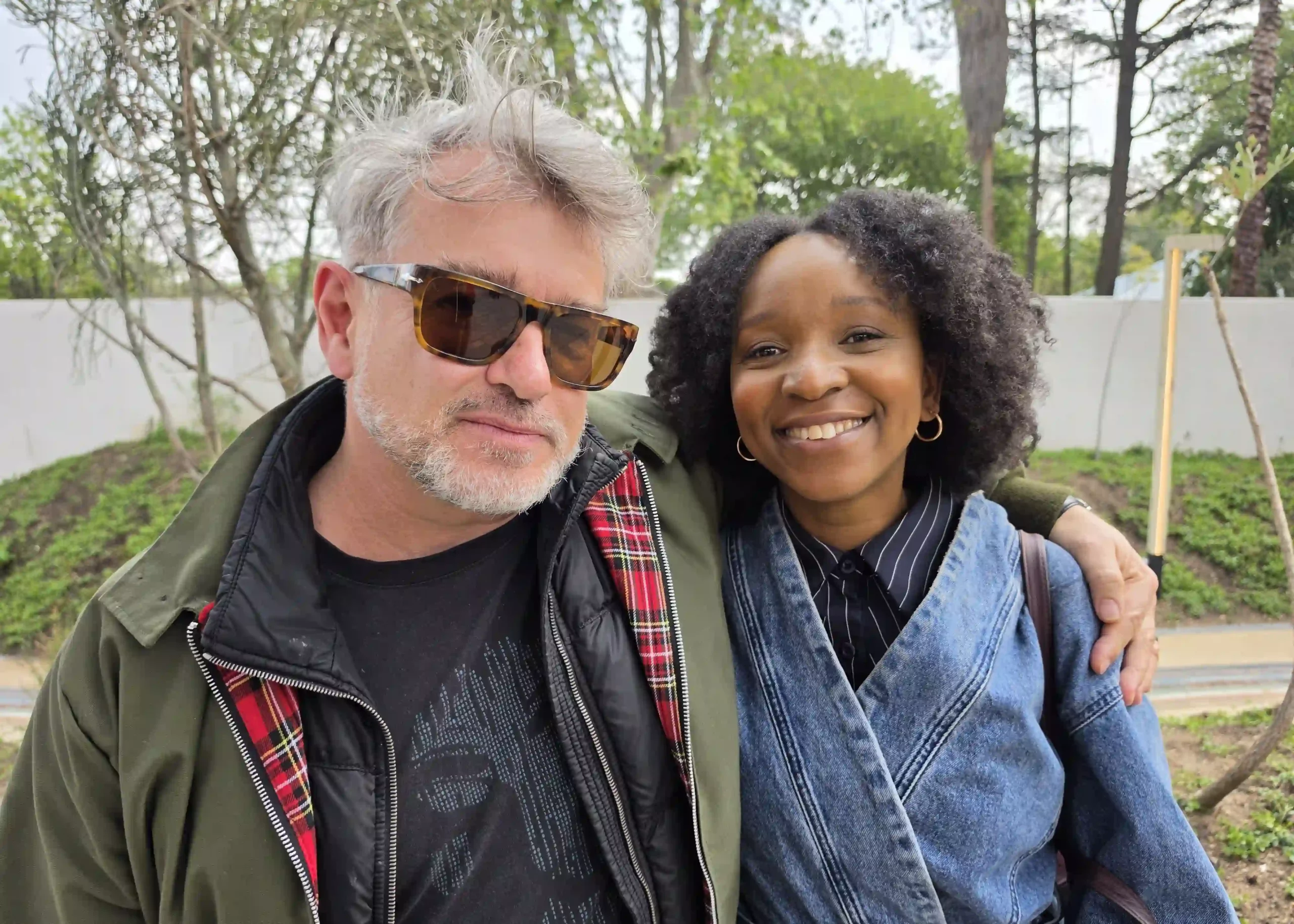
“I’m the true-crime guy, but when I take a break I watch science fiction,” said Storyscope founder and executive producer Neil Brandt, during a panel discussion at a Netflix South Africa 10th-anniversary media showcase in Johannesburg last week. Brandt was the executive producer behind Beauty and the Bester, a three-part true-crime documentary that premiered globally on Netflix in 2025
“I really think audiences want African science fiction,” he said. “There’s something there in telling our stories through a science-fiction lens. I really, really want that.”
Nosipho Dumisa-Ngoasheng, director, writer and executive producer at Gambit Films, creator and director of the Netflix hit series Blood & Water, has been making a similar plea for years.
“Fantasy and science fiction. I think, as South Africans, it fits naturally,” she told the panel. “Especially fantasy. It just makes sense in our culture and in the stories we’ve grown up with.
“And I think the escapism it allows for is amazing. District 9 was a phenomenal film. It was a long time ago. It wasn’t purely South African, but it was a South African story and a South African production in important ways.
“We know the audiences are there. I think we need that stuff.”
Neill Blomkamp’s Johannesburg-made District 9 supplied the creative precedent: it became an international hit in 2009 and received four Academy Award nominations. Its aliens found a home in an informal settlement, and its science fiction drew much of its force from a setting and social tensions recognised immediately by South African audiences.
International productions have already demonstrated the scale South Africa can support. Ridley Scott executive-produced Raised by Wolves and directed its first two episodes, using Cape Town Film Studios, Lourensford Wine Estate and other Western Cape locations to create the alien planet Kepler-22b. Its first season created nearly 700 full-time-equivalent jobs and hired 1,200 local businesses. Netflix later used Cape Town Film Studios and locations around the city for its post-apocalyptic Resident Evil series.

The new Netflix slate
Netflix’s anniversary announcement showed how wide the local production base has become. The new slate includes returning dramas and films, along with How to Ruin Diwali: Meet the Parents, Love Is Blind: South Africa and the wedding docu-soap Stars & Vows: Anele and Buzza. The Bomb Shelter Film Productions is developing a new scripted series, while Tshedza Pictures has secured a four-series partnership.
Those commissions keep production companies and crews working across genres, building the depth needed for technically demanding South African science fiction and fantasy.
The service says it has partnered with more than 30 South African production companies and made more than 300 local titles available. Productions across 20 cities in eight provinces have supported more than 8,000 direct and indirect jobs.
Ben Amadasun, Netflix vice-president of content for the Middle East and Africa, said the spending reached far beyond the programmes viewers eventually saw.
“The investment was never just about the titles. It’s about the people behind the stories, the communities that host our productions, and the local economy this industry sustains.
“Our productions have created more than 8,000 direct and indirect jobs, in transport, catering, costume, set building and many other areas. We’ve worked with hundreds of SMMEs and created full-time jobs.”

Science fiction places extra demands on crews through constructed worlds, visual effects and specialised filming techniques. Dumisa-Ngoasheng said South African filmmakers already had a strong base of skills when Netflix entered the market, although much of it was concentrated in relatively small groups.
“I don’t think we started with nothing. When Netflix came in, it was almost something we had been waiting for as South African filmmakers and storytellers. We were ready. We were primed.
“We had a lot of skill for a long time that wasn’t able to be used fully. What we perhaps had was a lot of skill in smaller groups of people, concentrated around the country.
“Then Netflix comes in, more projects are being made, more people are busy, and you have to start finding new talent.”
Gambit Films, which made Blood & Water and Unseen, responded by turning productions into training grounds. Dumisa-Ngoasheng said trainees were placed across almost every department, with each project used to prepare people for the next position.
“You want to see people grow. You want to see them go and start doing their own shows. You want to see the DPs you love become directors.
“So one of the things we’ve done intentionally is that we almost always have trainees, and people we’re training up for the next position, on every project, in almost every position. We’re always thinking: who is next for the next project, whatever that may be?”
Netflix is also funding skills and talent-development programmes that Amadasun said had trained thousands of creatives.
“The trainee you see today is the top director and producer of tomorrow, and we intend to keep that pipeline flowing.”

The commercial case for local stories has become easier to demonstrate. Netflix said the Johannesburg-filmed series The Polygamist drew more than 24-million views in its first weeks, entered the Top 10 in 62 countries and reached number one in more than 21. Sales of Zimbabwean author Sue Nyathi’s 2012 novel, on which it was based, tripled after the series appeared.
Brandt said African viewers still came first when local producers considered their audience, even when Netflix could carry the work across borders.
“We don’t go out to make the shows thinking about who is going to be watching in France or Kenya or wherever. We think very hard about who these stories are for.”
His documentaries are rooted in South African lives, including the damage wrought by crime and the responsibility of working with people who have endured it. The same principle offers a route into science fiction: use a genre recognised everywhere to tell stories that could come only from here.
* Arthur Goldstuck is CEO of World Wide Worx, editor-in-chief of Gadget.co.za, and author of “The Hitchhiker’s Guide to AI – The African Edge”.