



GadgetWheels
Tech drives Volvo
XC90 refresh
The evolution of the seven-seater SUV adds a little more tech and polish without straying from its brief, writes ARTHUR GOLDSTUCK.
The Volvo XC90 has been around long enough to build a reputation of its own. Since 2002, it has carried the responsibility of being the brand’s family-sized SUV, and each update has added a little more polish without straying from its brief. At Babylonstoren near Paarl last week, the latest version was introduced to South Africa, and the message was one of continuity.
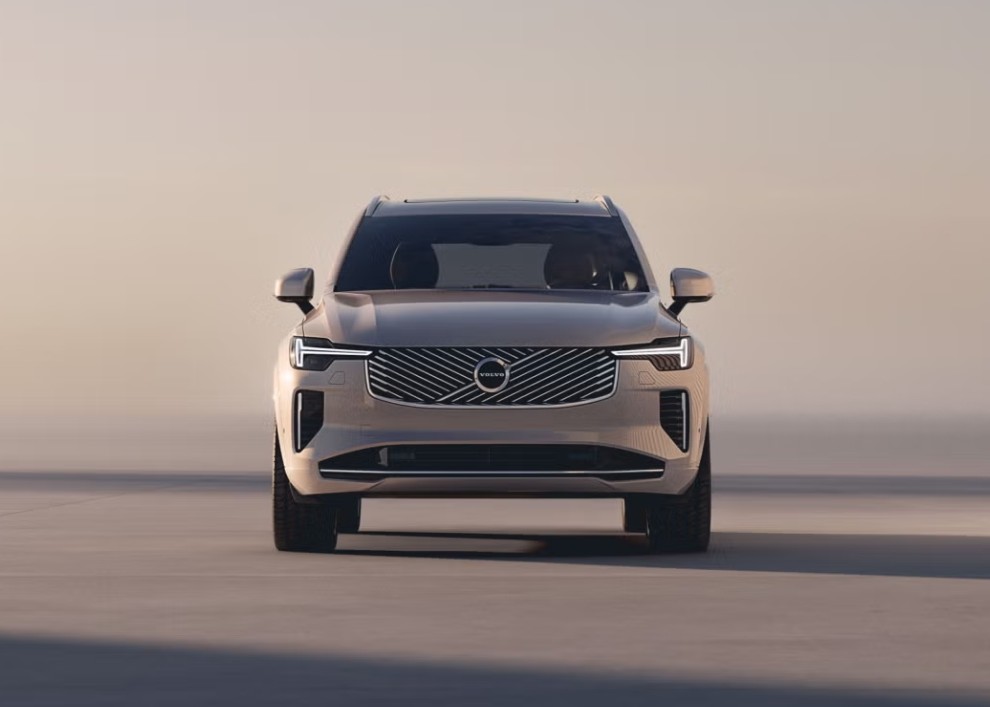
The exterior gains slightly cleaner lines and a sharper grille, but it remains a recognisable silhouette. Inside, the cabin has been reworked for a calm ambience. The dashboard runs more horizontally, new inlays make use of recycled materials, and ambient lighting adds atmosphere at night. Practical tweaks include additional console storage, another cup holder, and a relocated wireless charging pad that frees up the main storage area.
The changes are most noticeable in the tech. Volvo’s latest infotainment system now lives on a larger 11.2-inch screen, with built-in Google services, wireless Android Auto and Apple CarPlay, and over-the-air updates to extend functionality over time. In Plus trim the XC90 comes with a Harman Kardon audio system, while the Ultra specification brings a Bowers & Wilkins setup.
My happy moment in the car came with connecting Android Auto seamlessly – a sign of real progress of several years of complaining about the restrictions of the built-in Google interface.

Powertrain choice remains familiar but refined. The B5 mild-hybrid pairs a 2.0-litre turbo petrol with a 48-volt battery system, producing 183 kW and 350 N.m, with claimed fuel use of 8.1 L/100 km. The T8 plug-in hybrid offers over 70 km of electric-only range, and when the petrol engine joins in, combined outputs reach 340 kW and 709 N.m. Volvo quotes 0–100 km/h in 5.3 seconds and a combined consumption of 1.8 L/100 km. Both versions use an eight-speed automatic gearbox and all-wheel drive.
On the road, the XC90 aims to reduce effort rather than invite excitement. Adaptive dampers and standard air suspension help it adjust ride height for ease of entry, better aerodynamics, or additional clearance. At highway speeds the cabin feels quieter than before, thanks to added insulation and refined airflow.
Practicality remains central. Folding the second and third rows flat opens almost 2,000 litres of luggage space. With all seven seats in place, 301 litres are available, which is adequate for a family weekend. Access to the third row is straightforward, and space in the rear has been improved with subtle changes.
The range continues with Plus and Ultra trims, both comprehensively equipped. Standard kit includes four-zone climate control, a panoramic sunroof, a heated steering wheel, and power-adjustable front seats with memory. Heating is fitted to both front and rear seats. Upholstery and inlay choices range from Nappa leather to textiles and veneers, with a crystal gear lever remaining the most conspicuous flourish.
Volvo’s reputation for safety continues unchanged. The XC90 includes collision avoidance, blind-spot monitoring, lane keeping support, pilot assist, adaptive cruise control, intersection autobrake, run-off road protection, and cross-traffic alert. Passive measures include a reinforced safety cage, side impact protection, and multiple airbags. Isofix points are standard.
At the launch, Volvo Car South Africa managing director Grant Locke described the XC90 as a cornerstone of the brand’s local line-up, and emphasised its role alongside the new EX90 as part of a twin-track approach. The strategy allows South Africans to choose between hybrids and fully electric, depending on their circumstances.
Pricing begins at R1,555,500 for the B5 Plus and runs to R1,936,500 for the T8 Ultra. All models include a five-year/100,000 km warranty and service plan, roadside assistance for the same period, and on PHEV models the battery is covered for eight years/160,000 km.
The updated XC90 continues to serve its purpose as a spacious, safe and technically current SUV, offering buyers the choice of mild-hybrid efficiency or plug-in hybrid flexibility. Its evolution is steady rather than spectacular, but that is what has kept it relevant for more than two decades.
* Arthur Goldstuck is CEO of World Wide Worx, editor-in-chief of Gadget.co.za, and author of “The Hitchhiker’s Guide to AI – The African Edge”.