



Stream of the Day
Conservation runs wild in ‘Planet Zoo 2’
Aquatic creatures and flying animals bring new life to the zoo management sequel, writes JASON BANNIER.

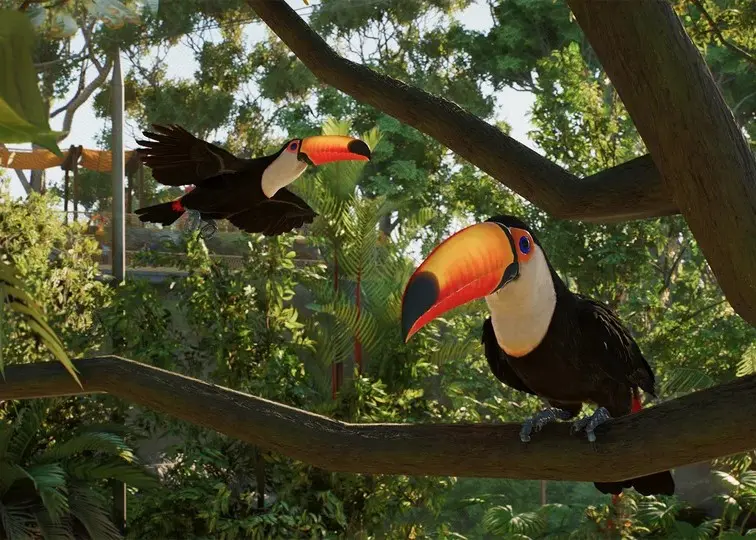
A blacktip reef shark glides beneath visitors while toucans soar through a walk-through aviary in Planet Zoo 2. But the sequel takes zoo management beyond the gates, where players can release captive-bred animals into wildlife reserves. There, they can restore habitats, rebuild populations and help entire ecosystems thrive.
The game launches today (13 October 2026) at 4pm SAST on PlayStation 5, Xbox Series X|S, and PC via Steam and the Epic Games Store.
Aquariums introduce fully aquatic species to the series. Players can design freshwater and saltwater environments for creatures including hawksbill turtles, West Indian manatees, Javanese cownose rays and shoals of smaller fish. Maintaining these habitats requires managing water temperature, salinity, filtration and cleanliness, as well as ensuring keeper access.

The skies come alive in Planet Zoo 2. Custom aviaries house species including the toco toucan, secretarybird, long-tailed parakeet and Javan green magpie. Players can construct enclosures using barriers, support poles and dynamic mesh roofs, with some aviaries allowing visitors to walk beneath birds in flight.
Wildlife Reserves transform releasing an animal into active play. Instead of disappearing after leaving the zoo, suitable species can continue their lives in customisable wild areas. Players can remove pollutants, restore natural environments, rebuild populations and establish functioning ecosystems.
A research vehicle allows players to explore these landscapes and observe their work at ground level. The reserves aim to make a successful breeding programme feel like the beginning of a conservation project rather than the end of a management task.
This wider cycle starts with the small signs inside the zoo. Frontier Developments, the studio behind the title, has rebuilt animal behaviour around a system called the Animal Brain. This considers stimuli such as weather, seasons, predators and habitat conditions.
An unhappy tiger may become lethargic, while healthy animals herd, graze and interact more naturally with their surroundings. These visible clues help players recognise welfare problems before opening another information panel.

Good care can take animals beyond basic welfare into a new Thriving state. Players must research each species and create natural, enriching habitats to reach that level. Thriving animals can live longer, and visitors may respond to the higher standard of care with larger donations.
Beyond animal welfare, players must balance finances, staff morale, training and visitor satisfaction. A five-star Zoo Reputation system measures performance across animal husbandry, sustainability, guest education and visitor experience.
Seasons change conditions across both zoos and reserves, with each biome following an appropriate weather pattern. More predictable weather gives players time to prepare habitats and facilities before harsher conditions arrive.
New line, curve, drawing and stamp tools aim to speed up the construction of paths and plazas. Nature brushes cover larger areas with foliage and rocks, while scenery can be scaled, mirrored and recoloured. Players who would rather skip detailed construction can use ready-made buildings or download community blueprints through the cross-platform Frontier Workshop.
Career mode follows the Fauna and Ecosystems Network, a conservation organisation connecting zoos and reserves around the world. Franchise mode supports animal trading between players, while Sandbox mode removes financial restrictions. A central Planet Hub manages locations, research, animal storage and trading across each network. Players can explore their own zoos, and those created by other players, from a first-person visitor perspective.
Photo Mode turns zoos and Wildlife Reserves into virtual photography hides, where players can frame animals at rest, in motion or interacting with their habitats.
* Visit the official ‘Planet Zoo 2’ website here.
* Jason Bannier is a data analyst at World Wide Worx and deputy editor of Gadget.co.za. Follow him on Bluesky at @jas2bann.