


GadgetWheels
Formula E rewrites the EV script
Nissan’s world championship shows how electric racing is reshaping the future of mobility, writes ARTHUR GOLDSTUCK.

When the motor sport governing body, the Fédération Internationale de l’Automobile (FIA), launched Formula E just over a decade ago, it was seen as a fringe curiosity. Back then, it was about silent cars and too many acronyms.
What a difference a championship makes.
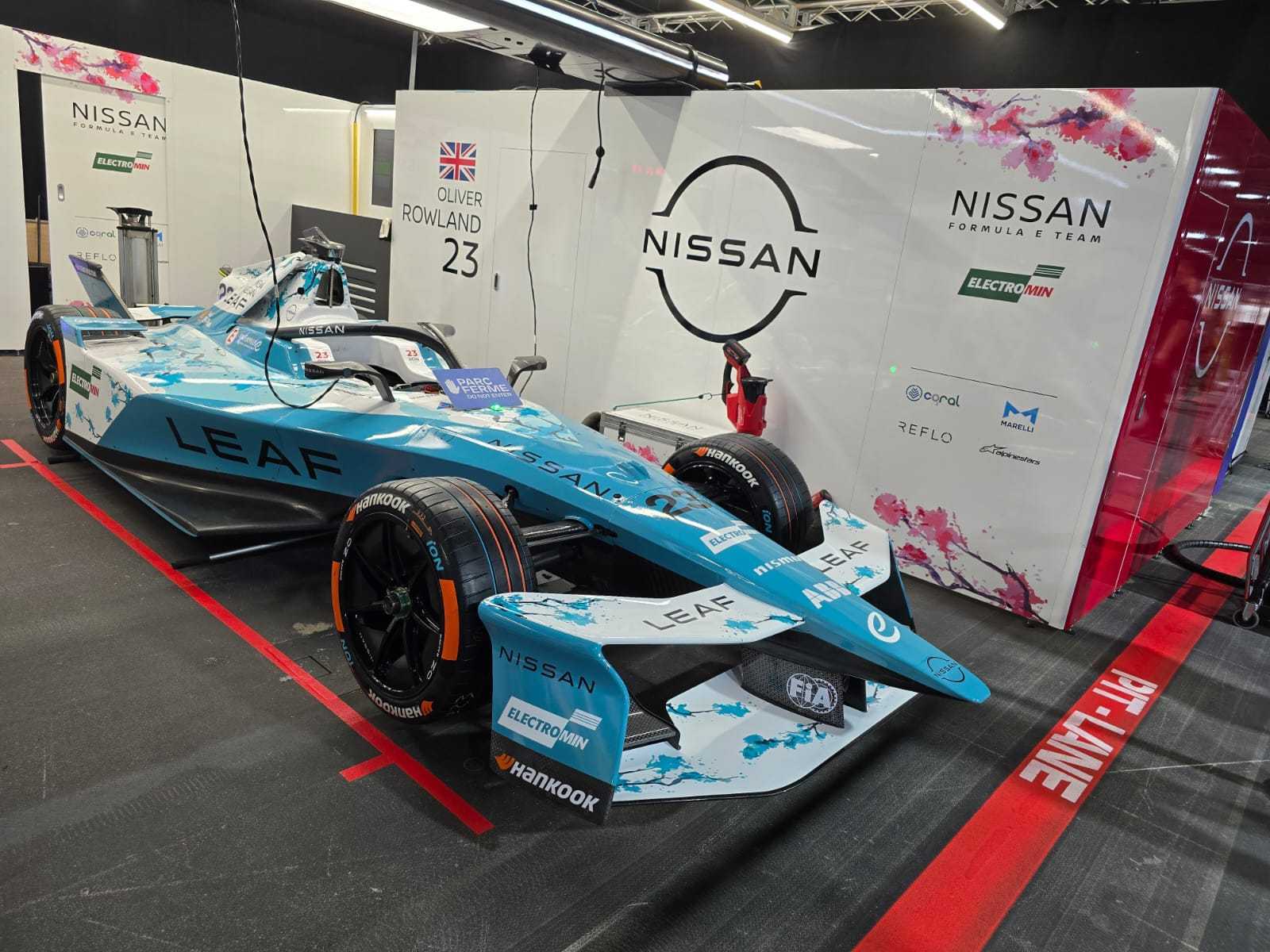
At the close of the 2025 season in London this weekend, the big names from Porsche and Jaguar respectively took the team title and the chequered flag for the final ePrix of the season, but Nissan’s Oliver Rowland came away the Formula E world title.
It was a moment of celebration for the unfancied Nissan team, but far more consequential than the average race weekend win. It signalled a shift in how electric mobility is developed, tested, and ultimately, sold.
Nissan’s real-world strategy
At the finale in London, Nissan Formula E team principal Tommaso Volpe told Gadget in an exclusive interview what the season meant both for racing and for the global trajectory of electric vehicles. What emerged was a real-world strategy for an industry being reinvented under our feet.

“When we took over the team, we were in 10th place in the championship,” said Volpe. “The talent was there, but the organisation, location, and connection to Nissan’s broader expertise were off. We just put things in order, step by step.”
That sounds deceptively simple. The real story is what happened behind the scenes. Formula E has become Nissan’s live testing ground for the next generation of battery systems, regenerative braking, control software, and drive train efficiency. Unlike Formula One, where technology tends to remain locked in the performance bubble of elite racing, Formula E transfers its learnings directly into road vehicles. Nissan calls it a “track-to-road” technology transfer.
“It’s the same technology,” said Volpe. “We have a battery, an inverter, a gearbox and a motor. The control systems are the same. What’s different is the way we push every component to the edge to extract more efficiency. That’s where we learn the most.”
‘An energy race’
He referred to Formula E as “an energy race”, where the goal is to complete the circuit with maximum speed while using the least possible amount of power. That means the difference between first and fourth place often comes down to who conserved the most energy through corners, or who harvested the most back into the battery during braking.
“In future EVs, that makes the difference between a car that gets 300 km and one that gets 400 km on a charge,” said Volpe. “It’s the same principle, just applied in different ways.”
This obsessive focus on energy recovery and efficiency is already feeding into Nissan’s next wave of production EVs. Volpe revealed that Nissan had been a key force in pushing for all-wheel drive capability in the next generation of Formula E cars, because of its relevance to road vehicles, particularly in markets where AWD is becoming a standard feature in electric SUVs.
EVs in South Africa
For South Africa, this evolution is arriving just as the national conversation about electric mobility shifts into a new gear. This week, WesBank hosted a landmark event at the Kyalami Grand Prix Circuit in Johannesburg, aimed at helping fleet operators understand how to electrify their vehicle portfolios. Called EVolution, the event brought together logistics providers, retailers, mining companies and public sector operators, all grappling with how to make electric transport viable on the ground.
“Fleet electrification in South Africa is still in its developmental stages, with much of the current work focused on pilot projects across various industries,” said Linda Cele, head of key accounts and partnerships at WesBank. “Our EVolution event provided a vital platform to address the uncertainties that hinder widespread adoption and offer practical insights based on local and global experiences.”

The event highlighted several pilot and research projects currently underway in South Africa, providing a local perspective on global new energy vehicle (NEV) market trends. Projects included:
- Private logistics companies running pilot projects in Johannesburg, Durban, and Cape Town;
- Retail chains experimenting with electric delivery vans;
- Mining companies exploring electric buses and heavy-duty vehicles on-site (where power and range can be controlled); and
- Municipalities in eThekwini and Cape Town that are evaluating electric buses for public transport
In this context, the lessons from Formula E suddenly feel less like racing trivia and more like a business playbook.
One of those lessons is patience. Volpe’s team spent three years overhauling every aspect of their operations before the wins started rolling in. They changed facilities, rebuilt their team culture, and most importantly, forged deep integration with Nissan’s research and development.
Rowland may have been the driver who clinched the title, but the machinery under him was the result of long-term thinking and an organisational pivot that extended far beyond the pit lane.
Nissan’s core business
Volpe sees this transformation as a microcosm of Nissan’s broader direction: “Our CEO was in Tokyo when we won there earlier this season. He said Formula E shows what Nissan is capable of. It’s like a small version of our core business.”
That core business is defined by Ambition 2030, Nissan’s global strategy to electrify its entire model range within the next five years.
The manufacturer’s mission is to achieve carbon neutrality and zero-emission vehicles by 2050.
For that to happen, the company needs more than good intentions. It needs hard data, real-world testing, and technologies that are ready for the road. Formula E has become the crucible for that process.
Back home, EV sales in South Africa are growing, if still modest by global standards. According to Naamsa, 3,487 EVs were sold in the first quarter of 2025, up from 3,042 in the same period last year, and more than double the 1,665 units sold in Q1 2023. That growth is expected to accelerate as government incentives begin to kick in and charging infrastructure expands beyond major metros.
But Volpe’s perspective offers a different way to think about the transition: as an accumulation of micro efficiencies, of the kind that wins races today and extends vehicle range tomorrow.
One thing all teams seem to agree on is where they would like to race again.
“We all loved Cape Town,” said Volpe. “It was an amazing race, and every team I’ve spoken to wants to go back.” He acknowledged that the final decision rests with Formula E and local organisers, but said Cape Town had made a lasting impression.
For South Africa, a return of the Cape Town ePrix would be a signal to investors, manufacturers and policymakers that the country is serious about electric mobility. It would also create a platform for showcasing local advances in infrastructure, energy storage, and transport policy.
* Arthur Goldstuck is CEO of World Wide Worx, editor-in-Chief of Gadget.co.za and author of The Hitchhiker’s Guide to AI.