


GadgetWheels
BMW 118 finds place
in the everyday
The compact premium hatch trades heritage expectations for real-world usability, writes ARTHUR GOLDSTUCK.

The latest BMW 118 marks a clear change in direction for the brand’s smallest model.
Earlier versions depended heavily on driving feel as a defining trait. This one aligns more closely with time in traffic, from short trips across town, to open stretches where speed builds for a few seconds before the next set of lights. In other words, how cars are used in the everyday.
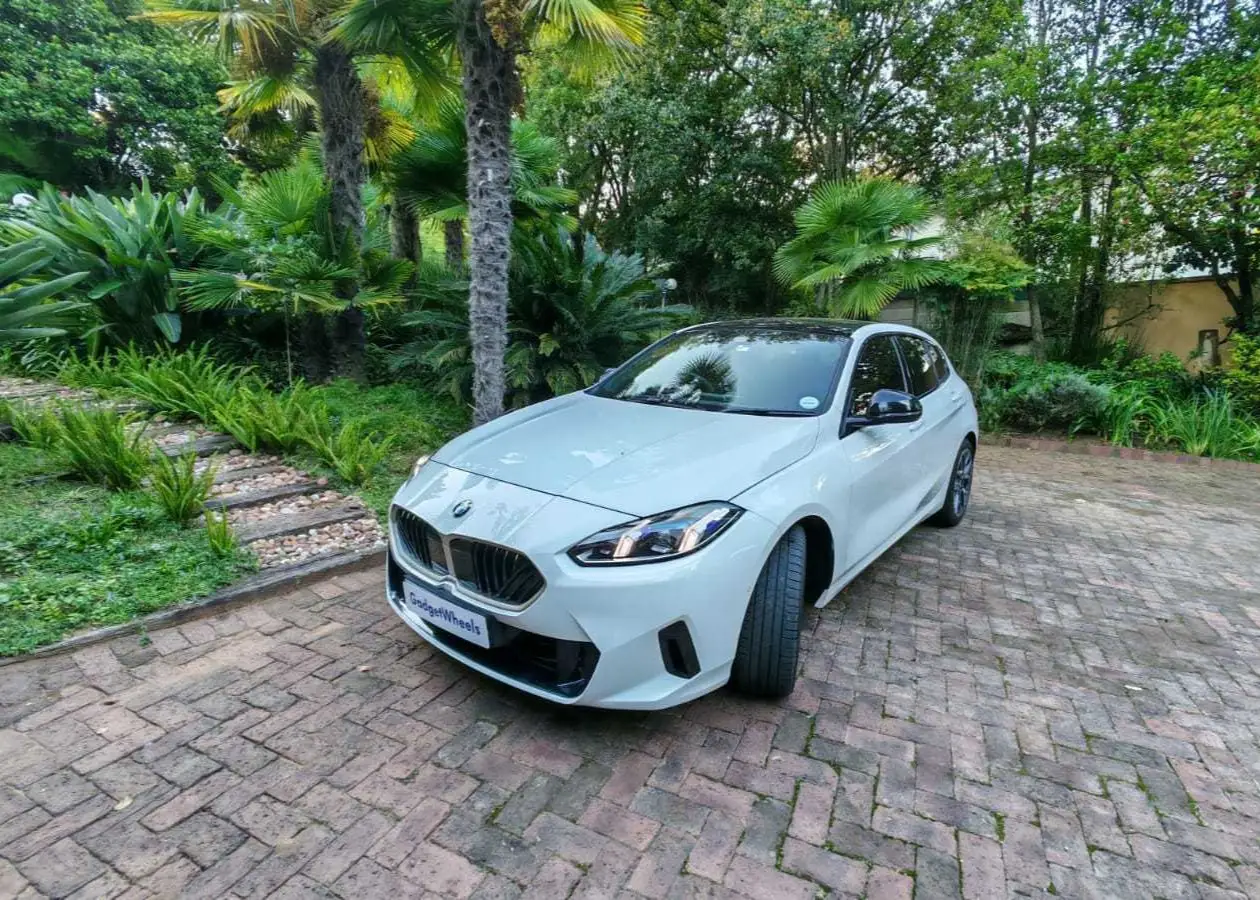
In M Sport trim, the design stands apart. Slightly lower ride height, larger wheels and more sculpted bumpers give it a sharper look without pushing into hot-hatch territory. Parked among rivals, it draws the eye for the right reasons.

Inside, a curved display runs across the dashboard in the style BMW has refined, combining the driver’s instruments and infotainment into a single unit. The graphics are crisp, and the system responds quickly to inputs. Navigation through menus becomes familiar within a short drive, but climate controls remain on the screen, which takes some adjustment. That is my main bugbear with a generation of cars that present digital as superior to manual even where that is demonstrably not the case. However, if that is the worst thing one can say about a car, then one could also say this car ticks the important boxes.
The 1.5-litre turbocharged three-cylinder engine produces 115 kW and 230 Nm, paired with a dual-clutch transmission. In everyday driving, that combination feels well matched to the car’s value proposition. Pulling away from traffic lights is clean and forceful, and merging into flowing traffic requires little hesitation. The gearbox shifts smoothly, especially at lower speeds where earlier dual-clutch systems often felt awkward.
At higher revs, the engine becomes more noticeable. The sound carries into the cabin, and acceleration builds at a steady pace rather than providing a cacophony of revs. It responds best to measured inputs, where throttle and steering are applied consistently.

Through corners, grip is strong. Steering provides a clear sense of direction, and the car follows the chosen line as if you’ve input firing coordinates. The front-wheel-drive layout favours stability and consistency over any sense of movement from the rear. It’s a different approach from earlier BMWs, but one that suits the positioning of this car.
Fuel consumption in mixed driving ranges from mid-5 to mid-6 litres per 100km. That’s not bad for a car likely to spend most of its time in urban and suburban conditions, where efficiency needs to be part of the ownership experience.
The cabin materials feel durable, with surfaces designed to cope with regular use. The seating position works over longer distances, and the steering wheel has a solid, well-weighted feel. Android Auto connected quickly and remained stable, which often proves more useful than additional features.

Rear space accommodates two adults for short to medium trips without issue, but taller passengers will feel the limits on longer journeys. The boot, like the car, handles everyday demands like shopping, luggage and general errands without requiring reassignment of space.
The bottom line is that there are no surprises, and no need to adjust driving style beyond keeping inputs smooth. It is a car that readily fits into daily life, yet still carries the expected BMW visual and tactile cues.
For drivers looking for a compact premium hatch that integrates easily into everyday life while still carrying the presence of the BMW badge, the 118 delivers a coherent and convincing proposition.
- Pricing for the BMW 118 starts at R795,957.
* Arthur Goldstuck is CEO of World Wide Worx, editor-in-chief of Gadget.co.za, and author of “The Hitchhiker’s Guide to AI – The African Edge”.