


Hardware
Rain closes the loop on
Wi-Fi and sound
The new loop from Rain fuses 5G Wi-Fi, speakers, and touchscreen into a single device built for the always-connected lifestyle, writes ARTHUR GOLDSTUCK.

Routers don’t usually get invited to the party. But Rain’s latest creation, a circular device called the loop, is bringing the music, the Wi-Fi, and the vibe. With built-in 5G, stereo speakers, and a smart touchscreen interface, the loop demonstrates that connectivity doesn’t have to be boxed-in or stuck to the wall.
Unveiled in Cape Town yesterday (7 July), the loop is unlike anything seen on South African networks. It’s pitched as a lifestyle device rather than a telecoms tool: a self-contained hub that brings together Wi-Fi sharing, stereo sound, and visual interaction. Its standout feature isn’t any one spec, but how those specs converge in a form that suggests a portable companion rather than a static router.
The loop supports 5G and 4G connectivity, powered by dual SIMs and a technology Rain calls smartswitching, which toggles between unlimited and per-gig data depending on location. This is tied into Rain’s new concept of “unli loopzones”, user-defined places one can get unlimited data. Outside of those zones usage is metered. The idea is to focus data access where it is most needed, like the home, office, or hangout spot, without overpaying elsewhere.

Photo supplied.
The device is also battery-powered and fully portable, offering a rechargeable experience that users can move between rooms or take outdoors. With a built-in touchscreen, there’s no need for an app or browser login to change settings or share the Wi-Fi password: users and their family or friends scan and go. Rain is clearly aiming to sidestep the usual user pain points of router setup and network sharing.
The connection is only the beginning, though. The loop doubles as a music player, thanks to integrated stereo speakers and full Android functionality. That means one can install streaming apps directly on the device, play music from the touchscreen, and hand over DJ control with Bluetooth.
“Anyone can choose the next song directly from the loop’s large touch screen display,” says Rain. “Now you’re all in control of the music.”

Photo supplied.
A built-in camera with a timer turns the loop into a hands-free selfie machine, a curious but potentially fun feature for small group settings. Place it down, set the timer, and get in the shot. It’s a small nod to the social sharing culture that Rain is subtly courting.
The company is also introducing open loopzones: selected public spaces where loop users can access free unlimited data. This hints at a broader ambition to create a community-driven data ecosystem that combines private and shared access in a way that rewards mobile users without locking them into fixed infrastructure.
Pricing is designed to match that flexibility. The loop can be bought outright or accessed via monthly subscription. Two main plans are available: a unlizones plan, which includes one unli loopzone and 10 GB for on-the-go use, and a per gig plan with 25 GB of flexible data. Additional loopzones and top-ups can be purchased via RainGo.
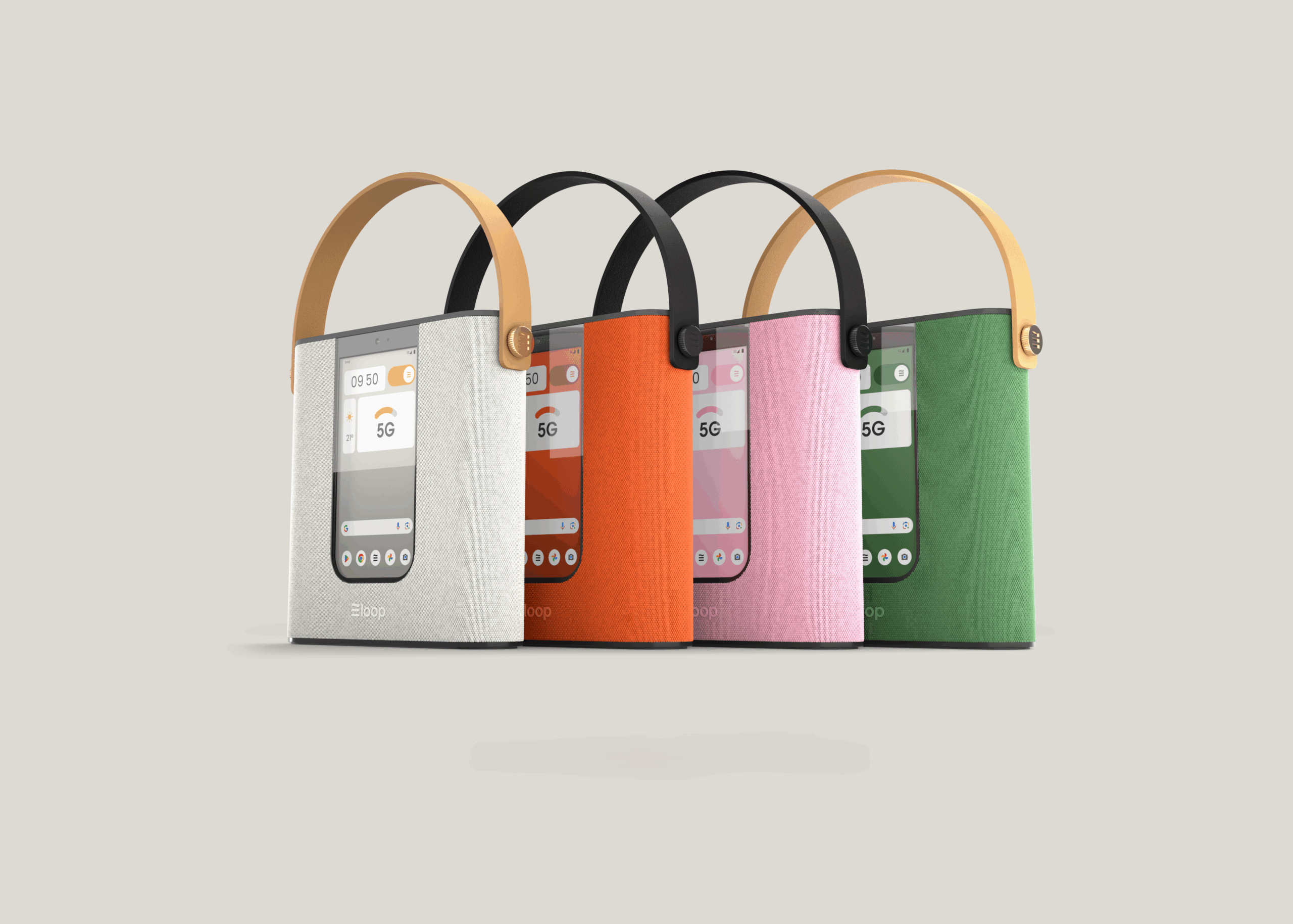
Visually, the device comes in a range of colours and resembles a stylish circular speaker with a digital eye at its centre. It feels more like a decor item than a gadget, which may be deliberate. It’s built for the kitchen table, the coffee shop, the student lounge, the DJ booth, and, well, anywhere one puts it down.

Photo supplied.
Rain has spent the past few years positioning itself as a disruptor in South Africa’s data market, often by offering uncapped access where competitors stuck with bundles. With the loop, it is also trying to disrupt on design, experience and lifestyle integration.
The question, of course, is whether users will embrace a new category of device that doesn’t quite fit into any existing one. It’s not a router in the traditional sense, it’s not a Bluetooth speaker, and it’s not a tablet, but it borrows enough from all three to feel familiar. It may find its strongest audience among students, co-living spaces, and hyper-connected young professionals who are already used to carrying a digital life in their pocket.
In that context, the loop feels like the next logical step in connectivity, making it tactile, shareable and even sociable.