


Music
Spotify cracks down
on AI identities
A new AI Persona badge will exclude labelled profiles from Spotify’s editorial and algorithmic recommendations.

Spotify will begin labelling AI-generated personas as part of new measures aimed at improving transparency for listeners. An AI Persona badge identifies profiles where the artist’s name, imagery or presented identity appears to represent an AI-generated person rather than a real human.
The label does not indicate whether the music was created using AI, as Spotify treats an artist’s identity and the use of AI in music creation separately. The company is taking steps to limit low-quality, AI-generated content and strengthen protections against impersonation and spam.
“Listeners have been clear in telling us that they don’t like seeing an artist profile that seems human, only to find out that the persona is AI-generated,” says Spotify. “That’s why, starting mid-September, you’ll begin to see an AI Persona badge on some artist profiles.”
Spotify will not include AI Personas in any editorial or algorithmic recommendations. Users won’t see any music from AI Personas in personalised recommendations, unless they follow AI Personas.
“While we believe all artists have creative choice in determining how they present themselves, Spotify’s programming is focused on elevating music from authentic artists building careers in music.
“True artist-fan connection can only be built on a foundation of trust and authenticity. In music, that means listeners need to be able to trust that the artist behind the music is who they say they are. That’s more essential than ever in the age of generative AI.”
How it works
Artists can disclose an AI Persona through Spotify for Artists, although Spotify will not rely solely on self-disclosure. The platform will also review profiles that appear to use photorealistic, AI-generated identities.
Spotify will initially focus on artists that meet defined audience thresholds. The company says this approach will cover most artist profiles visited by listeners.

From mid-September, the badge will appear in profile banners, About sections, search results and track listings across playlists. Selecting the badge will show whether the artist self-disclosed or Spotify applied the label following a review.
Artists labelled following a Spotify review will receive a notification and can either self-disclose or appeal the decision. Spotify also plans to allow listeners to report suspected AI Persona profiles in the coming months.
AI Persona disclosures apply specifically to an artist’s public identity. Spotify uses separate AI Credits and SongDNA features to provide information about the role of AI in music creation.
Spotify transparency features
Spotify has launched several features designed to give listeners more transparency about what they are hearing and who is behind the music, with the company providing the following descriptions:
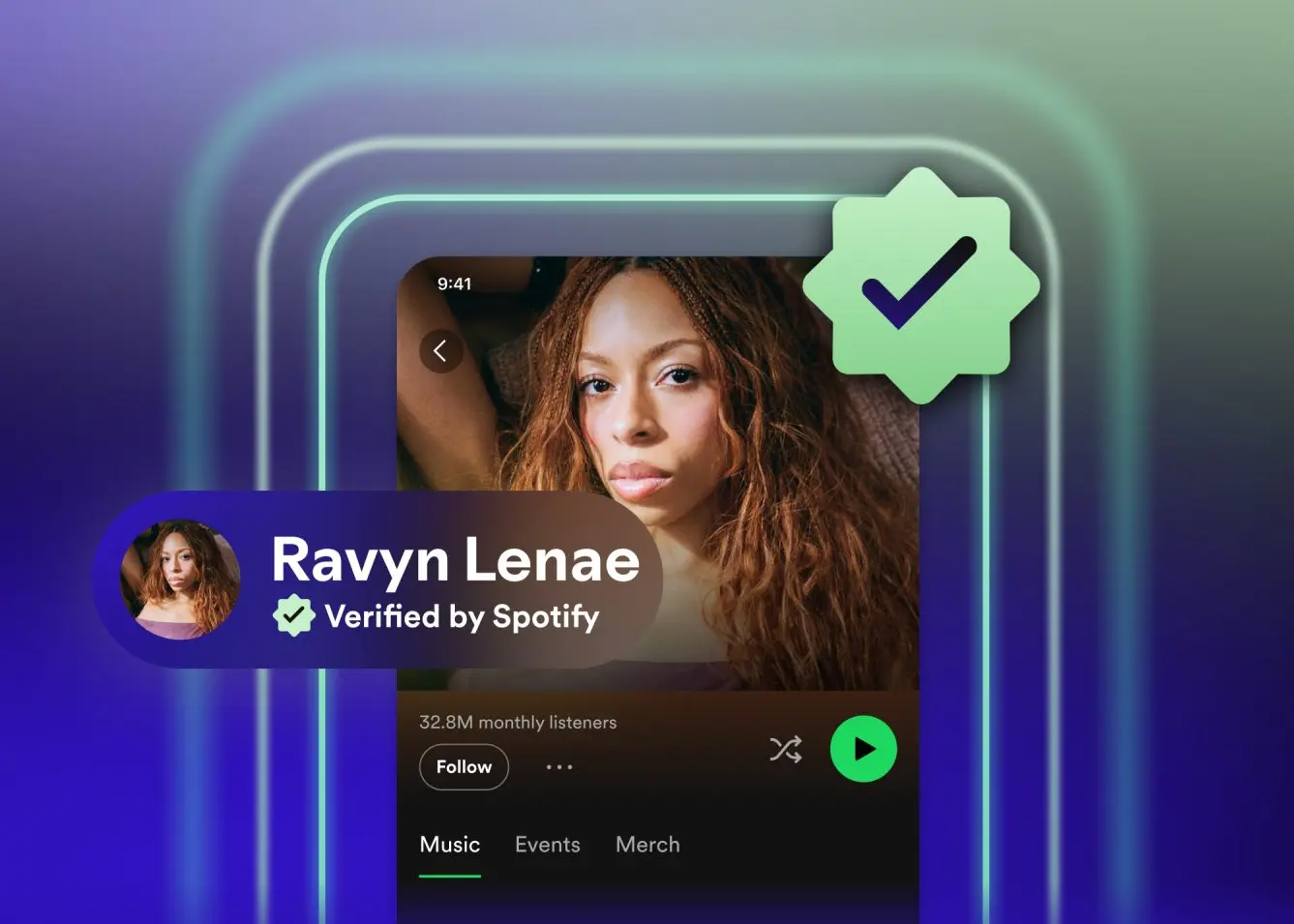
- Verified by Spotify signals to listeners an artist is a real human presenting themselves authentically on the platform. Hundreds of thousands of profiles are already verified, the majority of which are independent artists, representing more than 99% of the artists Spotify listeners actively search.
- AI Credits allow artists to disclose to listeners how they used AI in their music creation, with tens of thousands of AI credits submitted daily.
- SongDNA gives listeners deeper context on the artists and contributors behind a track, helping them discover and fall in love with the human creative process.
- Artist Details surfaces artist information based on Spotify’s own platform data, such as career milestones, release history, and touring activity, giving listeners a quick snapshot of an artist’s authentic activity on Spotify.
- Artist Profile Protection lets artists review and approve releases delivered to Spotify to protect their artist identity and prevent listener confusion about misattributed music.
“In addition to these features, we tune our algorithms to highlight authentic human artists and, based on available signals, strive to not include spam, slop, or low-effort content in our recommendations.
“We know the music ecosystem is evolving, and so will our approach. We’ll continue to adapt as the landscape changes and as we learn from artists, listeners, and industry partners.”