



Hardware
Bold design gives 3D look to Reno16 F
The new Oppo Reno16 F 5G uses microscopic engineering to create a design that appears to extend beyond the surface, writes NDABA BIKA.
Smartphone design has become remarkably sophisticated, but you wouldn’t think it. The basic canvas has barely changed. Designers still have a few millimetres of glass, metal, and composite material to work with to create something distinctive. Usually, the technology inside the device makes the difference.
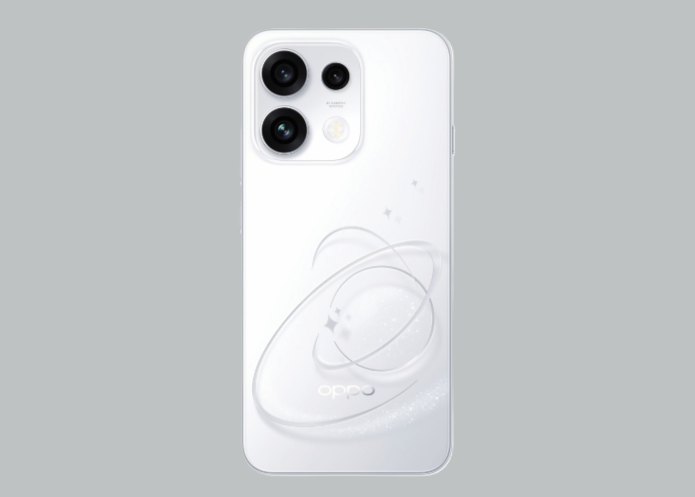
Oppo has decided to take a more expressive approach with the Reno16 F 5G. In Pop White, the back of the phone appears to contain a planet suspended above its surface. When one moves the device, the image responds to light, giving the impression of depth extending beyond the phone itself. It is the defining visual idea of the new handset and an immediate departure from the flat colour and texture treatments that dominate much of smartphone design.
“With Reno16 F 5G, we wanted the design to have a point of view,” says Thabang Piitso, marketing manager at Oppo South Africa. “3D Pop Planet is the boldest expression of that. There is enormous technical precision behind the effect, but what the person holding the phone experiences first is simply something unexpected.”
Oppo provided the following insights into the effect it calls 3D Pop Planet Design.

It uses HoloVerse 3D Technology, drawing on an optical principle physicist Gabriel Lippmann first proposed in 1908. Integral imaging uses arrays of tiny lenses to reconstruct a three-dimensional light field. Manufacturing limitations kept the idea largely in research environments for decades, until advances in nanoscale production made it possible to bring it into consumer products.
On the Reno16 F 5G, millions of microscopic optical elements work together beneath the back cover. Each microlens corresponds to a tiny fragment of the image, viewed from a slightly different perspective. Collectively, those fragments reconstruct the planet with enough depth for the eye to read it as floating above the surface.
Light becomes part of the design itself. As illumination moves across the phone, the apparent shadow beneath the planet shifts with it, reinforcing the sense that the object occupies real space. Oppo says the perceived floating depth reaches 15mm.
The engineering challenge was translating that optical effect into something that could be manufactured consistently at smartphone scale.
The pattern behind Pop Planet is continuous rather than a simple repeating grid, so individual microlenses must align with unique microscopic patterns. Even tiny alignment errors can become visible once millions of those elements combine into one image. Oppo used advanced computational modelling and Embedded Nano-Printing to turn the concept into a production-ready surface.
The process was far from straightforward. Oppo says the design went through seven rounds of optimisation before reaching mass production. Early prototypes achieved a yield of just 1%, meaning only one in every hundred pieces met the required standard. Refinement eventually pushed production to around 300 usable sheets an hour.
That manufacturing story gives the Reno16 F 5G more substance as a design object. The Pop White finish is visually playful, but its execution depends on tolerances and processes more common to precision optics than decorative smartphone finishes.

The rest of the device is deliberately understated. The Reno16 F 5G has a 6.57-inch AMOLED display and weighs about 197g in Pop White, while the design integrates the rear surface and camera treatment into a clean overall form. Pop White carries the full 3D Pop Planet effect, while Twilight Purple uses colour and a shifting finish to give the same device a different personality.
Both finishes are available directly from Oppo through the new Oppo South Africa online store, accessible via the “Shop Now” link on Oppo’s website, with 12 months of accidental damage protection, free delivery and an official warranty.
Pop Planet is only one part of the Reno16 F 5G’s visual identity. The device is designed to be expressive as an object before the screen even comes on, while its 50MP ultra-wide selfie camera, telephoto portrait camera and creative imaging tools extend that idea into what users make with it. Oppo has positioned the Reno16 Series around creation and self-expression, linking the phone’s physical design to the photography and editing experience inside it.
The result points to a wider shift in smartphone design. Differentiation is increasingly happening through materials science, optical engineering and manufacturing processes operating at scales the user never sees. A finished phone can feel simple in the hand while hiding extraordinary complexity beneath its surface.
“People should not need to understand microlens arrays or nano-printing to connect with a device,” says Piitso. “The engineering gives us the freedom to create something that feels surprising, personal and unmistakably Reno. When someone turns the Reno16 F 5G over and stops to look at it, the design has already done its job.”
*Terms and conditions apply to all online store purchases.
* Ndaba Bika is writer and contributor for Gadget.