



Gadget of the Week
Gadget of the Week: Rain 101 Pro, 18 months on
The Rain fixed wireless router has become the broadband backup ARTHUR GOLDSTUCK most values when fibre fails.

What is it?
Eighteen months ago, when this column first featured the Rain 101 Pro, it delivered a download speed of 401Mbps in the same room as the router. That was the kind of number fibre providers had trained us to associate with a cable running into the home, and it made Rain’s 5G proposition look like a direct challenge.
But the upload result was 13.7Mbps, which immediately put some distance between the two. That speed was perfectly usable for everyday activity, but modest for moving large files, cloud backups or other work that sends big data in the opposite direction. For gaming, where latency and responsiveness are as important as download speed, fibre remained the safer choice.
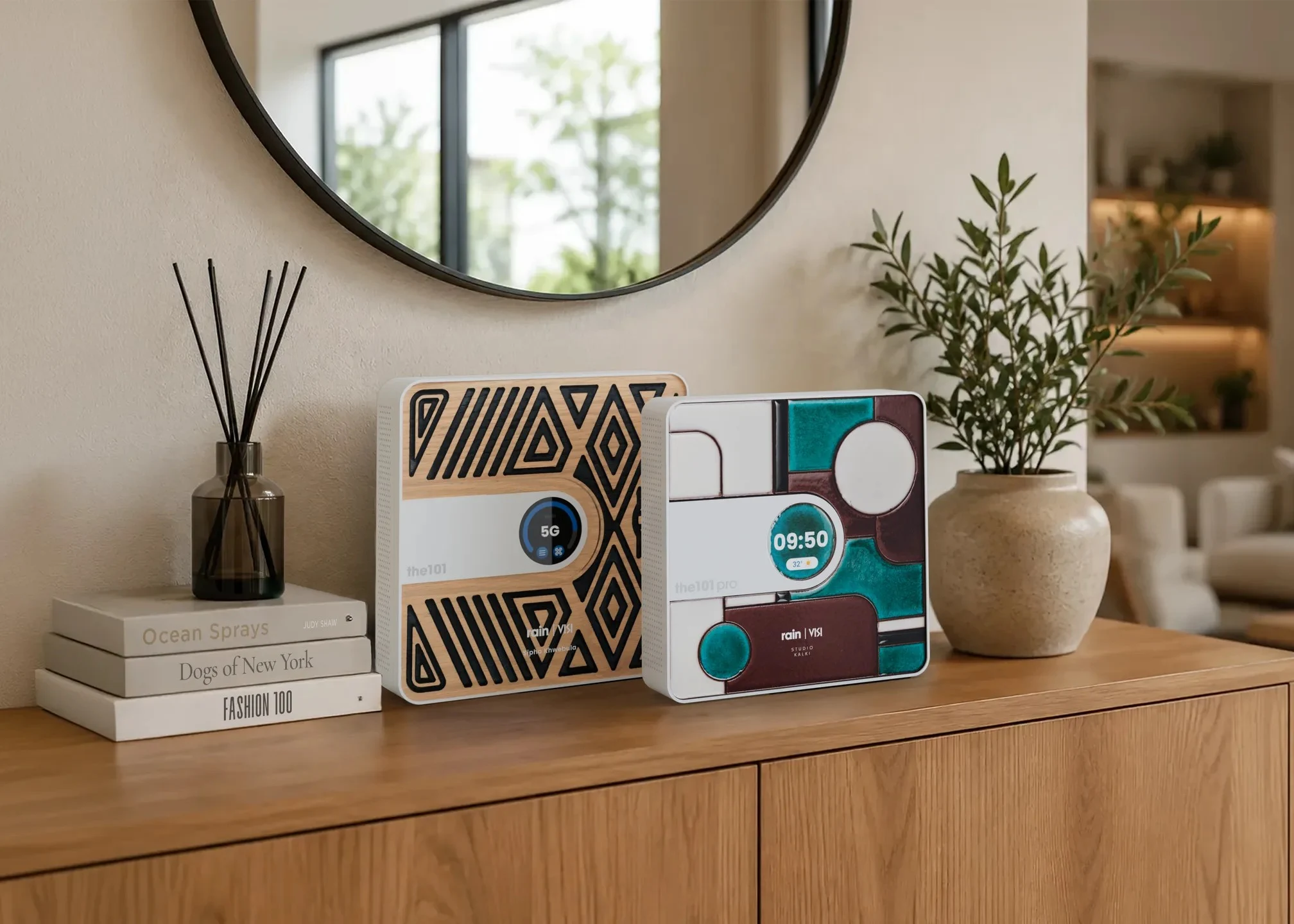
The 101 Pro itself is Rain’s high-end 5G home router, combining 5G-Advanced with Wi-Fi 7. It’s the most consumer-friendly example of a broadband category called Fixed Wireless Access (FWA),
A 2.1-inch touchscreen gives direct access to settings and network information without demanding a deep dive into arcane menus. It can be paired with a 101 xtender, which creates a mesh network and extends Wi-Fi coverage through a larger home or office.
The appeal was obvious from the start. It provided high-speed broadband without waiting for fibre to be trenched into a property, and it could be moved to whichever part of the premises gave it the best 5G reception. That made the 401Mbps result especially seductive. A wireless router was delivering a download speed that would have looked impressive on a fixed line.
After 18 months, fibre remains my primary connection. It is more consistent, especially for uploads, and less dependent on where a router is placed or what is happening on the mobile network around it. The Rain connection can produce excellent download speeds, but 5G performance varies with local coverage, network load and the position of the router.
I would no longer position the 101 Pro as a direct competitor to fibre. Its best role in my setup has been as a gap filler, and it is superb at that job.
For a home or small office waiting for fibre, it can provide serious broadband without an installation process. In an area where fibre coverage is incomplete, it can provide a high-speed connection immediately. I have found its greatest value alongside fibre, where it gives me a completely separate route to the internet.
A fibre outage used to mean finding another route online. A phone hotspot can rescue a laptop, but it is a poor substitute for a home or office network with several connected devices. The Rain system is already a broadband network in its own right, with the 101 xtender spreading coverage beyond the room containing the router.

When my fibre connection goes down, Rain has kept me working. The failure of the fibre line does not take the mobile network with it, so I can switch across and carry on. That also keeps other devices connected without turning a phone into the household’s emergency router and watching its battery drain.
That is another way of saying 18 months of use has changed the original verdict sharply. The first review was dominated by speed, because 401Mbps was the eye-catching part of the experience. Long-term use has made availability far more useful. In short, I do not need Rain to beat fibre speed for speed. I need it to be there when fibre is not.
The mesh capability has helped make that more practical. The xtender allows the Rain network to cover a wider area, so the backup connection is useful beyond the immediate reach of the 101 Pro. Once the Rain network has been saved on the devices that need it, switching during an outage is straightforward.
That also makes the service useful during less serious gaps in connectivity. Fibre Wi-Fi can have weak spots in a larger property, especially when walls or distance get in the way. The Rain mesh gives another option without interfering with the fibre setup. I have come to think of it as a second network with a different job.
What does it cost?
Rain’s current Unlimited Home Pro package costs R799 a month and includes the 101 Pro on a free-to-use basis, with speeds of up to 60Mbps. Unlimited speed can be added for R200 a month, and a 101 xtender costs another R100 a month. The Unlimited Home Premium package costs R1,199 a month, includes unlimited 5G speed and comes with two xtenders on a free-to-use basis.
Is it different?
The 101 Pro still has hardware that puts it well above the ordinary mobile router. Rain specifies 5G-Advanced with 300MHz four-carrier aggregation, Wi-Fi 7 and a 2.1-inch circular touchscreen. The screen provides direct access to functions such as a built-in speed test and QR-code connection, while the xtender can create a mesh network with up to four units.
What are the biggest negatives?
- Upload performance remains far behind the best download speeds the service can deliver.
- 5G performance varies with coverage, network load and router placement.
- Keeping Rain alongside fibre adds a second monthly broadband bill.
Three biggest positives
- It can keep a home or office online when fibre goes down.
- The 101 Pro and xtender provide a proper Wi-Fi network instead of relying on phone tethering.
- Download speeds are excellent when reception and network conditions are good.
* Arthur Goldstuck is CEO of World Wide Worx, editor-in-chief of Gadget.co.za, and author of “The Hitchhiker’s Guide to AI – The African Edge”.