



GadgetWings
Travel tech: Can tech keep
airport lines moving?
Record passenger traffic is putting airport systems to the test worldwide, writes ARTHUR GOLDSTUCK.

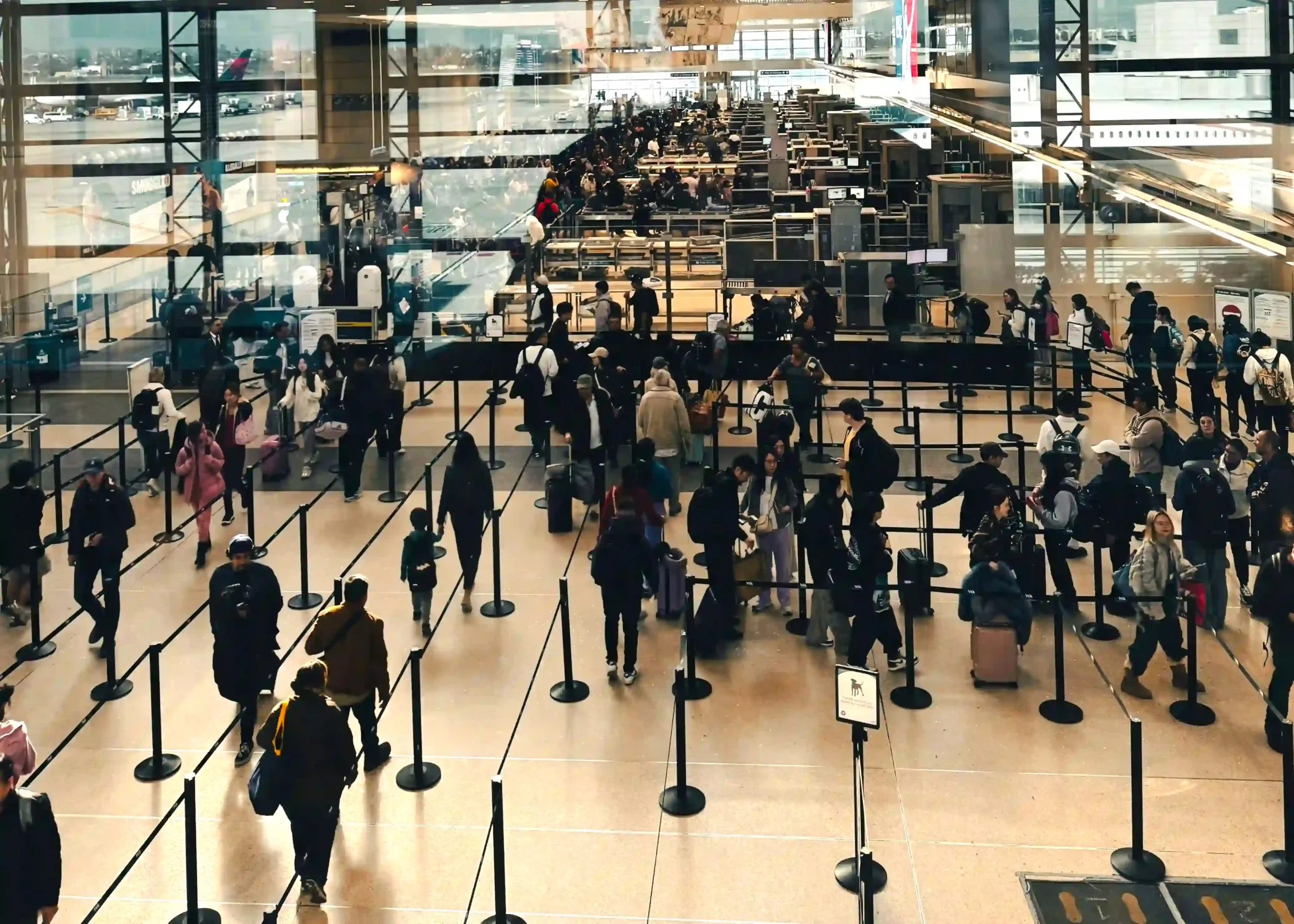
Airports spent $14.8-billion on technology last year. For that kind of money, a passenger might reasonably expect to spend less time holding a passport open, not to mention less time getting to their luggage.
Global airport traffic reached a record number of passengers in 2025, according to Airports Council International (ACI) World – and they want operators to get more people through existing terminals.
“Meeting that demand means expanding capacity while getting far more out of the infrastructure we already have,” said ACI World director-general Justin Erbacci.
The organisation’s 2026 Annual World Airport Traffic Report puts global airport passenger traffic at 9.8-billion in 2025. It draws on 2,817 commercial airports, covering an estimated 97% of scheduled global passenger traffic.
The numbers in effect measure the work airports perform, with passengers recorded at departure and again at their destination. Frequent flyers contribute repeatedly, so it is not as if the entire global population is flying either.
The airport spending figures come from aviation technology provider SITA’s 2025 Air Transport IT Insights research. Airports devoted 7.3% of revenue to IT, up from 6.4% the previous year. Adding airline expenditure brings the industry’s technology bill to $50.8-billion.
The return on that investment depends heavily on different organisations sharing information. SITA found that 49% of airlines surveyed identified data integration and consistency as the primary barrier to improving operational predictions and responses.
A delayed flight changes the time available to move connecting passengers and their bags: while an airline may have the revised schedule, it does not help people handling the luggage if they do not get that information early enough to act on it. And, often, such information remains trapped in separate systems.
SITA reports that 63% of airlines surveyed use AI in operations control to help manage disruption. Software assessing a disrupted schedule can consider aircraft availability alongside crew constraints, helping operations teams choose workable recovery options.
Baggage provides an instructive example. SITA’s 2026 Baggage IT Insights reports that mishandled baggage rates fell 23% in 2025, despite record passenger volumes. It attributes progress to improvements that include real-time data sharing and automated routing.
At Thai Airways, SITA reports, an automated system across nine airports reduced a baggage rerouting task from three minutes to wait for it, one second per bag.
The same report estimates that baggage mishandling still costs the industry $6.3-billion a year. Delayed bags have to be traced and sent on to their owners, with airlines paying for failures that can undo the benefits of an otherwise efficient journey.
At passport control and boarding gates, facial recognition offers to spare passengers the ritual of repeatedly proving who they are. It also allows airports to process more people through existing facilities. Travellers have to decide how comfortable they feel about sharing the data that makes this possible but, increasingly, they will not have much choice.
On 1 October, ACI Europe joined IATA and technology providers, including SITA, in launching the Responsible Biometrics Travel Industry Coalition. The group argues that proposed European digital legislation could restrict voluntary biometric services.
Its case links faster passenger processing directly to airport capacity. Its commitments include voluntary participation and alternatives for passengers who prefer conventional checks, along with the ability to request deletion of their data.
A passenger choosing conventional processing should still have a usable route through the airport, but consent is hardly a negotiation when the alternative threatens a missed flight.
South Africa is pursuing similar improvements. ACSA’s latest annual reporting says biometric and automated border-control solutions are being advanced to streamline passenger journeys. For us mere passengers, the measure of progress will be the time saved at the checkpoint, supported by systems that keep working during peak travel periods.
Africa recorded the strongest regional passenger growth in ACI’s 2025 figures, at 9%. That creates a substantial incentive to improve processing as airports plan additional capacity.
Airport systems must also cope with sudden changes in where passengers travel and how they connect.
For an airport deploying AI tools, the work should begin with persuading every organisation involved in a passenger’s journey to exchange accurate information.
“The technology is there,” said SITA CEO David Lavorel. “The data infrastructure to connect it often is not.”
* Arthur Goldstuck is CEO of World Wide Worx, editor-in-chief of Gadget.co.za, editor of GadgetWings, and author of “The Hitchhiker’s Guide to AI – The African Edge”.