



Gadget of the Week
Gadget of the Week: Moto g37 5G – true blue
The Motorola moto g37 5G brings a rare dash of style to the sub-R5,000 smartphone market, writes ARTHUR GOLDSTUCK.

What is it?
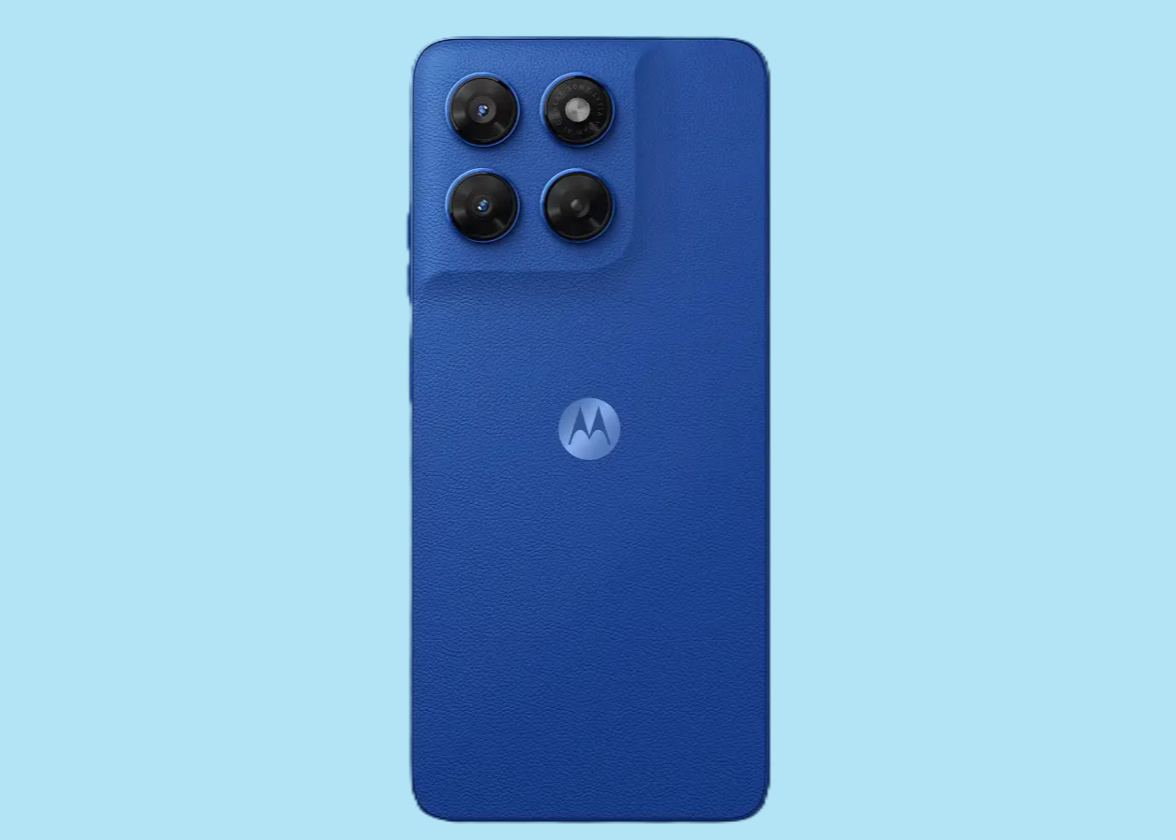
The first surprise of the moto g37 5G is that a sub-R5,000 phone can look this good. The Pantone Nautical Blue version has the colour of a deep royal blue, with a soft leather-like texture across the back. The finish gives it warmth in the hand and keeps fingerprints away.
The second surprise is in the box. Aside from the fact that the box itself looks so good, in white and embossed silver, and a charger and cable inside, Motorola supplies a rubber cover in the identical blue. Most bundled covers are transparent until they turn yellow, or black from the beginning. This one retains the character of the phone, and keeping it fitted it does not feel like wrapping a good suit in an anorak.
The cover also follows the shape of the raised camera island, where the design becomes less honest. Four large circles suggest an array of cameras. The phone has one: a 50MP main camera. A second circle contains a combined ambient-light sensor and flicker detector, a third houses the flash, and Motorola describes the fourth as a “decorative lens”. In plainer language, it is a fake camera circle.
That is packaging sleight of hand. A buyer glancing at the phone in a shop could easily assume it has several rear cameras. The decorative circle has been added to create visual symmetry and the appearance of a better-equipped camera system. The irony is that the single real camera is adequate for the price.
In good daylight, the 50MP camera produces pleasing images for sharing on social media and WhatsApp. Colours are acceptable and the automatic HDR mode copes reasonably well when bright sky and darker foreground appear in the same shot. Fine detail is less convincing when an image is enlarged, and there is no ultrawide lens for landscapes, architecture or cramped indoor scenes.
Low-light pictures require care. Night Vision can recover a usable photograph from a dim scene, but it takes time, and movement quickly softens the image. The camera records video at up to 1440p at 30fps, with 1080p available at 60fps. There is no 4K option. The 8MP selfie camera is adequate for video calls and casual portraits, provided the light is kind.
At 7.8mm thick and 191g, the g37 is comfortable to hold despite the large screen hosting a 6.67-inch IPS LCD with a 120Hz refresh rate. Scrolling through web pages and menus looks smooth, and the panel is bright enough to remain readable outdoors. Colour reproduction is better than one might expect from a basic LCD. It also avoids the rapid pulse-width modulation used to dim some OLED screens, which can trouble people who are sensitive to flicker.
Motorola began making savings in the resolution: a 1604 by 720-pixel display, which produces only 264 pixels per inch. Text lacks the crisp edges seen on Full HD screens, while high-resolution photographs and video cannot display their full detail, although the 120Hz refresh rate makes movement look fluid.
Performance comes from a MediaTek Dimensity 6300 processor and 4GB of physical RAM. Everyday jobs like email, browsing, messaging, navigation and streaming are handled without difficulty. Apps do sometimes take moment to open, and switching among several of them can expose the memory limit. This is especially apparent when returning to an app that Android has closed in the background and it has to reload.
Motorola advertises RAM Boost that can raise the displayed memory figure to 12GB by allocating part of the storage. It helps Android keep some processes available, but storage cannot operate at the speed of real RAM. Don’t confuse it with an upgrade to a 12GB phone.

Android 16 is a welcome inclusion. Motorola keeps its interface close to standard Android and adds a few useful shortcuts, including the familiar chopping gesture to switch on the torch and a wrist twist to open the camera.
The 5,200mAh battery carries the phone through a full day of regular use with room to spare, and lighter users can push well into a second day. Independent laboratory testing by Notebookcheck recorded almost 18 hours of continuous Wi-Fi web browsing, but please excuse me if I don’t go there.
Charging is less impressive. The maximum wired rate is 20W, and replenishing the battery from empty takes more than two hours. The phone also supports 6W reverse wired charging, allowing it to donate power to another device through a cable – but slowly.
The stereo speakers can reach a healthy volume and speech remains clear, making them useful for podcasts, video clips and speakerphone calls. Music exposes a thin sound with little bass and an emphasis on the upper frequencies. Motorola deserves credit for retaining a 3.5mm headphone socket, so better listening does not demand Bluetooth earphones or an adapter. Dolby Atmos processing adds width, but software cannot conjure bass from small phone speakers.
The South African model provides 128GB of storage, with expansion through a microSD card, and has slots for two physical nano-SIMs. A side-mounted fingerprint sensor unlocks the phone quickly and reliably. IP64 protection guards against dust and splashes, although the phone must not be submerged.
What does it cost?
The Motorola moto g37 5G has a recommended retail price of R4,499 from Vodacom and selected retailers, including PEP and Ackermans. That price buys the 4GB RAM and 128GB storage model with two physical SIM slots.
Is it different?
The moto g37 5G is aimed at buyers who need a modern 5G phone and cannot justify spending on a flagship. But it is also a pleasure to look at and hold. The royal blue finish gives it an identity, and the matching cover allows the owner to keep that identity after wisely opting for protection. Many phones costing several times as much become generic slabs once placed in a case.
Three biggest negatives
- Only one of four rear circles contains a camera, and one is purely decorative.
- The HD+ resolution is low for a 6.67-inch screen.
- 4GB of RAM and 20W charging reveal the corners cut for the cost saving.
Three biggest positives
- The Nautical Blue finish looks far more expensive than the phone, and the matching cover preserves it.
- Battery life comfortably covers a full working day.
- Android 16, 5G and expandable storage give make it a useful everyday phone.
* Arthur Goldstuck is CEO of World Wide Worx, editor-in-chief of Gadget.co.za, and author of The Hitchhiker’s Guide to AI – The African Edge.