


GadgetWheels
Continental closes in
on 40% sustainable
tyre goal
The manufacturer is increasing the share of renewable and recycled materials, including rubber made from used cooking oil.

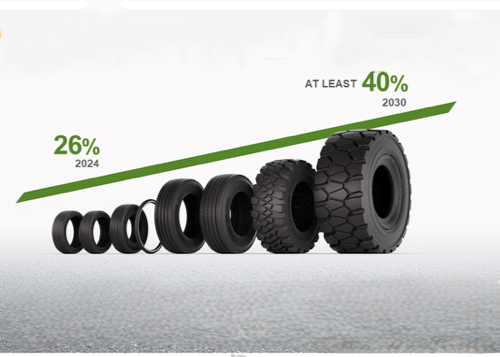
Continental Tires is increasing the use of renewable and recycled materials in tyre production, with a target of at least 40% by 2030.
These materials accounted for an average of 26% in 2024, and the company expects this share to rise by 2-3% by the end of 2025. The focus includes rubber and resins from more sustainable sources, both of which are critical to tyre quality and performance.
Synthetic rubber from renewable and recycled materials, together with responsibly sourced natural rubber, plays a crucial role in sustainable tyre production. This is particularly significant given the high proportion of rubber used in every tyre, with modern high-performance tyres consisting of up to 40% rubber by weight.
The actual type of rubber used in a particular tyre depends heavily on the component in question and the function it performs. Continental car tyres are composed of up to 100 different raw materials, which in turn are used to produce up to 20 different customised rubber compounds per article. These contain more recycled variants of additives and supplementary raw materials, and circular resins that make the resulting rubber more pliable and improve overall tyre performance.
“We’re closing the loop: Continental is ramping up its commitment to a circular economy and mapping out its path for the future,” says Jorge Almeida, head of sustainability at Continental Tires. “Innovative solutions enable us to use more sustainable raw materials, such as synthetic rubber made from used cooking oil or resins based on certified renewable feedstocks originally derived from vegetable oil.”
Synthetic rubber from recycled cooking oil
Rubber is a vital commodity for global mobility. Vehicles such as cars, trucks, bicycles and e-bikes rely on rubber tyres to keep them moving, as do motorbikes, forklift trucks and port cranes. The components that make up a tyre consist of various types of rubber spanning a range of applications.
Continental mainly uses two categories of rubber, each offering specific technological benefits for specific tyre components: natural rubber and synthetically produced rubber. Natural rubber, the type traditionally used in tyre production, is used in the treads of car and truck tyres, where the rubber needs to be extremely hard-wearing. Its special properties include its impact resistance and durability because of the strain-induced crystallisation inherent in naturally grown rubber. This feature of natural rubber cannot yet be reproduced artificially.
Synthetic rubber, meanwhile, is incorporated into the tread of car tyres in addition to natural rubber because of its superior braking performance and rolling resistance. The tyre manufacturer is increasingly using synthetic rubber derived from more sustainable sources, such as for example pyrolysis oil made from end-of-life tyres or used cooking oil.
It sources the raw materials for this more sustainable synthetic rubber from suppliers such as Synthos and TotalEnergies Cray Valley, both of which are using a mass balance approach valorising sustainable sources certified by the ISCC PLUS International Sustainability and Carbon Certification. The production processes and raw materials used to manufacture the synthetic rubber supplied comply with this system.
Circular resins for sustainable use of materials
Continental says it takes a holistic approach to its tyre development. This includes ensuring that all raw materials are sourced from more sustainable sources step by step. For example, there are special resins for almost every rubber compound that enable a perfect balance between the elasticity and resilience of the tyre.
Resins play a crucial role in unlocking the optimum performance of rubber compounds. They improve wet grip, abrasion resistance and rolling resistance, which helps reduce a vehicle’s energy consumption. Continental uses circular resins from suppliers such as TotalEnergies Cray Valley. These resins are ISCC PLUS-certified and support the development of renewable feedstocks sourced from vegetable oil or used cooking oil.
Use of more sustainable additives
Alongside resins, certain additives constitute an indispensable part of the tyre production process at Continental. These are used, for example, to protect rubber during vulcanisation against the side-effects of heat or oxygen.
Continental uses the ISCC PLUS-certified rubber additive TMQ from LANXESS, while adhering to the same high quality and performance specifications. According to life cycle assessments, this additive, which is produced from raw materials such as biocircular acetone, has a carbon footprint that is more than 30% lower than its conventionally manufactured counterpart. Biocircular acetone is made from waste of biological origin, like recycled cooking oil.
Traceability of mass balance-certified materials
The use of sustainable materials is supported by the mass balance approach, which Continental applies in tyre production. This method mixes fossil, renewable and recycled materials during manufacturing and tracks them along the value chain.
It enables the attribution of renewable and recycled inputs to the final product and provides documentation of ISCC PLUS-certified material use. In this way, Continental can measure and gradually increase the share of renewable and recycled raw materials, with a target of at least 40%.
Matthias Haufe, Continental Tires head of material development and industrialisation, says: “The mass balance approach enables us to efficiently manage the complexity of the raw materials portfolio and track how these raw materials are used at multiple production sites in a wide range of markets. In this way, we can steadily increase the share of renewable and recycled materials in our tyre production – and transparently document the progress we make.”