


GadgetWheels
EV charging network
opens on N3
Zero Carbon Charge’s new solar-powered system expands options for electric vehicle travel between Johannesburg and Durban.

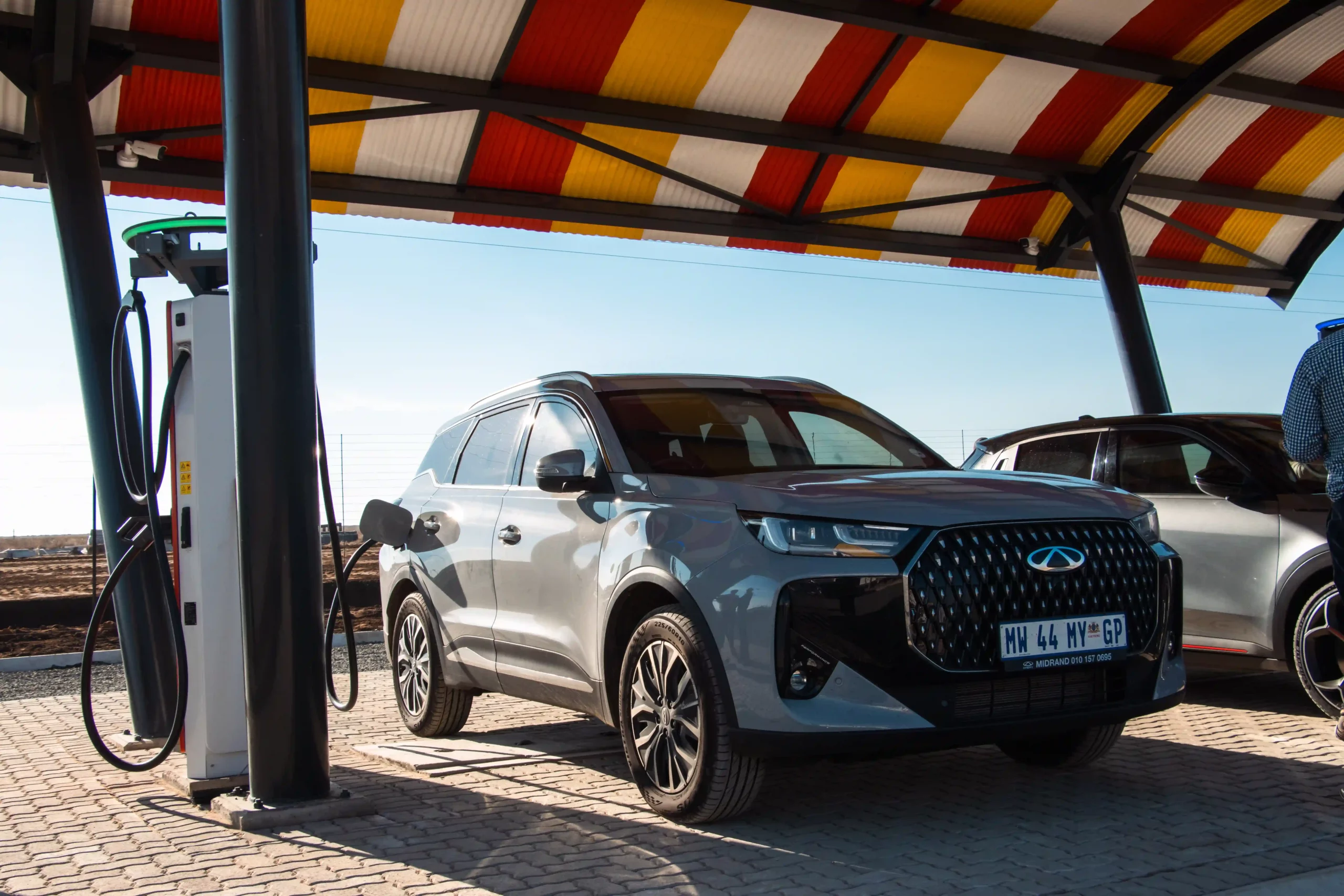
Zero Carbon Charge has opened an off-grid, solar-powered electric vehicle (EV) charging network along the Johannesburg to Durban N3 corridor, comprising two charging stations.
The Charge N3 Roadside station is located at the Reitz Interchange (Exit 107) in the Free State, while Charge N3 Tugela is situated at the Colenso to Winterton Interchange (Exit 207) in KwaZulu-Natal.
According to Charge, the sites establish SA’s first off-grid, solar-powered EV charging network. The network aims to enable electric passenger and freight mobility at scale on one of the country’s critical freight and transport routes.
“By building off-grid EV charging infrastructure along key transport corridors like the N3, we are reducing dependence on volatile fuel prices while creating greater energy and transport cost stability over the long term,” says Joubert Roux, Charge co-founder and chair. “This is about giving consumers and fleet operators the confidence to transition to electric mobility knowing the infrastructure exists to support them. The future of transport won’t be powered by electric vehicles alone, it will be powered by renewable energy infrastructure.”

The expansion is supported by a R100-million investment from the Development Bank of Southern Africa (DBSA) and forms part of Charge’s broader strategy to roll out a national network of off-grid, ultra-fast, solar-powered EV charging infrastructure on all major routes across the country.
Gregory Fyfe, DBSA chief investment officer, says: “The DBSA’s investment in this project reflects our commitment to financing infrastructure that supports South Africa’s energy transition, improves transport resilience and unlocks inclusive economic growth. Innovative models such as Charge’s renewable energy-powered charging infrastructure demonstrate how sustainable infrastructure can contribute to decarbonising the transport sector while expanding access to future-ready mobility solutions.”
Charge demonstrated the viability of the model through a pilot site in Wolmaransstad (Charge N12 Wolmaransstad) in the North West province, which achieved a 99% uptime since launching in November 2024. The N3 rollout builds on this, scaling EV charging infrastructure to meet passenger and commercial fleet demand.
The two new N3 charging stations aim to demonstrate the speed and scalability of Charge’s off-grid infrastructure model as demand for electric mobility accelerates across SA. Following the launch of the N3 corridor, Charge will begin a major rollout along the N1 corridor, followed by the addition of 60 more sites before expanding to a full 120-site network.

Each N3 station is equipped with next-generation technology delivering 50% more charging capacity than the Wolmaransstad pilot site. Each station can charge up to eight EVs simultaneously with three DC chargers with six dispensers, and two AC chargers with one dispenser each. The system operates off-grid using solar-powered microgrids and battery storage.
While charging time is vehicle specific, Charge’s DC fast chargers are designed to allow most EVs currently available in SA to charge close to their maximum supported power. On average, a typical EV can charge from 20% to 80% within half an hour, depending on vehicle size and battery configuration. Payment and charging are facilitated through the Charge mobile app.
Both locations offer complimentary WiFi, restrooms, and on-site farm stalls (Leeukop Padstal in the Free State and Three Towers Farm Stall in KwaZulu-Natal) where travellers can receive refreshments while charging.
AutoTrader reports that EV searches increased by 45% year-on-year between February and March 2026, while engagement rose by more than 200%. In March alone, SA recorded a record 389 EV sales, driven in part by more affordable models entering the market. The data, says Charge, signals that electric mobility is no longer a future trend in SA, it is becoming a market reality.
Roux says: “South Africa cannot participate in the future of transport without building the renewable energy infrastructure that will power it. What we are building is bigger than charging stations, it is the foundation for a new independent transport economy that is more resilient and ultimately more affordable for South Africans.”