



EdTech
Robots reduce children’s reading anxiety
A new study reveals children can feel calmer and more confident when reading aloud to a robot instead of an adult.
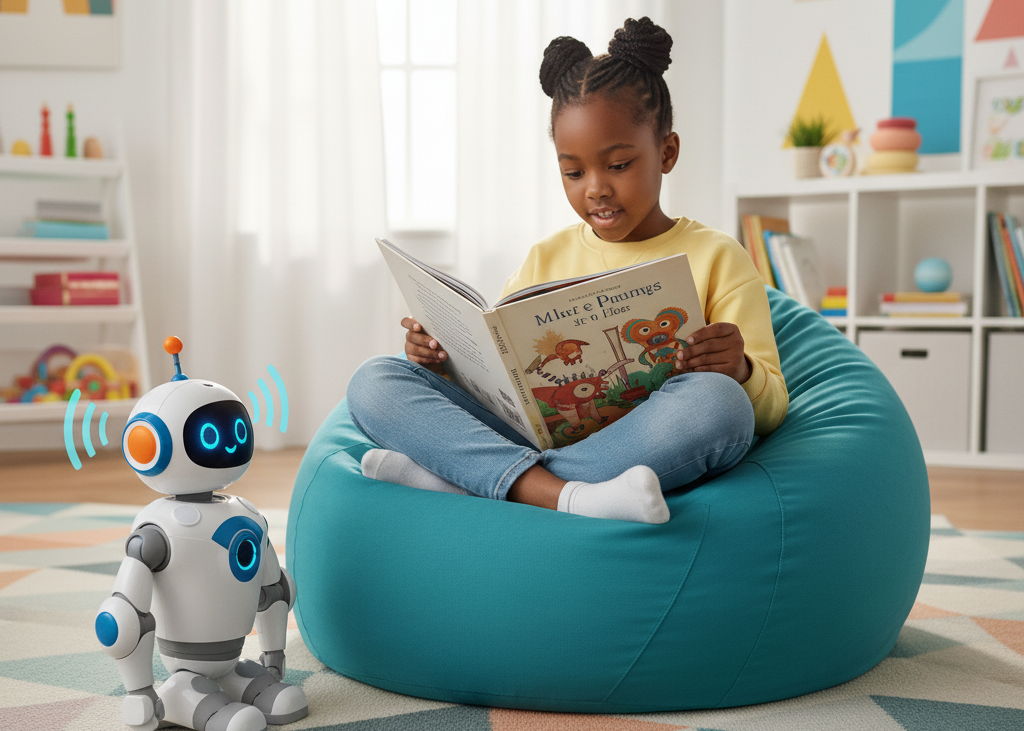
Robotic reading companions may soon help children overcome one of the most anxious stages in education.
University of Chicago PhD student Lauren Wright and her research team investigated how technology could ease reading anxiety. The study found that robotic companions may provide the supportive presence young readers need to gain confidence and improve their skills.
For many children, the transition from learning how to read to using reading to learn can be stressful. Reading aloud in class is meant to build fluency and confidence, yet for some, it triggers anxiety that can hold back literacy development well into adulthood.
The study included collaborators from University of Illinois Chicago, and University of Wisconsin–Madison and emerged from UChicago Asst Prof Sarah Sebo’s Human-Robot Interaction Lab. Researchers there are investigating how technology can augment the important work teachers are doing in the classroom by providing one-on-one, individualised educational assistance.
“Children seem to feel more comfortable making mistakes in front of a robot than a human adult,” says Sebo. “[They] may be able to learn with robots in a unique and potentially beneficial way – free of anxiety. Rather than being worried about making a mistake in front of a person, children could focus more of their mental resources on learning the subject material in front of them.”
Reading aloud, without judgment
The study involved 52 children ranging in age from eight to eleven years old. Each child read stories aloud in three different settings: alone; to a human adult; and to a robot called Misty. As children read, researchers monitored three classic indicators of anxiety, including vocal jitter, heart rate variability and facial temperature.
The results were striking. When reading to the robot Misty, children displayed fewer of the physical signs of anxiety. Compared with reading in front of an adult, the children’s voices were steadier and their heart rates more relaxed.
Wright says: “Physiological measures give us a more unbiased understanding of a person’s internal state of mind – for example, very few of us can intentionally control our own heart rates.”
Wright says that survey results can sometimes be less accurate for children.
“In educational research, we can use these techniques to study not just how students learn under different conditions, but also how the act of learning makes them feel.”
The children’s feedback reflected these physiological metrics. One child says: “the robot was less stressful … the robot is easier because you feel less judged because robots don’t have feelings.”
Another said: “Even when I made a mistake, I knew it couldn’t be mad at me.”
Most children in the study preferred reading with the robot, describing it as cute, fun and a less stressful audience. However, not all were convinced. Some students found the robot unsettling or disliked the mechanical voice, highlighting the importance of thoughtful design if robots are to become regular fixtures in classrooms.
For those who preferred Misty, a key reason was that the robot offered support and feedback without making them feel self-conscious or judged. Many children appreciated that mistakes could be pointed out in a straightforward way by the robot, helping them focus on learning rather than worrying about what others might think.
Learning outcomes and societal impact
While the researchers did not observe substantial differences in reading comprehension between robot and human sessions, the robot’s calming influence did not interfere with learning objectives.
According to the authors, the anxiety-mitigating effects of reading to the robot did not come at the expense of comprehension.
The study provides objective evidence supporting what many in human-robot interaction research have suspected: robots can offer social advantages in situations that provoke anxiety. Especially with classroom anxiety affecting many aspects of learning beyond literacy, including speaking up and tackling new subjects. Technologies such as robotic companions could help teachers create environments where students feel more comfortable taking academic risks.
The potential applications are not limited to education; they can also extend to settings where vulnerability creates barriers. Robots might help patients feel more at ease when discussing sensitive issues with doctors, or support beginners in activities ranging from painting to physical therapy.
Wright says: “Ideally, the difficulty of practicing any skill should come from the challenge of the skill itself, not our fear of practicing.
“Robots occupy a very useful niche – just social enough to give us feedback, but not so social that we’re concerned about being judged. For people who avoid learning new skills because they’re nervous about how they look or sound as a beginner, robots might be one way to practice in a safe space until they gain more confidence.”