



GadgetWings
Travel tech: Airlines lose their way in AI search
Big travel companies have built powerful booking sites, but smaller operators are proving easier for AI to find, writes ARTHUR GOLDSTUCK.

Giant airlines have invested heavily in online booking over the past few decades, yet a traveller asking an AI assistant where to go will probably receive more useful guidance from a small tour operator.
That uncomfortable conclusion lurks in a new study of 100 of the world’s largest travel brands. Obvlo, a company that produces destination content and AI-search tools for the travel industry, has audited 20 companies in each of five sectors: airlines, hotel groups, online travel agencies, tourism organisations and tour operators.
Only 23 cleared its threshold for being ready for AI search. Forty-six scored below 30 out of 100, placing them in its “at risk” category. Airlines came last, with an average score of 27. Tour operators led with 52.
The result seems upside down for an industry in which airlines command huge technology budgets and mountains of customer data. Smaller tour companies often work with a fraction of those resources. The difference is that their websites were built for a different job.
An airline destination page usually pushes the visitor towards a booking. It offers a class option, a fare, a timetable, and a button. A tour operator has to explain the place before it can sell the experience: what travellers will see, how long it takes, where the tour begins and what makes it worth the money.
The difference between the two also sums up the difference between traditional Search Engine Optimisation (SEO) and what is currently known as Generative Engine Optimisation (GEO) or, simply, AI search.
The information on the tour operator’s gives an AI assistant , in effect, a journey. The airline merely offers a starting and end point.
SEO is also a very blunt instrument for the user. Traditional search presented a page of links and left the traveller to open several of them. ChatGPT, Gemini and other AI services increasingly write the answer themselves, drawing on a small selection of sources.
Obvlo describes the change as a move from ten blue links to “one cited answer”. The airline may still carry the passenger, while a smaller company supplies the facts that help the AI choose the destination, route or experience.
Each page in the study received up to 25 points for website infrastructure, 25 for features that help AI systems read it, and 50 for the quality and depth of its information. The researchers looked for accessible pages, structured data, visible update dates, factual detail and clear descriptions of places and attractions.
Three airlines scored 64, 78 and 81, proving the sector can solve the problem. A fourth reached 59. Among the remaining 16, the median score was only 13.
Hotels averaged 31, tourism organisations 38 and online travel agencies 43. Seven of the 20 tour operators crossed the 60-point readiness mark, and a tour operator was the only brand to earn a perfect score for the AI-specific part of the audit.
Some failures were basic. Two-thirds of the brands lacked the FAQ (frequently asked questions) coding that helps machines identify questions and answers. More than a third had inadequate structured data, while 28% had sitemap problems. Content freshness was flagged for almost one in five.
The irony – as well as the frustration – is that the travel industry spent two decades learning how to satisfy Google, tuning pages around keywords, links, loading speed and the path to purchase. The Google algorithm became the king-maker of content, and the “customer journey” became a cliché. AI assistants use some of the same cues, but they also need enough solid information to compose an answer.
For South African tourism, omission could be expensive and almost invisible. An overseas visitor may ask an AI assistant for a two-week itinerary, or family-friendly places beyond Cape Town and the Kruger National Park. The assistant will build its reply from material it can access and understand. A local airline, hotel or tourism organisation with thin or outdated destination pages may never be found.
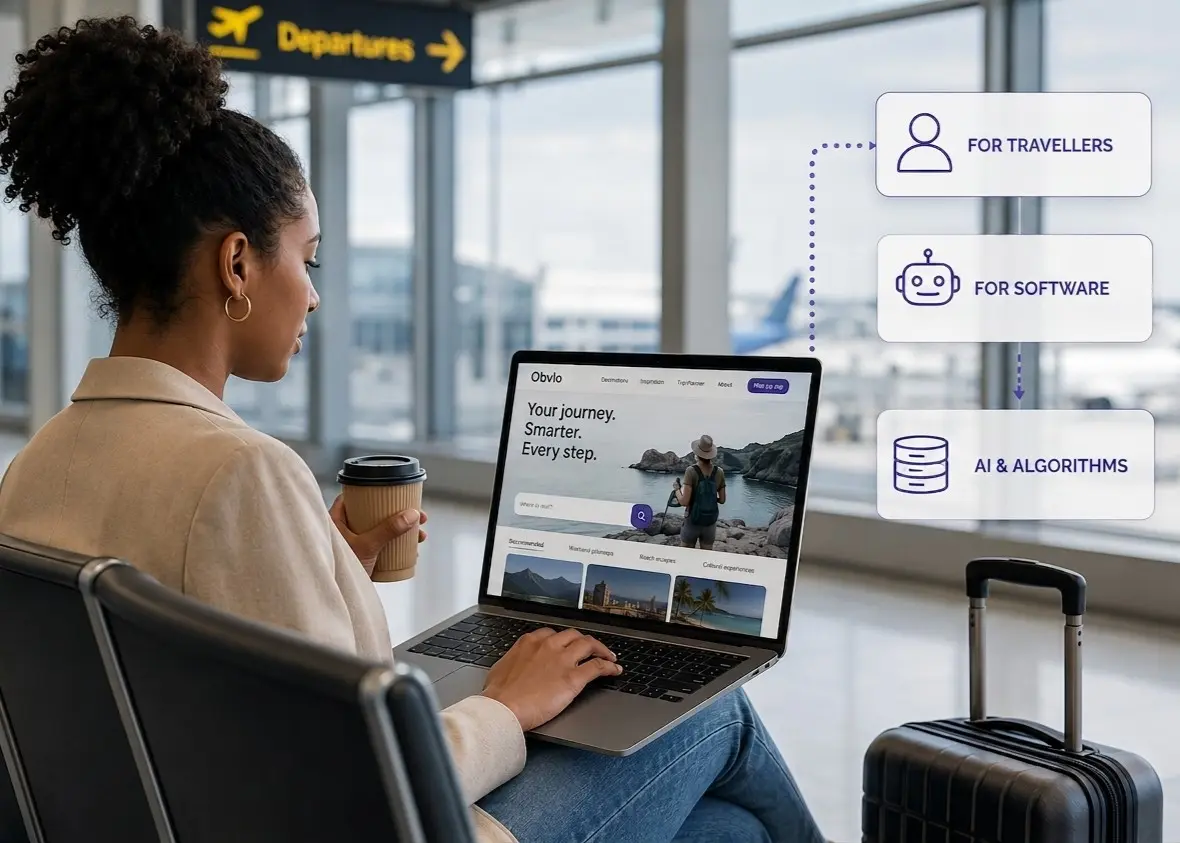
While no brand names or locations are mentioned, South African airlines and tourism bodies receive a useful warning from the study. Their websites must serve two audiences: the traveller reading the page and the software deciding which pages the traveller will ever see.
* Arthur Goldstuck is CEO of World Wide Worx, editor-in-chief of Gadget.co.za, and author of “The Hitchhiker’s Guide to AI – The African Edge”.