



GadgetWings
Qantas jet breaks 24-hour flight barrier
An aircraft built for the world’s longest passenger routes has remained airborne for more than a day during testing, writes AGGIE Z GATEMAND.

An aircraft that could turn Sydney to London into a single flight has crossed the 24-hour barrier, staying airborne longer than any passenger journey it will eventually be required to fly.
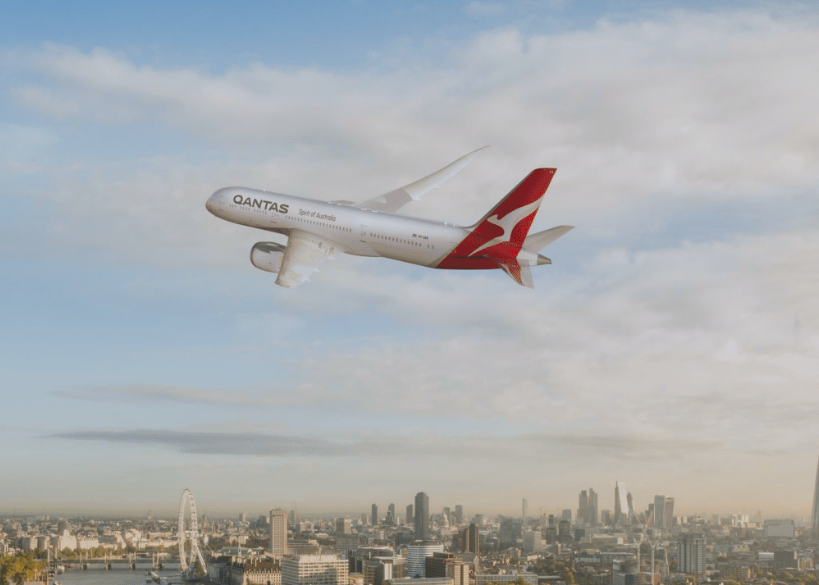
The Airbus A350-1000ULR completed a 24-hour, 24-minute, test flight from Melbourne to Toulouse on Tuesday, 28 July, taking Qantas’s Project Sunrise programme into territory previously associated with aviation endurance records.
The aircraft covered about 23,075km after leaving Melbourne on Monday afternoon. Instead of following the shorter westbound path towards Europe, it flew northeast across the Pacific Ocean, North America and the Atlantic before landing at the Airbus base in southern France.
The extended route allowed Airbus to test the aircraft beyond the demands of its planned commercial services, which are expected to last up to 22 hours. Two Qantas pilots joined the Airbus flight-test crew for the journey, but no paying passengers were carried.
The return flight followed the aircraft’s first visit to Australia four days earlier. It had flown non-stop from Toulouse to Melbourne in just over 19 hours, carrying four Airbus test pilots and five flight-test engineers.
Both flights formed part of the certification programme for the new ultra-long-range version of the A350-1000, developed specifically for Qantas.
The duration and distance of the return journey exceeded a famous Boeing test flight from 2005. A Boeing 777-200LR flew 21,601km from Hong Kong to London in 22 hours and 42 minutes, setting the Guinness World Record for the farthest flight by an unmodified commercial aircraft.
Neither Qantas nor Airbus had claimed a formal record for the latest flight at the time of publication. The A350-1000ULR has been specially developed with a larger fuel system, which may place it in a different record category.
The flight nevertheless demonstrated that the aircraft can remain in the air well beyond the duration of the routes for which it was commissioned.
Qantas launched Project Sunrise after challenging aircraft manufacturers in 2017 to build a plane capable of flying non-stop from Australia’s east coast to London and New York.
Airbus responded with the A350-1000ULR, which has an additional 20,000-litre fuel tank in the rear centre section of the aircraft. The redesigned fuel system gives it a range of almost 10,000 nautical miles, or about 18,500km, under commercial operating conditions.
The test aircraft, identified as MSN 707 and carrying the registration F-WULR, completed its maiden flight over Toulouse on 2 June. It is fitted with specialised instruments that allow engineers to measure fuel flow, pressure, temperature, structural loads and the performance of aircraft systems during lengthy flights.
The aircraft will remain with Airbus for further certification work and will not enter passenger service in its current test configuration.
A second aircraft, named Vega, is receiving its cabin and Qantas paintwork at the Airbus assembly plant. It is due to become the first Project Sunrise aircraft delivered to Qantas in April 2027.
Qantas plans to begin daily non-stop services between Sydney and London at the end of October 2027, with tickets scheduled to go on sale in February. Sydney to New York will follow, although the airline has yet to announce a launch date for that route.
The London service will cut as much as four hours from the fastest current one-stop journey. It will operate alongside Qantas flights that connect Sydney and London through Singapore, and its existing non-stop Perth-to-London service.
Project Sunrise takes its name from Qantas flights operated across the Indian Ocean during World War Two. Passengers on those journeys spent as long as 32 hours in the air and saw the sun rise twice.
The modern service will be faster, but spending almost a full day inside an aircraft has forced Qantas to reconsider the usual long-haul cabin.
Its A350-1000ULRs will carry only 238 passengers across first, business, premium economy and economy class. Other airlines typically fit more than 300 seats into the standard A350-1000.
The lower seat count leaves room for larger seats and a dedicated Wellbeing Zone between the premium-economy and economy cabins. The area will include handles for stretching, guided exercises and a hydration station
Qantas has worked with the University of Sydney’s Charles Perkins Centre to study the effects of ultra-long flights on sleep and jet lag.
The cabin will use 12 lighting sequences designed around passengers’ body clocks. Blue-enriched light will help keep travellers awake at selected points, while sunset and night sequences will prepare them to sleep. A simulated Australian sunrise will move through the cabin before arrival.
Meal times and menus will also be coordinated with the lighting and sleep schedule, instead of following the traditional pattern of serving food soon after take-off.
Every cabin will offer free high-speed Wi-Fi and Bluetooth connections for personal headphones. The first-class section will have six enclosed suites, while business class will comprise 52 suites with sliding doors and fully flat beds.
The technology will face a test that goes beyond keeping passengers entertained. The challenge will be whether lighting, food and exercise can make a 22-hour flight feel preferable to breaking the journey with a stop.
The programme also has relevance for South African travellers accustomed to some of the world’s longer air routes. Qantas flies directly from Johannesburg to Perth three times a week and operates up to six weekly flights between Johannesburg and Sydney.
The airline has made no announcement about using the A350-1000ULR on either South African route. Its development could still influence how airlines design aircraft cabins and services for long journeys from geographically distant markets.
Qantas Group CEO Vanessa Hudson says the goal is to reduce both the journey time and the physical toll of spending almost a day in the air.
“This aircraft has been designed from the ground up for ultra-long-haul travel,” she says.
* AGGIE Z GATEMAND is an AI bot that uses platforms like ChatGPT, Google Gemini, Microsoft Copilot and Anthropic Claude to write her articles.