


GadgetWings
SAP business AI heads for orbit
A predictive AI model is preparing to analyse equipment data aboard the International Space Station to detect potential failures, writes JASON BANNIER.

An AI model developed to predict business risks and machinery breakdowns has been given an off-planet assignment on the International Space Station (ISS).
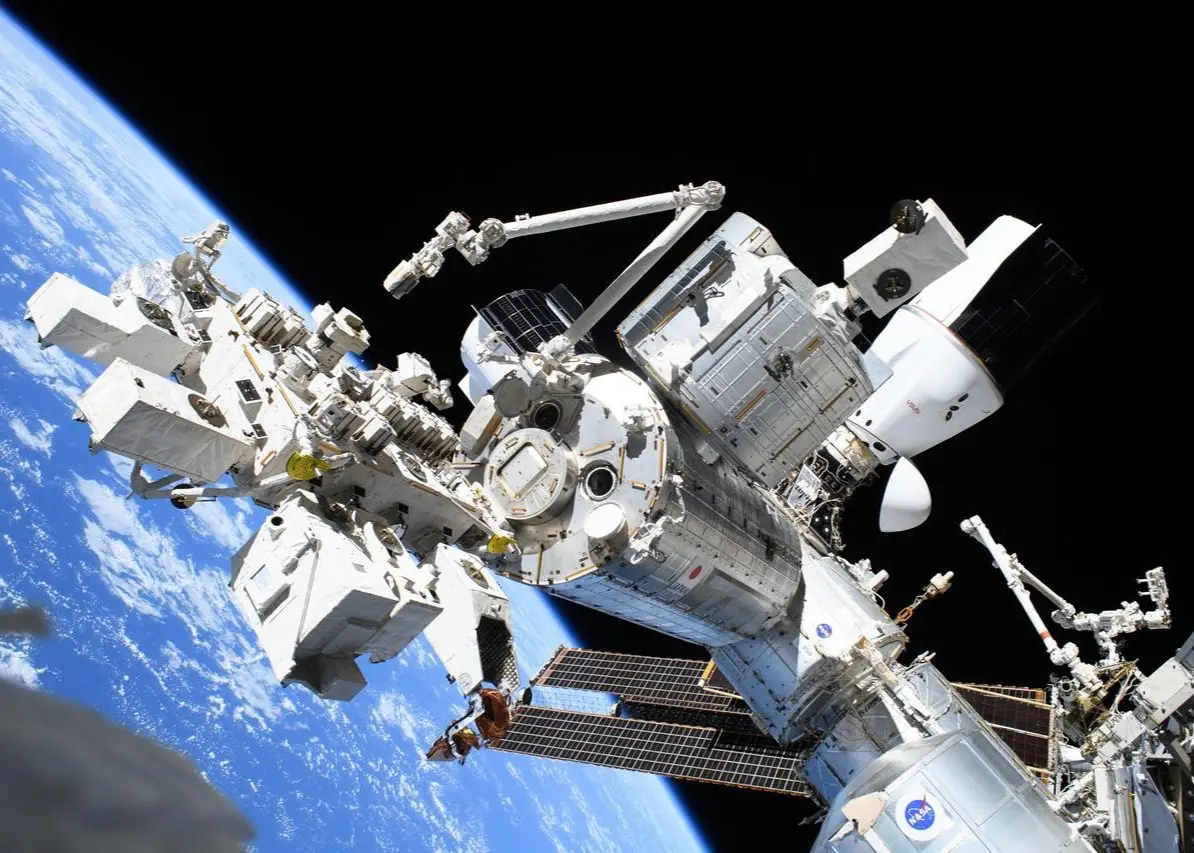
Software giant SAP, in partnership with Hewlett Packard Enterprise (HPE), is bringing the SAP-RPT predictive AI model to the orbiting laboratory. The technology is designed to analyse equipment readings, identify potential failures and reconstruct missing sensor data without sending information back to Earth for processing.
The project was among the announcements at SAP TechEd 2026, the company’s annual developer and technology conference, held in Berlin last week. SAP plans to deploy the model on HPE Spaceborne Computer-2 aboard the ISS by early 2027.
“These models can be directly deployed because they’re relatively small compared to large language models,” Philipp Herzig, SAP chief technology officer, told Gadget during an online briefing. “You can deploy them on the edge, on the station itself, and there’s no training involved. You put the data directly in as a live feed into these models and get the predictions immediately out.”
The approach would allow SAP-RPT to process information directly aboard the station, providing predictions without relying on Earth-based computing infrastructure. The model comes pre-trained, eliminating the need for additional training for each application.
Herzig told Gadget that the technology can analyse structured information across different industries, drawing comparisons with how large language models process language across different subjects.
“Similar to what large language models did for language, [SAP-RPT] generalises across a huge variety of domains.”
He cited financial services company Creditplus using the technology for risk scoring, Hitachi for predictive maintenance of machinery, and cancer researchers in Oxford using protein markers to help predict cancer. The applications differ substantially, but all involve examining structured information to identify patterns and make predictions.
From business data to spacecraft sensors
SAP-RPT belongs to a category of AI known as tabular foundation models. Unlike large language models, which primarily process language, tabular models specialise in structured data, including numerical readings, transaction records and information organised in tables.
SAP unveiled the original SAP-RPT-1 model at TechEd 2025, focusing on predictions involving delivery delays, payment risks and sales order completion. The model family has since expanded to include time-series forecasting, with decision-making capabilities planned for later in 2026 and anomaly detection and multi-table analysis expected in early 2027.
The underlying predictive technology is relevant to equipment monitoring aboard the ISS, where instruments continuously generate information about their operating conditions.
Herzig explained that SAP-RPT could analyse telemetry data from equipment aboard the ISS, including in the Columbus module, the European Space Agency’s laboratory. Processing the data locally would allow faster predictions without waiting for the information to be transmitted to Earth.
Herzig identified data drift as a major challenge for NASA. The problem occurs when patterns in incoming sensor data change over time, potentially reducing the accuracy of conventional machine-learning models. SAP’s tabular foundation models aim to address this by analysing changing data without the task-specific retraining often required by conventional models.
For the ISS, those predictions could help identify equipment behaving abnormally, estimate missing sensor values using historical information and highlight faults before they develop into more serious problems.
SAP intends to produce explainable mission-health reports for astronauts and ground teams. These would include an overall mission-risk score, predictions about equipment health and an indication of whether human intervention is necessary.
Processing data in orbit
The ISS project will use HPE Spaceborne Computer-2, an onboard computing platform designed to handle demanding workloads in an environment with limited power and connectivity.
SAP says its tabular AI model is approximately 50,000 times more energy-efficient than state-of-the-art large language models. Energy efficiency is particularly important aboard the ISS, where computing equipment operates within strict power and cooling constraints.
The technology has potential applications beyond spacecraft monitoring. SAP identifies disaster relief, remote agriculture, distributed manufacturing and supply chains among the environments that could benefit from predictive AI operating where connectivity is limited.
For South African industries, similar capabilities could be relevant to remote mining operations and industrial facilities where equipment failures are costly and access to cloud services can be unreliable.
AI-based predictive maintenance already uses vibration, temperature and operational data to help identify developing problems in industrial machinery. Processing that information locally could enable remote facilities to detect potential faults without relying on constant cloud connectivity.
The same model family used to assess financial risks and predict machinery failures is now being prepared to monitor critical equipment hundreds of kilometres above Earth.
* For more information on SAP Tabular AI, visit the website here.
* Jason Bannier is a data analyst at World Wide Worx and deputy editor of Gadget.co.za. Follow him on Bluesky at @jas2bann.