



GadgetWheels
SA electrified car
sales double
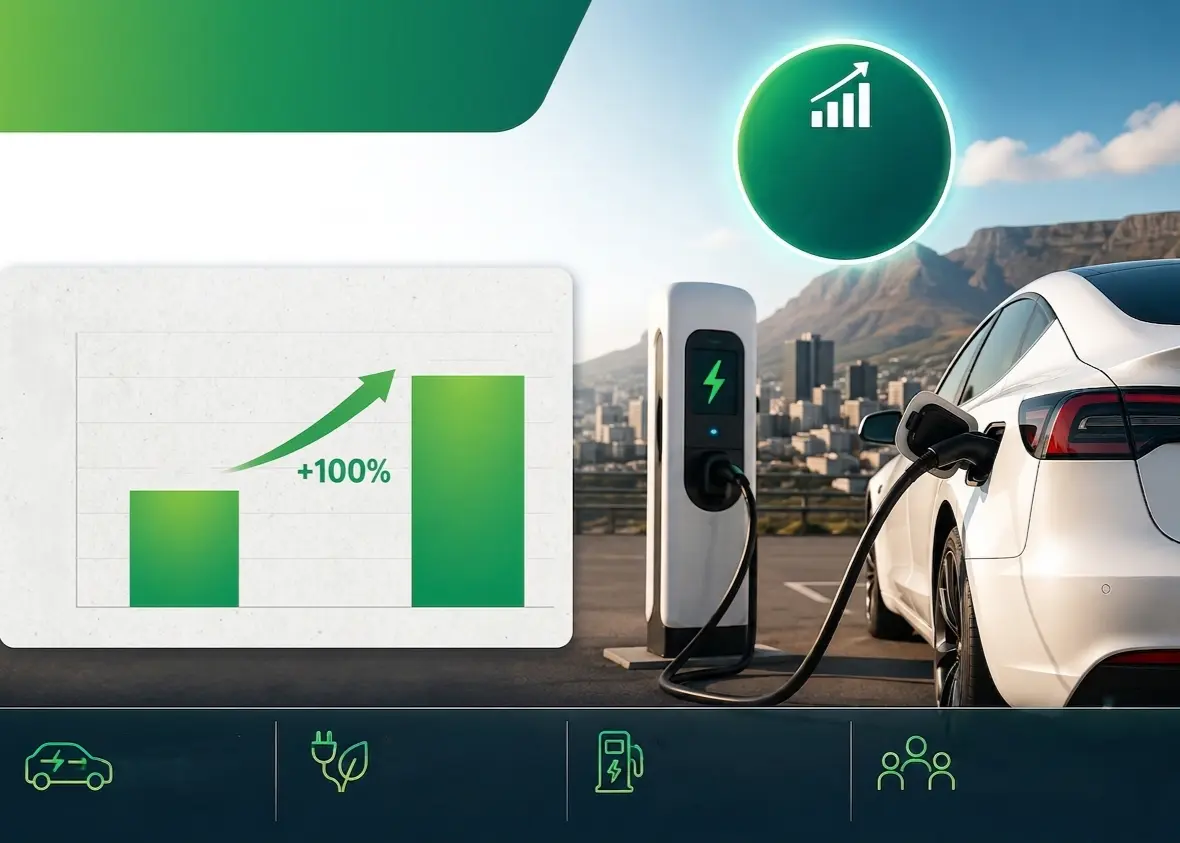
New Energy vehicles accounted for 6% of new light vehicle sales in June 2026, or about one in every 17 vehicles.

South Africa’s electrified vehicle market more than doubled year on year in June 2026, with 3,045 new energy vehicles sold. According to the latest data from Naamsa, sales increased by 104.2% from 1,491 units in June 2025.
NEVs accounted for 6% of the 51,508 new light vehicles sold domestically during the month. The market share means approximately one in every 17 new light vehicles sold in South Africa was electrified.
“The significance of these figures isn’t just the number of vehicles sold in a single month,” says Joubert Roux, co-founder and chair of Zero Carbon Charge (CHARGE). “It’s that they confirm a trend we’ve been watching for several years. Electric mobility is moving beyond early adopters and becoming an increasingly mainstream choice for South African consumers and businesses.”
Year-to-date NEV sales reached 13,193 units by the end of June. The total comprised 6,667 hybrid electric vehicles, 4,623 plug-in hybrid electric vehicles and 1,903 battery electric vehicles.
Traditional hybrid electric vehicles led June sales with 1,488 units, representing 48.9% of the NEV market. Plug-in hybrids contributed 990 units, or 32.5%, while battery electric vehicles recorded 419 units and a 13.8% share.
South Africa’s market continues to follow a technology-diverse path rather than moving directly towards battery electric vehicles. This pattern reflects affordability considerations, charging-infrastructure availability and consumer driving patterns.
Naamsa supports a technology-neutral policy framework that allows manufacturers and consumers to select from different low-emission and zero-emission technologies. The organisation says such an approach would support consumer choice, investment and industrial competitiveness.
Naamsa interim CEO Shinny Gobiyeza says the figures reflect a domestic automotive market adapting to changing economic conditions and consumer preferences.
Gobiyeza says: “The continued growth in domestic vehicle sales, coupled with record levels of New Energy Vehicle adoption, demonstrates the resilience of South Africa’s automotive industry. While export markets remain under pressure from global economic conditions, the domestic market continues to provide an important foundation for industry growth. Equally significant is the accelerating uptake of electrified vehicles across multiple technologies, confirming that South Africa is steadily progressing towards a more diversified and sustainable mobility future.”
Lower electric vehicle prices could support further growth. South Africa’s cheapest new electric vehicle cost close to R800,000 in 2023, while several current models now cost less than R520,000.
The Geely E2 Aspire enters the market at R339,900, followed by the BYD Dolphin Surf Comfort at R341,900. The Chery Q is expected to launch in September from R350,000.
According to Roux, the lower entry prices are changing the financial assessment for private motorists and fleet operators. Buyers previously had to consider whether reduced running costs would offset a higher purchase price over several years.
Roux says: “For years the conversation was about payback periods and total cost of ownership over five or ten years. Increasingly, in some categories, electric is simply the cheaper option on day one. That changes the conversation for both fleet operators and individual buyers entirely.”
CHARGE highlighted prices for electric industrial equipment. The Everun EREL05 Electric Loader, with a rated load of 500kg, starts from R177,183.
The MCM 912 Front End Loader, with a higher rated load of 800kg, starts from R257,125. The different specifications mean the two machines do not provide a direct like-for-like comparison.
Operating costs remain an important part of vehicle purchasing decisions. Fuel price changes implemented on 5 August reduced petrol prices by 52 cents a litre but raised both diesel grades substantially.
Diesel containing 0.005% sulphur increased by 123.44 cents a litre, while 0.05% sulphur diesel rose by 138.44 cents. The Department of Mineral and Petroleum Resources linked the increases to tighter supplies, Russian export restrictions and reduced Middle Eastern refinery capacity.
The diesel increases could raise operating costs for commercial fleets, while the petrol reduction provides some relief for motorists. Financing costs remain elevated after the South African Reserve Bank kept the repo rate unchanged at 7% in July.
Headline inflation reached 5% in June, above the Reserve Bank’s preferred 3% anchor. The prime lending rate remained at 10.5%, continuing to affect affordability in credit-dependent vehicle segments.
Naamsa reported stronger aggregate domestic vehicle sales of 57,708 units in July 2026, up 11.9% from 51,558 units in July 2025.
Passenger vehicle sales increased by 12.5% to 40,912 units, the strongest monthly performance since September 2014. Light commercial vehicle sales rose by 10.6% to 13,710 units.
Medium commercial vehicle sales climbed by 19.4% to 843 units, while heavy truck and bus sales increased by 7% to 2,243 units. Vehicle exports declined by 11.6% to 32,801 units.
Continued growth in electric vehicle sales will require greater charging coverage, particularly for long-distance travel. CHARGE is developing an off-grid, solar-powered national charging network, including sites along the N3 between Johannesburg and Durban.
“These figures reinforce why continued investment in charging infrastructure matters,” says Roux. “As adoption grows, we need to ensure South Africans have access to a reliable, national charging network that supports the market as it matures.”