


Energy
SA data centres defy US power backlash
American voters rejected data centres due to their demands on the grid, but South Africa’s operators are helping expand the energy grid, writes ARTHUR GOLDSTUCK.

Data centres became a major election issue in the United States this month, with voters delivering an emphatic rejection of developments that threaten to drive up electricity costs and strain local resources. Of 47 local ballot measures on 3 November, 46 produced outcomes favouring restrictions or opposition to data centre expansion.
In South Africa, the tables have been turned. Major data centre operators have built sustainability into their expansion strategies. In many cases, they are helping to finance additional renewable generation rather than simply drawing more electricity from an already stretched national grid. Amazon Web Services (AWS) pioneered the approach in 2021, and Teraco has now taken it to another level with a multibillion-rand investment in power generation and grid infrastructure.
Teraco announced on 17 November that its first contracted wind power producer began delivering electricity to its Cape Town data centres in September, through an arrangement that allows renewable electricity to be transmitted across Eskom and municipal networks.
The announcement follows a R3.5-billion capital commitment to its own solar generation programme, with further investment in grid upgrades that could also benefit other electricity producers.
This is a remarkable development for a country that has spent much of the past decade struggling to generate enough electricity to sustain economic growth. The expansion of cloud computing and artificial intelligence (AI) adds new demand, but it is also creating an incentive for private industry to invest in the infrastructure South Africa needs.
The American backlash demonstrates the consequences of getting the balance wrong. Concerns over electricity prices and water consumption have turned data centres into political targets, despite their essential role in supporting digital services. In South Africa, operators have had to confront the electricity and sustainability question from the outset.
AWS showed the way
In November 2021, AWS became the key customer of South Africa’s first operational large-scale solar electricity wheeling project, developed by SOLA Group at Adams in the Northern Cape.
The 10MW facility generates approximately 28-million kilowatt-hours of electricity annually, which is supplied to AWS through Eskom’s network. The electricity is generated hundreds of kilometres from the facilities that use it, establishing an early commercial model for renewable energy wheeling.
The principle is straightforward: a company finances or contracts renewable generation in a suitable location, and the electricity is delivered through the existing grid to its operations elsewhere.
The approach helped create a new market for private electricity generation, with AWS providing the demand needed to make the project commercially viable.

Amazon reinforced that strategy in 2025 as the original anchor buyer for SOLA Group’s 195MW Springbok Solar Power Project in the Free State. The project became Africa’s first operational multi-buyer solar wheeling facility, allowing several major businesses to purchase electricity from the same power plant. Participants include Sibanye-Stillwater, Sasol and Vodacom, demonstrating how the initial commitment from a technology company can help create electricity resources that serve a much wider market.
Its experience also illustrates the growing scrutiny of the industry. Proposed developments in Cape Town have attracted objections over electricity and water consumption, demonstrating that South African communities are asking many of the same questions as American voters. The distinction is that operators such as AWS and Teraco have already demonstrated how data centre investment can help finance new renewable generation and electricity infrastructure.
Equinix has also made sustainability central to its South African expansion. The global data centre operator opened its first local facility in Johannesburg in 2024 and reports 100% renewable-energy coverage for its operations there. On a recent site tour, it showed Gadget how its cooling technology is designed to minimise water consumption. It is now pursuing a R7.5-billion expansion programme that could add around 160MW of data centre capacity.
Other data centre operators have followed similar strategies. Africa Data Centres, part of Cassava Technologies, has a 20-year renewable electricity agreement linked to solar generation in the Free State. Vantage Data Centers has committed to purchasing electricity from an 87MW solar development through a 20-year agreement with SolarAfrica.
These investments reflect the enormous importance of electricity security to the data centre industry. The operators need reliable power for their own businesses, but their investments can also increase the country’s overall generating capacity.
Teraco builds beyond its own needs
Teraco’s programme takes the model further through direct ownership of a large solar power plant and investment in the electricity transmission network.
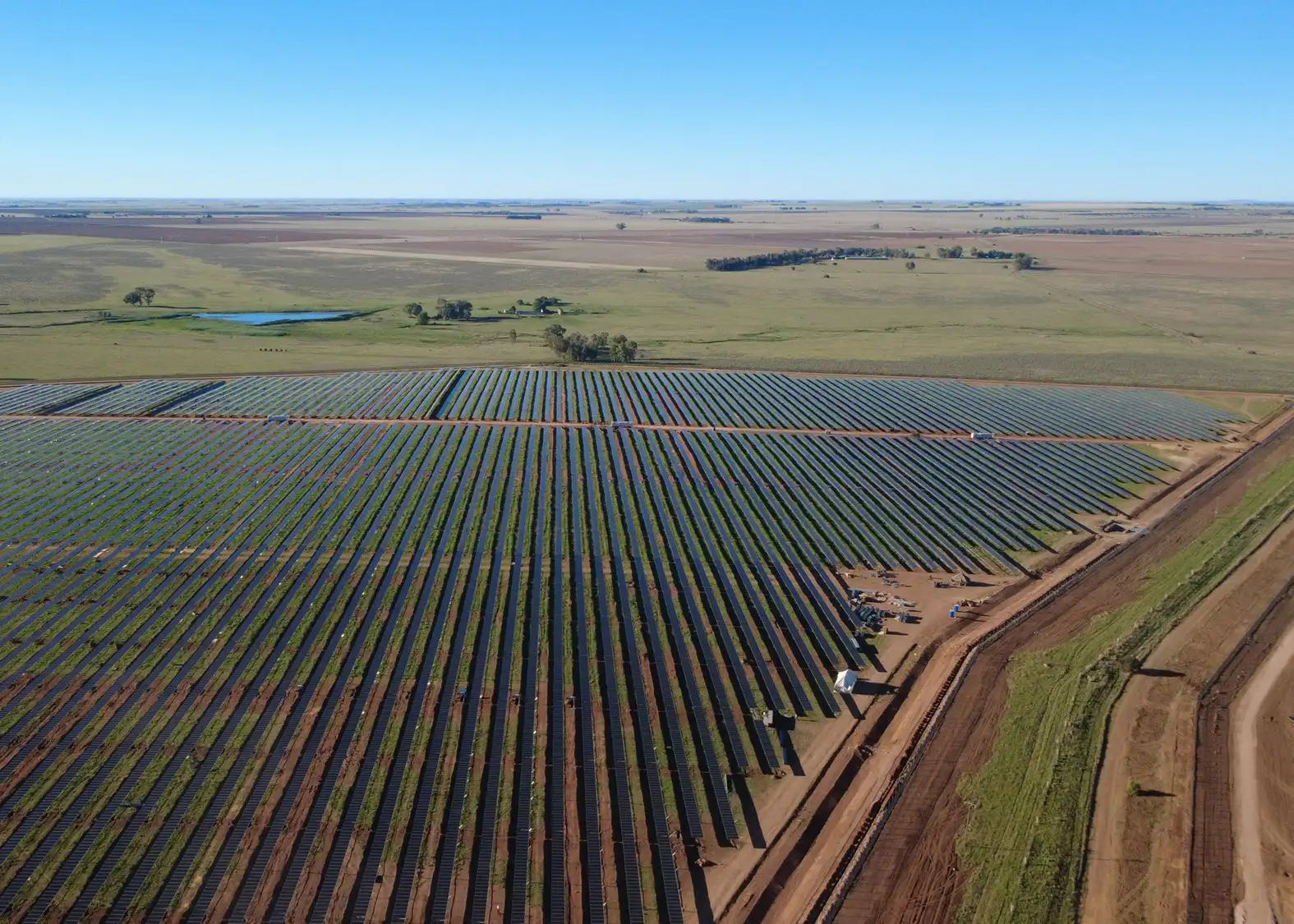
Its 120MW Sediba solar facility in the Free State is nearing completion, with grid energisation scheduled for December 2026 and commissioning expected in early 2027. The R2.25-billion development covers 464 hectares and includes 235,000 bifacial solar panels, which capture sunlight from both sides.
Once operational, Sediba is expected to produce 354 gigawatt-hours annually, offsetting an estimated 348,000 tonnes of carbon dioxide emissions. Teraco says no other data centre operator has previously developed its own solar generation at this scale to match its electricity requirements.
“Demand for data centre capacity is rising in South Africa and around the world, driven by cloud and AI adoption, and with it, scrutiny of the sector’s energy use,” says Bryce Allan, Teraco head of sustainability.

“Teraco is working with Eskom, City of Ekurhuleni, and City of Cape Town to take responsibility for its own supply by building and contracting new renewable generation, funding upgrades to the national grid, and opening additional grid capacity to which other renewable projects can connect.”
One of the most significant components of the programme is an upgrade to Eskom’s Scafell substation, financed and constructed by Teraco.
The 500MVA switching station upgrade was needed to connect Sediba to the national grid, but also creates 380MVA of additional connection capacity for other renewable energy projects.
Grid connection constraints have become a major obstacle to renewable electricity development in South Africa, with available generation resources often located far from the infrastructure needed to transmit the electricity. Teraco’s investment therefore provides an immediate benefit to its own operations and additional capacity for other producers to bring electricity onto the grid.
“From the outset, we wanted to be one of the reasons new renewable energy gets built in South Africa, adding clean power to the grid,” says Allan. “Building Sediba ourselves helped unlock the wheeling frameworks and tariffs that made our wind PPAs possible. Through the Scafell upgrade, the investment benefit doesn’t stop at our fence line as 380MVA of new capacity is available to connect other renewable projects to the grid.”
Teraco CEO Jan Hnizdo says the company recognised that the expansion of digital infrastructure would require a direct response to South Africa’s electricity constraints.

“Data centres are the foundations of the digital economy,” says Hnizdo. “They underpin banking, healthcare, e-commerce, government services, and the cloud and AI applications that businesses depend on every day. That infrastructure needs reliable, increasingly clean power to keep growing.
“We take the questions being asked about data centre power demand seriously. Our answer is to grow responsibly: adding new renewable generation and investing in the grid, so the country’s digital infrastructure can keep expanding while the emissions associated with it fall.”
* Arthur Goldstuck is CEO of World Wide Worx, editor-in-chief of Gadget.co.za, and author of The Hitchhiker’s Guide to AI – The African Edge.