


Hardware
Logitech Rise: Time to put on headsets
Gaming expertise, replaceable components and rapid regional growth support Logitech for Business’s push into professional audio, writes JASON BANNIER.

A headset needs to deliver clear audio, whether a gamer is trying to hear teammates amid explosions or an office worker is struggling to follow their boss over background chatter. Logitech is now using its wider audio expertise to up its professional-headset game across Africa.
“As a business-to-business (B2B) sector, we have been focusing a lot on room development solutions,” Jawad Jabalane, head of Africa at Logitech for Business, told Gadget earlier this month at the Logitech Rise conference in Cairo, Egypt. “But we saw that the headsets business is a very important piece of this unified communications and video conferencing (UC/VC) business.”
The push follows growth in Logitech’s keyboards, mice and webcams, where the company has an established presence. Jabalane reported growth of more than 100% in the regional headset business from a low base.
To strengthen the range, Logitech is drawing on expertise from two of its established brands: Logitech G, which specialises in gaming equipment; and Ultimate Ears, which focuses on music and consumer audio.
“When we develop our solutions, we are always looking at our own base,” Jabalane told Gadget. “We took all the knowledge from these two spaces to be used into the B2B headset development to make us better.”
Logitech is drawing on this experience to improve the sound quality, microphone performance and comfort of professional headsets. The business range adds compatibility with workplace communication platforms and management tools for IT teams. The aim is to give employees a headset that moves easily between video meetings, customer calls and personal listening without requiring a change of equipment.
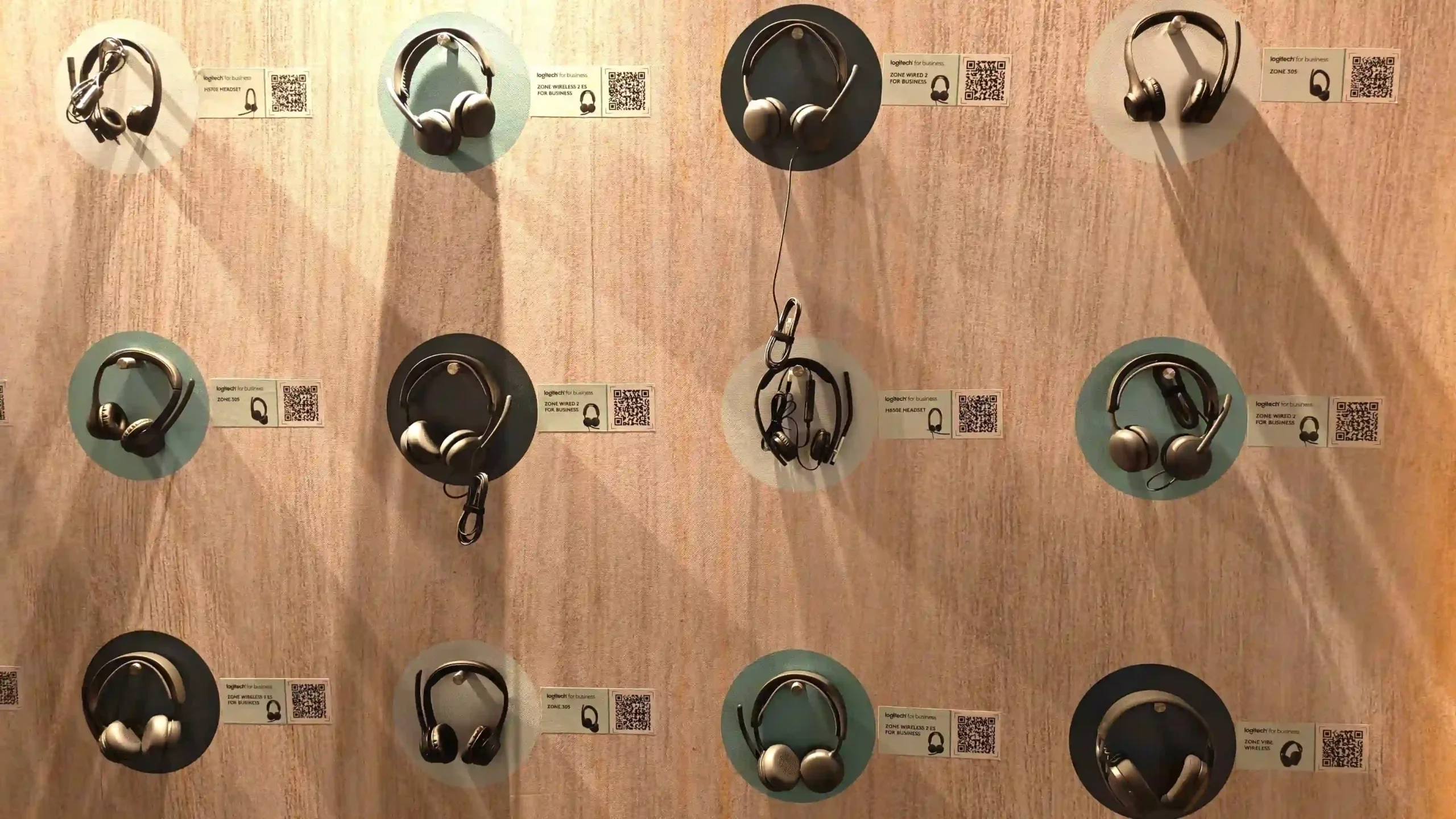
The Zone Vibe Pro range, launched last month (September 2026), demonstrates the approach. The wireless over-ear range includes a standard model and two business versions, with options for a USB-C receiver or direct Bluetooth connections.

Unlike conventional office headsets with protruding microphone booms, Zone Vibe Pro resembles a pair of wireless headphones. AI-powered voice isolation reduces background noise picked up during calls, while adaptive active noise cancellation reduces surrounding sound for the person wearing the headset.
For someone taking a video call in a busy office, the combination aims to make speech clearer to colleagues while reducing distractions from nearby conversations.
Multipoint Bluetooth allows the headset to remain connected to a computer and smartphone, making switching between calls and devices easier. Logitech claims up to 18 hours of call time or 30 hours of listening with noise cancellation enabled.
For businesses supplying headsets to employees across different offices or remote workplaces, managing equipment is another consideration. The business versions support platforms including Microsoft Teams, Zoom and Google Meet, with certifications depending on the connection option.
Logitech Sync allows IT teams to monitor supported headsets and distribute firmware updates remotely, while Logi Tune gives employees control over personal audio settings. Centralised management could reduce the time spent maintaining individual devices across an organisation. However, Logitech is also looking to compete on the lifespan of professional headsets, rather than audio performance alone.
“We have been launching a lot of new headsets with all the technology to bring either a better solution or to be equal to what is in the market in some cases,” said Jabalane. “But on top of that, we have been adding a sustainable approach. We developed a lot of headsets with replaceable parts, [including] the band and battery.”
Zone Vibe Pro follows this approach, with replaceable headstraps, ear cushions and batteries designed to extend the working life of the headset. Replacement-part availability differs between markets.
For businesses purchasing large quantities of equipment, replacing worn cushions or ageing batteries could be more economical than purchasing new headsets. The approach offers a way to reduce electronic waste while supporting corporate sustainability requirements.
Logitech has incorporated recycled materials into the design. According to the company, Zone Vibe Pro’s plastic parts contain at least 29% certified post-consumer recycled plastic, with recycled materials also used in the batteries and magnets.
The environmental considerations are already influencing business purchasing decisions.
“South Africa is very sensitive to sustainability. We’ve been winning a lot of big names in SA because of sustainability being important to them on top of the quality of the solution.
“For headsets, we are becoming stronger and stronger. We are investing a lot in them. I believe that, based on growth of 100% from a low base, we are seeing strong interest from partners and distributors. The next step is reaching our end users.”
* Jason Bannier is a data analyst at World Wide Worx and deputy editor of Gadget.co.za. Follow him on Bluesky at @jas2bann.