

Product of the Day
Frontline turns staff expertise into training
A new platform uses company documents and presentations to create courses and other training resources, writes GUIDO RUSSO.

A new AI-powered product, Frontline, aims to help employees and subject-matter experts outside traditional training roles create workplace learning material themselves.
Frontline was launched by global learning technology company Articulate. The product is supported across African markets by New Leaf Technologies, one of three Articulate distributors on the continent and the only certified Articulate training partner in Africa.
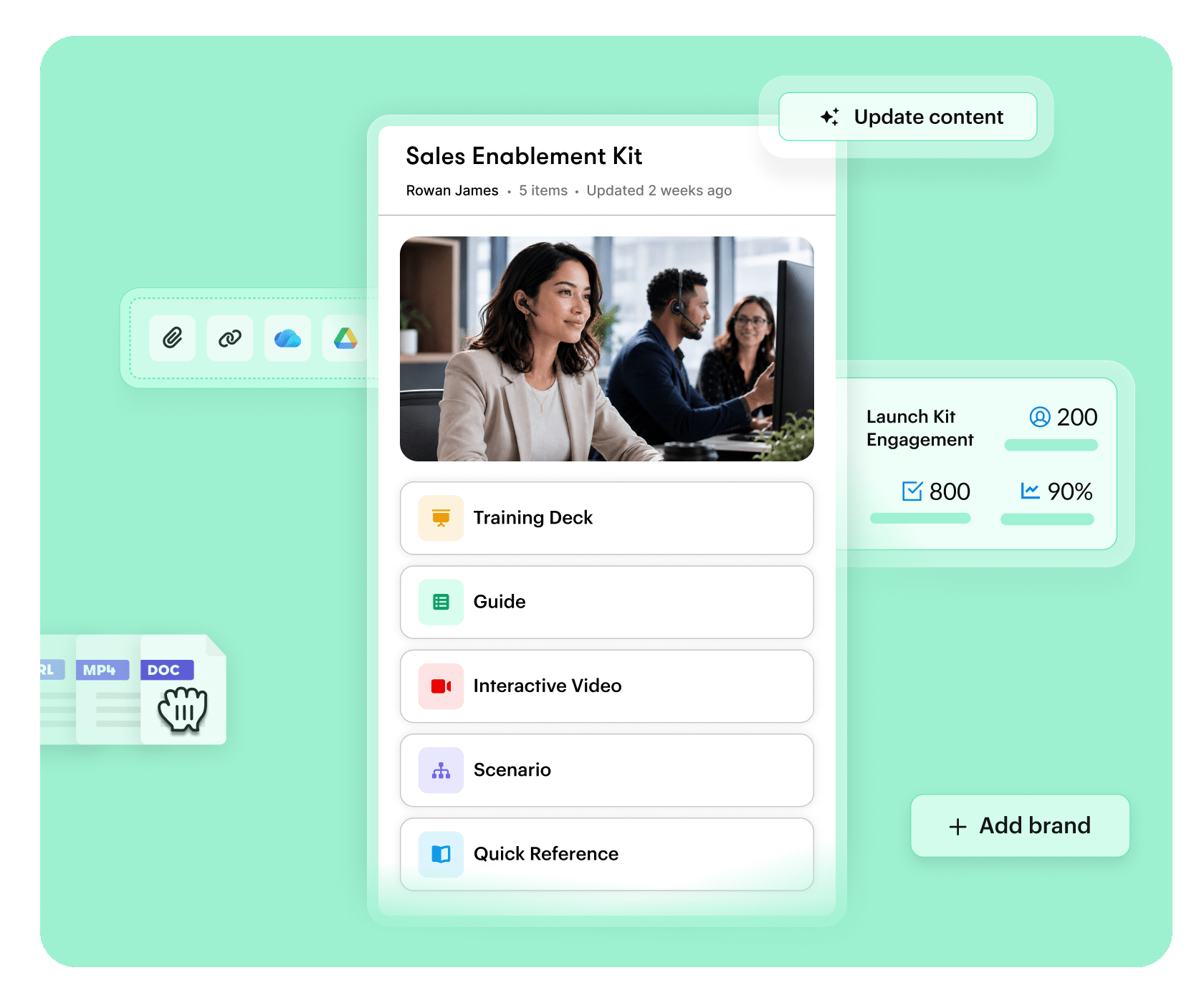
Employees can upload existing material to Frontline, including documents, presentations, conversations and videos, and specify what workers need to learn. The platform uses AI to identify learning objectives and recommend suitable training formats.
Frontline can use the same source material to generate training resources such as short courses, presentation decks, scenarios and quizzes. Users can adjust the content for specific requirements, including the time available for training, before distribution.
Organisations can track participation, completion, quiz results, knowledge checks and individual learner performance after training has been distributed. This adds measurement to material that may previously have been shared through presentations, documents or email attachments.
Frontline can also be used to convert employee expertise into reusable training material. This allows organisations to document knowledge held by experienced staff before that knowledge leaves the organisation.
“Companies have traditionally relied on their learning and development (L&D) and instructional design teams to turn subject expertise into structured learning,” says Mduduzi Sibisi, New Leaf Technologies product head. “But the people who possess that knowledge are distributed throughout the organisation. They could be engineers, sales managers, compliance specialists, operations teams or someone with 30 years of institutional knowledge who is about to retire.”
According to New Leaf, the result can be a bottleneck: subject-matter experts supply the knowledge, while specialist L&D teams must translate it into training, a process that can take days or weeks.
Crucially, says Sibisi, decentralising content creation does not mean eliminating L&D departments.
“This isn’t about replacing L&D professionals with AI,” he says. “It is about expanding their reach. If people closest to the knowledge can deal with more immediate and straightforward training requirements themselves, specialist L&D teams can concentrate their expertise on the more complex, strategic learning challenges where they add the greatest value.”
The global corporate e-learning market was valued at about R1.66-trillion in 2024 and is forecast to reach R5.34-trillion by 2030, representing annual compound growth of 21.7%, according to Grand View Research.
South Africa’s corporate education and skills development market was worth an estimated R32.8-billion in 2025 and is forecast to reach R53.8-billion by 2031. Self-paced digital learning is expected to record the strongest growth in learner volumes.
Official figures underline the scale of investment already flowing into skills development. South Africa collected R24.1-billion through the Skills Development Levy in 2024/25, up 7.8% in a single year and 138.8% since 2011/12. Some R19.3-billion of the latest annual total was allocated to Sector Education and Training Authorities.
“For African businesses, where skills development is already a major investment, the opportunity is significant. The next evolution of workplace learning isn’t simply putting more courses online. It’s making it possible for knowledge to become learning wherever that knowledge sits in the organisation, and doing it at the speed at which businesses now need to operate.”
* Guido Russo is writer and contributor for Gadget.