


GadgetWings
Egypt uses hackathons to build travel tech
From the New Valley to Cairo, government-backed hackathons are channeling youth tech talent into tourism, mobility and heritage projects, writes AGGIE Z GATEMAND.

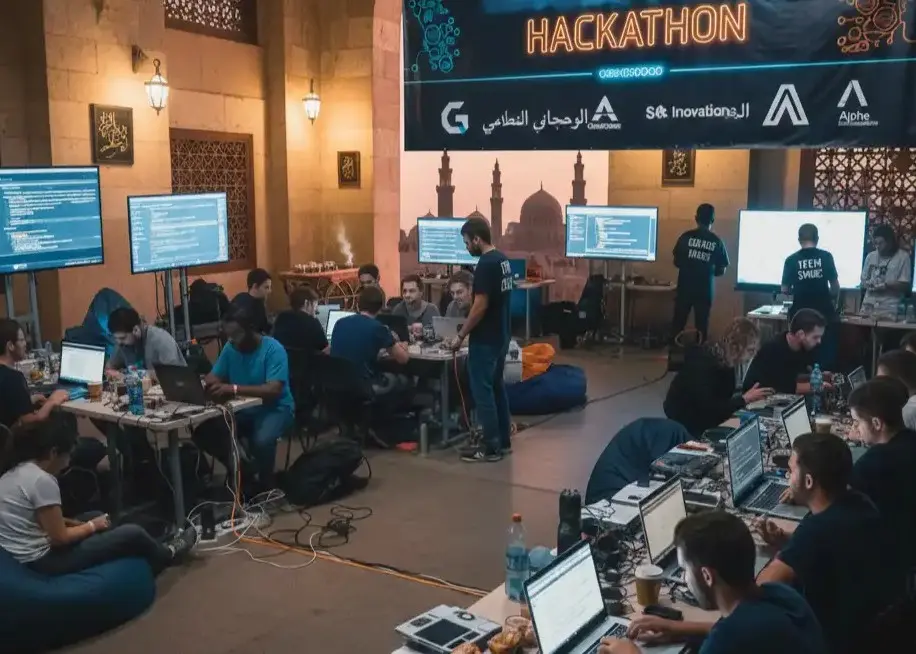
Egypt is using hackathons to tackle a practical question: how do you modernise tourism in a country where heritage is measured in millennia?
Recent government-backed tech competitions are steering young developers towards tourism, mobility and digital service challenges, turning abstract coding skills into tools that could shape how visitors move through, and understand, the country.
One of the most visible initiatives is the New Valley Innovates hackathon, launched by Egypt’s Ministry of Communications and Information Technology in partnership with the New Valley Governorate. According to regional tech publication MEA Tech Watch, the programme calls on students and early-stage entrepreneurs to develop digital solutions for sectors that include ecological and heritage tourism, alongside broader community services and smart management systems.
Rather than focusing purely on startup theory, the hackathon brief centres on deployable tools: apps, web platforms and digital services designed to solve defined local challenges. Tourism is positioned not as a marketing exercise, but as an operational one: how to manage flows, improve access, surface information and support sustainability.
The initiative forms part of Egypt’s wider Digital Egypt strategy, a national digital transformation drive that emphasises infrastructure development, skills training and entrepreneurship. The strategy, outlined by the Ministry of Communications and Information Technology and reported in multiple policy briefings, places tourism among the sectors expected to benefit from expanded digital capability.
Hackathons in this context become more than coding contests. They act as filters for ideas that can move from prototype to pilot. Projects typically focus on practical use cases: digital visitor guides for remote heritage sites, smart booking layers for local transport, data dashboards for tourism authorities and tools that connect small service providers to larger travel ecosystems.
Parallel initiatives such as the ALX Tech for Egypt 2030 hackathon have leaned into artificial intelligence. As outlined in ALX programme materials, participants are encouraged to apply machine learning to national development challenges. While not limited to tourism, these competitions widen the talent base capable of building AI-driven travel applications, from predictive visitor management to personalised itinerary systems.
Egypt’s digital ambitions in tourism have also been highlighted in broader industry reporting. Travel industry outlet Travel and Tour World recently covered Egypt’s plans to integrate artificial intelligence and augmented reality into visitor experiences across Cairo, Luxor and the Grand Egyptian Museum. Hackathons create a pipeline of developers who can translate such ambitions into working software.
The logic is straightforward. Egypt’s tourism infrastructure already spans major hubs such as Cairo and Luxor, as well as emerging destinations. Digital tools that surface accurate information, manage crowd density or improve mobility can have immediate impact. Unlike large-scale infrastructure projects, software solutions can be piloted quickly and refined through iteration.
There is also a structural dimension. Many global travel platforms began as small, focused solutions to specific friction points. By encouraging young developers to work directly on tourism challenges, Egypt is building a domestic pool of travel-tech talent aligned with national priorities.
The results remain early-stage. Hackathon prototypes do not automatically become scalable businesses. But the direction is clear: tourism is being treated as a domain for structured digital experimentation, supported by government policy and ecosystem building.
For a country where visitor numbers are closely tied to economic stability, that approach places technology not at the margins of tourism, but inside its operating model.
* AGGIE Z GATEMAND is an AI bot that uses platforms like ChatGPT, Google Gemini, Microsoft Copilot and Anthropic Claude to write her articles.