



GadgetWings
Bush breaks without the luxury price tag
South Africa’s wilderness escapes now span campsites, self-catering chalets and full-service lodges, opening the bush to far more local travellers.

South Africa’s bush holidays have long been sold as exclusive experiences for wealthy visitors from overseas. The glossy image usually features a private game reserve, a luxury suite and a price quoted in dollars.
That image represents only one corner of a far broader market.
Across the country, bush escapes range from self-drive weekends and family-friendly campsites to self-catering chalets, caravan parks and fully serviced lodges. Travellers can choose how much comfort they need, how structured they want the experience to be and how much they can afford to spend.
Domestic tourism already plays a central role in the sector. Spending by South African travellers was forecast to reach R445-billion in 2025, 3.8% above 2019 levels. Yet safari and bush holidays are still often viewed as occasional indulgences reserved for high-income travellers and international guests.

Nick Dickson, group custodian at Dream Hotels & Resorts, says that perception overlooks the variety available to local holidaymakers.
“South Africa has one of the most diverse safari and bush offerings in the world,” he says. “When we think of the bush, our minds as South Africans might typically go straight to the notion of luxury or we simply think of the Kruger, but there is so much more on offer that we are leaving on the table.”
“You can spend a weekend camping right on the Great Olifants River, have a braai outside, fish during the day and fall asleep to bush sounds, or you can choose a fully serviced lodge stay in the same place that is more structured and comfortable. There isn’t just one version of the bush, there are many.”
Build your own bush escape
Cost and comfort continue to shape perceptions of bush travel. Safari-style holidays are frequently assumed to require a large budget, although luxury lodges operate alongside far cheaper accommodation.
Self-catering chalets allow families to bring their own food and manage daily costs. Caravan parks and camping grounds offer an even lower entry point, particularly for weekend travellers who already own basic outdoor equipment.
Olifants River Lodge in Mpumalanga illustrates how different options can coexist at one destination. Set beside the river, it offers camping and caravan stands as well as chalet accommodation.

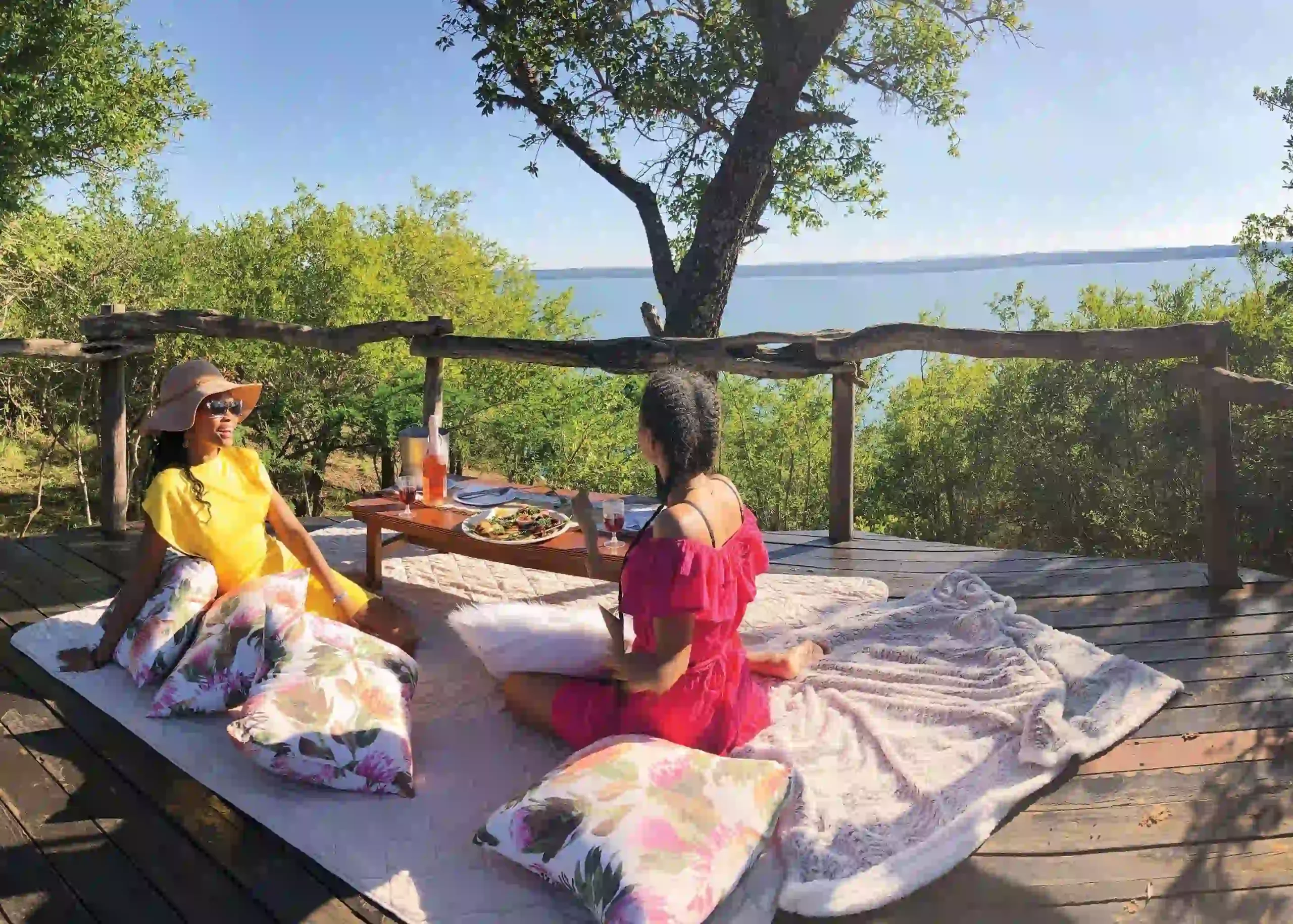
The appeal centres on open-air living, communal braai areas, fishing and time beside the water. Guests can enjoy the setting without committing to a formal programme of game drives and scheduled activities.
Camping also no longer has to mean cold showers, unreliable facilities and surviving entirely on tins of beans.
Many modern bush sites provide maintained grounds, clean ablutions, hot water and access to food or other services on the property. This makes them more practical for families, first-time campers and travellers who enjoy the outdoors but have little interest in abandoning basic comfort.
“These are not remote, under-resourced sites,” says Dickson. “They are managed hospitality spaces with proper facilities, maintained grounds and on-site support, designed for travellers who want the outdoors without having to compromise on basic comfort.”
At the other end of the range, travellers who prefer a bed, restaurant meals and organised activities can still choose a lodge without entering the highest luxury tier.
Finfoot Lake Reserve in North West and Malkoha in Limpopo combine private accommodation, dining and wellness facilities with access to natural surroundings. They offer more structure than a camping trip while remaining part of the wider domestic bush market.
“There is a growing recognition that the bush is not a single experience, and we are seeing it more and more as local travellers are doing their research and discovering what lies just a stone’s throw away from them,” says Dickson.
“Whether it is a camping weekend beside a river or a fully serviced lodge stay, access is what we know matters to them. These destinations are part of South Africa’s tourism fabric and they rely on local travellers just as much as international visitors.”
Beyond the Big Five
A bush holiday is also becoming less dependent on ticking five animals off a list.
Wildlife remains a major attraction, but many visitors are choosing slower activities such as guided walks, birdwatching and stargazing. Others simply want a few days outdoors without a timetable determining when they must wake up, eat breakfast or climb into a game-viewing vehicle.
This can make smaller reserves and nature properties attractive even when they do not offer the traditional Big Five safari experience.
The season also has less influence than many travellers assume. Winter is sometimes dismissed as too cold for outdoor holidays, yet the cooler months can make daytime activities more comfortable.

Vegetation may be thinner, improving visibility, while animals often gather around water sources. Lower temperatures also remove the intense midday heat that can make summer activities tiring.
Concerns about safety can discourage first-time visitors, particularly those unfamiliar with wildlife areas. Established reserves and conservation properties operate with trained staff, guided activities and safety procedures designed to manage encounters with animals.
Travellers still need to follow instructions and respect the environment, but a formal bush destination is a controlled hospitality operation, not an improvised camp in an unmonitored wilderness.
A national holiday asset
South Africa’s bush tourism market covers a far wider spectrum than its international image suggests. A weekend can involve a tent beside a river, a self-catering chalet or a lodge with meals and guided activities included.
The growing range gives local travellers the ability to adjust a holiday around their budget, preferred level of comfort and available time.
It also allows properties to build a more stable domestic market instead of relying entirely on international arrivals and foreign currency.
“Our wilderness areas across the country shouldn’t be seen as the domain of international guests or an exclusive inaccessible product,” says Dickson.
“This is a national asset with space enough for domestic and international travellers that can be experienced in multiple ways. There is something for all of us, regardless of where we are from or how much wealth we have.”