



GadgetWheels
When a battleship becomes a yacht
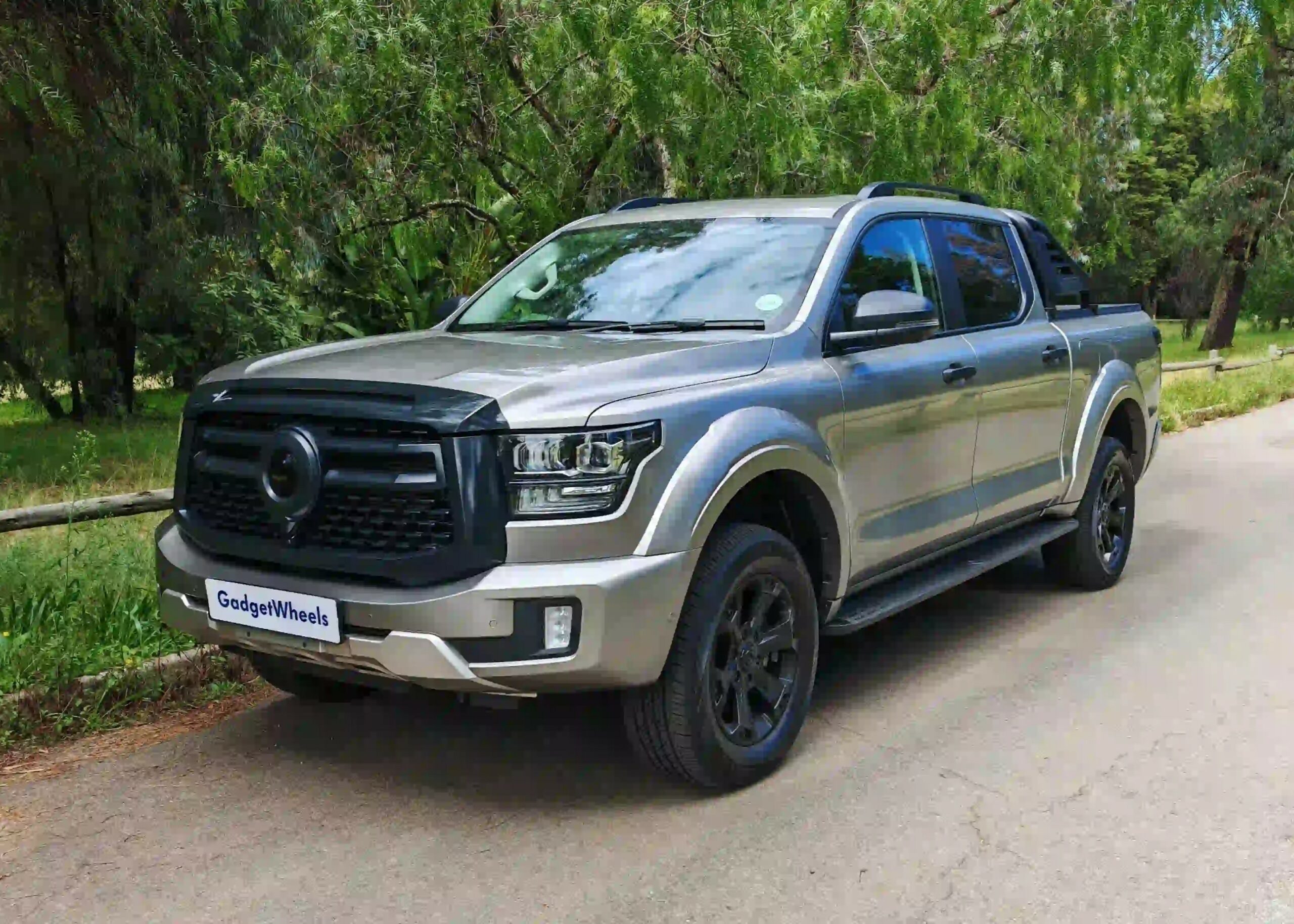
The size of the GWM P500 HEV Double Cab turns it into a welcoming space, writes ARTHUR GOLDSTUCK.

Driving the GWM P500 HEV Double Cab 4×4 can be daunting when one first climbs inside.
My first concern was whether this was going to be more like steering a battleship than navigating the roads. However, the engineers at GWM did their homework. The vehicle is built around the human experience in a way that is surprisingly intuitive, transforming what looks like a massive machine into a welcoming space.
That space, in turn, lends itself to an array of controls that allows for endless customisation.

The experience begins with climbing in – and you literally climb in, using the footboard that is essential for most normal-sized human beings to get in. You then not only strap yourself in, but adapt yourself to the seat. Electric seat controls for both the driver and passenger are essential to this process, helping you achieve your optimal comfort level before the real learning curve begins.
And there is a learning curve, because of the extensive controls. The driver presides over no less than five sets of controls, starting with the steering wheel itself. It has extensive settings, including customisation buttons on the left and right sides. The plus (+) button opens, among other things, a 360-degree surround view, whereas the asterisk (*) button allows one to play favourites or cycle through them; both allow one to enter a Custom Button setting screen on the infotainment system.

But first, the instrument cluster in front of the driver is comfortably visible through the way the steering wheel is designed. Unlike many vehicles, where you either have to raise your head or lower your face each time you want to see the full display, this one is clear, sharp, and allows for extensive customisation as well.
The infotainment system is similarly adaptable: options range from setting the lights to seating positions for both front and rear seats to configuring the Heads-Up Display (HUD). One can choose between it displaying modes like a smart drive or navigation, and even a Snow Mode, along with setting brightness and rotate the display.
Most unusually, the settings allow one to activate or deactivate front-row and rear-row wireless charging. It’s not often you see rear-row wireless charging, and that alone sets this vehicle apart. Since GWM describes this car as a “passenger double cab”, it is optimised for a family, and that rear wireless charger is going to become a popular option if one regularly has kids in the back.

The system’s home screen is fairly basic, displaying time, current music, available range, phone connectivity, and radio controls. However, the App setting opens up extensive car control options like energy trends of the hybrid battery, and general control of one’s phone and the infotainment systems. It’s sizeable, clear, and close enough to the steering wheel that the driver can steal glances without affecting concentration.
Just below the display is a very unusual feature for a modern vehicle: an analog clock, for those who don’t want to squint to see the time on the infotainment or instrument clusters. It may be mere aesthetics, but it is quite a cute addition. It sits just above manual aircon controls, which all of us appreciate and all of us just wish more manufacturers would introduce – specially the aircon ON/OFF button.

Then there’s the fifth set of controls around the gear lever. It’s very basic, very easy to use, and thankfully provides a very clear Park button that you just press to put the car in park, as opposed to having to do gear gymnastics.
These controls include a dial for the Drive Mode, buttons for three 4×4 modes on the left-hand side of the dial, an auto-hold button… did I mention this car comes with physical buttons? This is not a subtle vehicle, and it is not going to hide core controls behind digital layers.

That symbolises the vehicle. There’s nothing subtle about it. And that also dictates how it would be used. You would probably avoid parking garages, for example, and go places where you know that parking is fairly easily available on the road. On our test rides, it was a big attraction at a farmer’s market.
And what a pleasure those rides were, beyond the attention the car drew. I might have worried about it steering like a battleship but out on the open road, it was more like cruising on a yacht.
Pricing, service plan, warranty and features
- The GWM P500 2.0T HEV Double Cab Ultra Luxury 4×4 is priced at R999,900 in South Africa. The flagship hybrid model produces a combined output of 255kW and 648Nm, and features 7 airbags, along with a comprehensive suite of advanced driver assistance systems (ADAS). It comes with a 5-year/75,000 km service plan and a 7-year/200,000km warranty, while the hybrid battery offers an 8-year/150,000km warranty.
* Sheryl Goldstuck is general manager of World Wide Worx and editor of GadgetWheels. Follow her on Bluesky on @crazycatbuzz.bsky.social.