



GadgetWings
Travel Tech: SA Tourism
faces AI challenge
Germany’s vast tourism database offers South Africa a lesson in helping AI travel planners discover smaller destinations, writes ARTHUR GOLDSTUCK.

A traveller asking an AI assistant to plan a holiday in Germany can draw on a database containing more than 500,000 records about places to visit, accommodation and events. The German National Tourist Board has collected information from tourism bodies across all 16 states, organised it so computers can use it, and opened it to travel companies and developers.
The World Economic Forum’s Travel & Tourism Development Index 2026 highlights the German system as an example of a new differentiator between destinations: getting reliable information to the tools that help people decide where to go. The German National Tourist Board’s AI travel assistant, Emma, uses the data to recommend trips. The same information is available to other services, so a small regional attraction has a better chance of appearing when someone asks AI for ideas.
That means a bot can now assemble an entire disappointing itinerary in seconds, and tear it apart as quickly. You know the drill: opening hours change and seasonal activities disappear. Anyone who has followed an online listing to a restaurant that closed two years ago will feel the pain. Especially tourists exploring or visiting South Africa.
The WEF puts this country 61st out of 110 economies for conditions supporting tourism development, with a score of 3.99 out of seven. It has dropped three places since 2024, although its score edged up by 0.5%. The average score across the index rose by 2.1%, with Mauritius leading Africa in 59th place, Morocco in 70th and Kenya 77th. Germany ranks sixth.
Those are broad tourism rankings, covering anything from transport and safety to natural attractions and digital readiness. The latter includes elements like internet access, online platforms, digital payments and electricity reliability, as part of tourism’s underlying capacity.
Digital readiness improved in 91% of the economies surveyed between 2024 and 2026 – but not in South Africa. Its score fell from 5.19 to 5.12 out of seven, dropping it from 56th to 65th in the world.
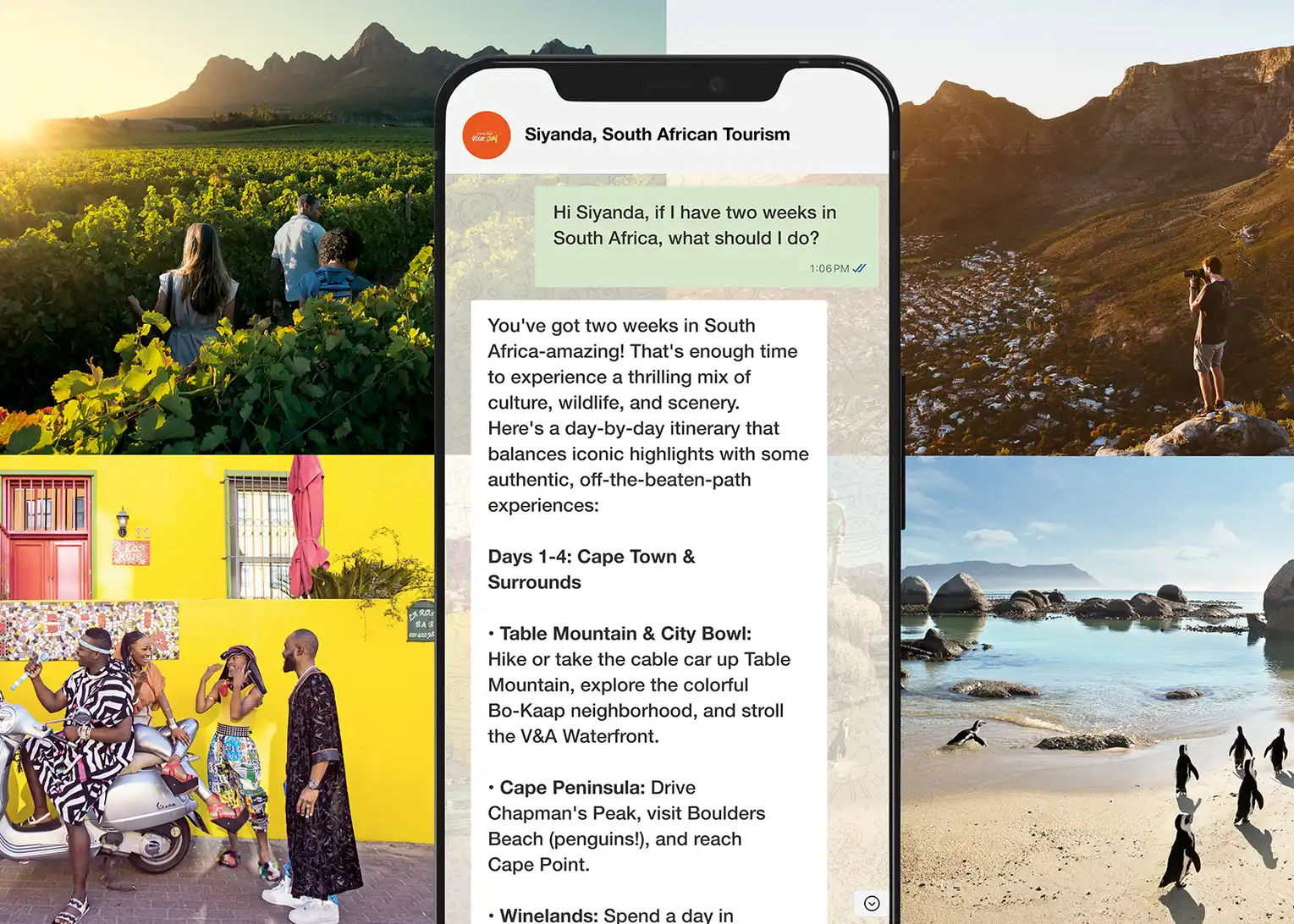
South African Tourism has made a start with Siyanda, an AI assistant built on Matador Network’s GuideGeek platform, to offer US and Canadian travellers personalised South African itineraries covering wildlife, heritage, hiking and food. Siyanda is trained on extensive data from South African Tourism, and Matador says it is combined with “over 1,000 travel information integrations” from GuideGeek’s technology.
South Africans can try it too, but should not expect too much beyond the typical attractions one might find in a Google search. In fact, almost every link it provides points to generic brochureware. The occasional breakout to Google Maps suggests far more is possible.
Germany’s example provides a superb blueprint. Emma is one application of a shared database that other developers can also use, as Germany makes its records available to search engines, platforms, AI services – and travel operators.
As South Africans, we know our tourism appeal extends far beyond the handful of names that appear in every international itinerary. A small guesthouse in the Northern Cape or a specialist guide in an isolated town needs exposure far more desperately than, say, Cape Point or Maboneng. Ask the right questions, and one eventually gets there, but it isn’t easy.
South African Tourism does seem to understand the shortcomings – and the risks.
The organisation’s chief strategy officer, Siya Mthethwa, warned last year on its website against describing local experiences whose details are poorly represented online, and giving AI the opening to hallucinate.
“Our most urgent task, therefore, is to collectively ensure our digital tourism footprint is available, up-to-date, and credible,” he said.
The WEF report says smaller tourism businesses in emerging markets struggle to reach travellers through online platforms. Germany’s example suggests that a shared South African database could help them get accurate information into AI trip planners, provided they can keep their details current.
The timing is neat. South Africa marked World Tourism Day last Sunday, under the theme “Growing South Africa’s tourism sector in the digital era”.
South Africa has Siyanda. The next challenge is giving the AI, and every travel planner, dependable information about places beyond the familiar.
“As travel discovery shifts towards AI-mediated channels,” says the WEF, “destination data is becoming critical digital infrastructure rather than simply a marketing asset.”
* Arthur Goldstuck is CEO of World Wide Worx, editor-in-chief of Gadget.co.za, editor of GadgetWings, and author of “The Hitchhiker’s Guide to AI – The African Edge”.