

Artificial Intelligence
Signpost: AI learns to change our behaviour
Research into personalised AI coaching reveals how technology can change individual habits, writes ARTHUR GOLDSTUCK.

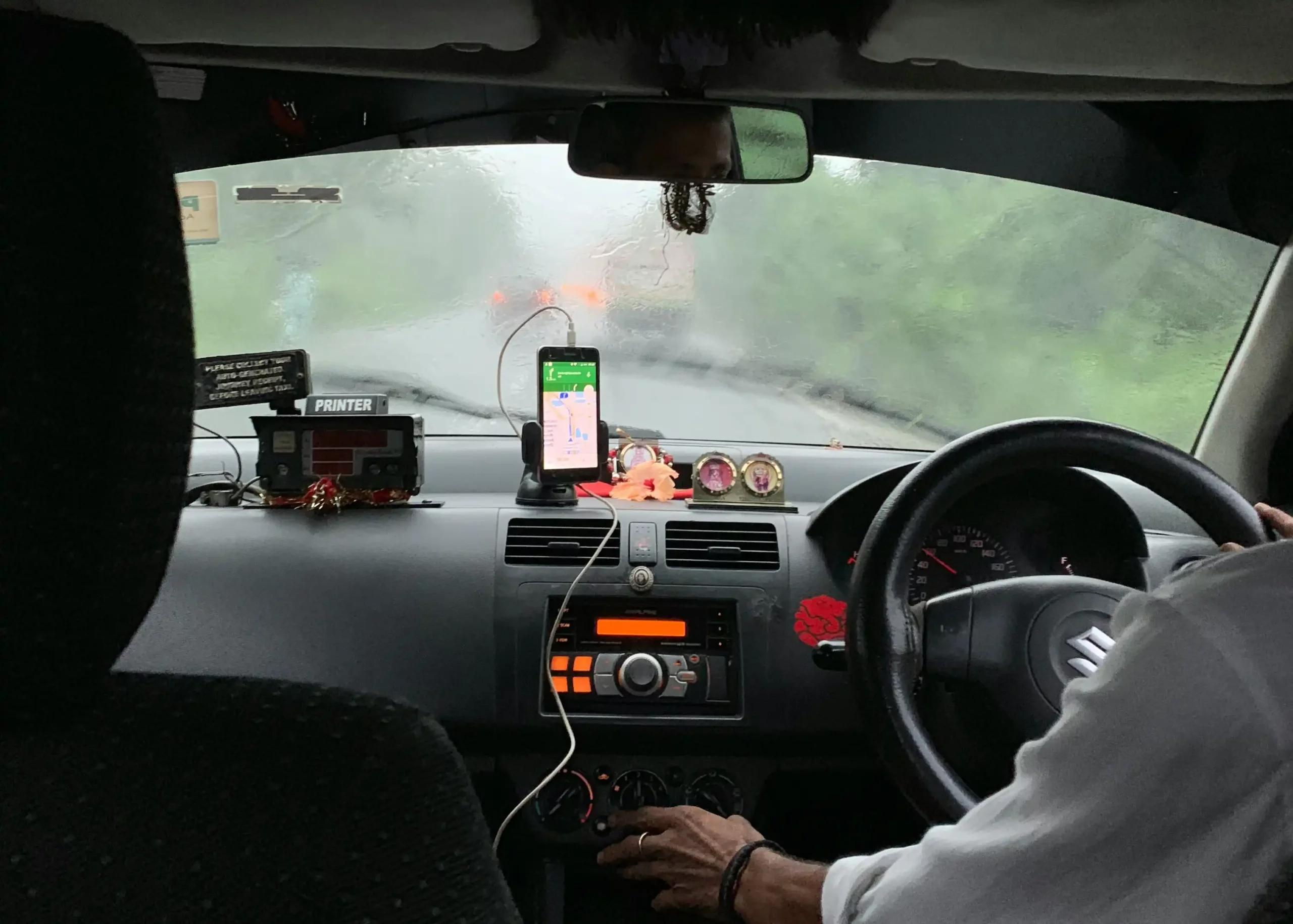
In a major new South African study of drivers, AI-powered coaching has reduced cellphone use behind the wheel by 9%.
The research, conducted by Discovery Insure with Johns Hopkins University and British consultancy Affective Mobility, involved 5,000 motorists covering 15-million kilometres over 1.7-million journeys.
The coaching also helped motorists improve other driving habits, like reducing harsh acceleration and braking by 5% each. According to by Discovery Insure, the findings demonstrate that personalised AI interventions can persuade drivers to change habits that increase their risk of accidents.
AI does this by identifying personal habits and selecting interventions most likely to change them. That means insurance companies, for example, can now influence individual conduct on a scale previously impossible.
Discovery Insure CEO Robert Attwell told Gadget earlier this year that its Advanced Driving Instructor, launched in January, uses large language models to create individual goals based on each customer’s driving habits.
“For example, if we identify that a particular client consistently uses their phone at a certain intersection, the system can generate a personalised goal to address that behaviour, together with a specific reward for achieving it.
“In the past, providing that degree of personalisation would have been very difficult because of the enormous amount of data that needed to be processed.”
The October research tested the approach over four months, generating 23,000 personalised goals, 390,000 coaching messages and 160,000 notifications and voice alerts.
Discovery chief analytics officer Michael Rodewijk described the technology as performing the work of a personal driving coach.
“It might seem that the only way you can get that personalisation is essentially a coach that’s sitting in your passenger seat. But a coach is essentially doing two major things: figuring out a strategy specifically for you, and then telling you what your next step is within that strategy.”
The system combines machine learning with generative AI. Machine learning identifies driving patterns and selects appropriate goals, along with the approach and tone of each message. Generative AI then communicates it to the driver.
Rodewijk said the technology could distinguish between motorists with identical driving scores but different weaknesses.
“So the one driver is a distracted driver and uses the phone quite a bit, and the other driver has got braking problems.mIf we just go and give the same message to both of them to drive safer, we’re losing that personalisation that’s going to get the behaviour change.”
The ability to identify those differences and tailor individual coaching offers a major advance in applying behavioural science at scale. The researchers drew on the Insight-Motivation-Action framework developed by behavioural scientist Dr Neale Kinnear of Affective Mobility.
“Each individual message is unique, but it’s built around a framework that provides the key ingredients: the insight, the motivation and action,” he said.
Discovery has also explored how habits outside the vehicle affect driving risk. In July, it released research linking four years of sleep records with driving information from more than 10,000 motorists.
Accumulated sleep deprivation proved up to five times more predictive of accident risk than traditional insurance factors considered individually. Drivers with less than an hour of sleep debt over three consecutive nights had up to 36% lower accident risk than those with five hours or more.
Discovery has introduced Vitality Drive Sleep Points to encourage healthier sleeping through additional rewards. Attwell said the programme encouraged improvement without punishing customers for poor sleep.
The same principle applies to the Advanced Driving Instructor, although the ability to influence individuals raises questions about the limits of AI persuasion. A system that understands a person’s habits and motivations could also influence decisions that primarily benefit the company deploying it.
Attwell is keenly aware of the potential of reputational damage.
“The objective is to encourage positive behaviour change. We have to be very careful that these interventions, or nudges, always remain positive and constructive.”
Attwell said the company maintained strict limits on how information collected by its telematics systems, like speeding and cellphone use, could be used in assessing claims.
“We only use the app’s telematics data during claims assessment to confirm the time and location of an incident.”
The October experiment established improvements in driving habits, although equivalent reductions in actual crashes remain to be demonstrated.
“However,” said Johns Hopkins associate professor Jonathan Ehsani, “crashes are predictable. And because they’re predictable, they can be preventable.”
* Arthur Goldstuck is CEO of World Wide Worx, editor-in-chief of Gadget.co.za, and author of “The Hitchhiker’s Guide to AI – The African Edge”.