


Artificial Intelligence
Can you prove what your
AI agent did?
You need to see beneath the surface to argue AI liability, writes GARETH REDELINGHUYS, TrendAI country manager for sub-Saharan Africa.

Different arguments are being had in South Africa about who’s on the hook when an AI agent gets it wrong. While all of it is worth having, none of it matters if you can’t tell anyone what your agent actually did.
That’s the part missing from the liability conversation, and it’s the part that decides who wins it.
The problem with the liability argument
Here’s the scenario every one of those liability debates assumes: something goes wrong, an agent takes an action, and somebody has to establish who’s responsible – the deploying organisation, under section 25(c) of the Electronic Communications and Transactions Act, or a vendor whose terms exclude autonomous behaviour.
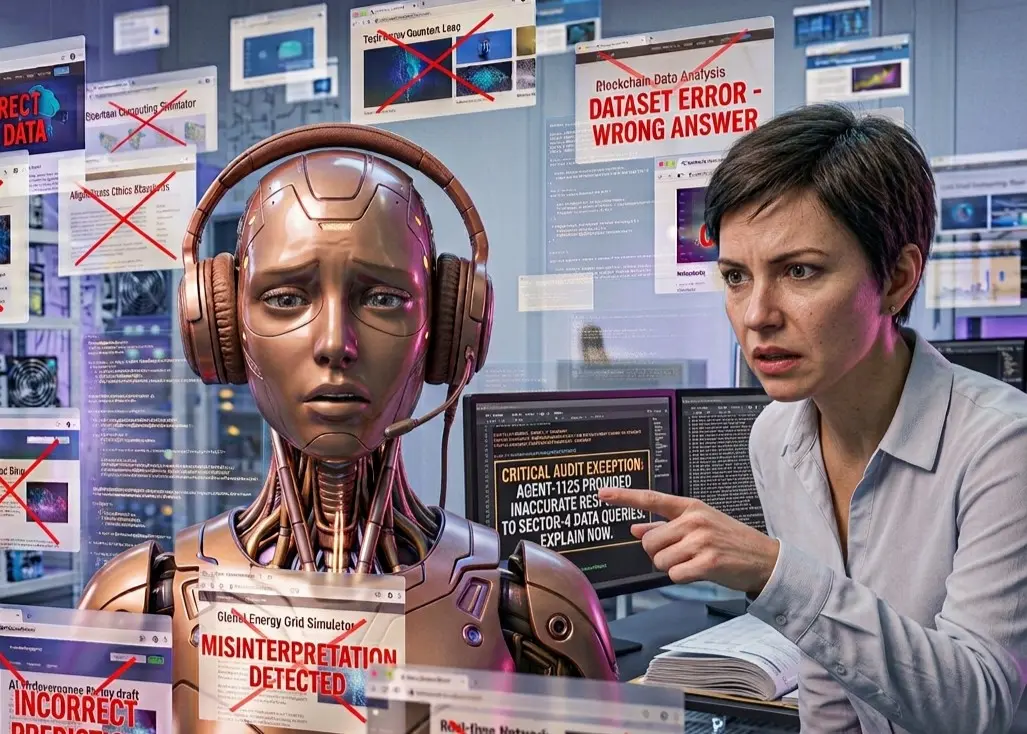
Whichever way you argue it, eventually someone has to prove what happened. What data the agent touched. What triggered the action. Whose credentials it was operating under. What it was authorised to do and whether it stayed inside that authorisation.
Most organisations can’t produce that, and the problem isn’t necessarily the law. It’s the evidence. The agent may simply not have left enough of a trail to explain what happened to an investigator, arbitrator or regulator.
Why the trail doesn’t exist
According to the 2026 CISO AI Risk Report, 92% of security leaders say they lack real visibility into what their AI agents are doing. Three in four have already found AI tools running in production nobody signed off on. That’s not an edge case. It’s becoming a normal enterprise problem.
Agents don’t behave like the things our logging was built to catch. They don’t trigger MFA prompts. They don’t generate the session records a SIEM knows how to parse. They can move quickly, using the permissions they’ve been given, without anyone watching every action as it happens.
So when it comes to answering “what exactly happened here,” a lot of organisations are going to discover the honest answer is: we don’t fully know.
Why this bites twice as hard in South Africa
Reported compromises to the Regulator were up 60% in the second half of 2025 alone, and the eServices portal built to catch them isn’t interested in “the agent did something, we’re not sure what.”
For regulated financial services firms, it’s worse. The FSCA’s Joint Standard puts cybersecurity governance failures at board level, and board-level accountability is difficult to dismiss with a shrug.
Whether you’re defending the company or trying to point the finger at a vendor, the case is only as good as the evidence behind it. Right now, most South African enterprises would be arguing from a position of “we think,” not “we know.”
What actually closes the gap
Not a bigger legal team. Not a smarter contract clause, although you should have those too. The answer is knowing which agents you have, what they can access and what they’ve done – and keep enough evidence to reconstruct it later.
That’s an inventory problem before it’s a legal problem. Where are our agents? What can they access? And if something goes wrong, can we show what they did? Most boards can’t yet answer the first of those with any confidence.
I’ll be honest: we’re not there yet either. TrendAI included. Nobody in this industry gets to claim it’s solved. But there’s a big difference between not having everything solved and not being able to find out what happened when something goes wrong.
The liability question will get settled eventually, case by case, in front of a judge or an arbitrator or a regulator. Whoever wins that argument will be the party that can show its work. Right now, in most South African boardrooms, nobody can.