



Artificial Intelligence
Signpost: Sanlam bets
on elevating AI
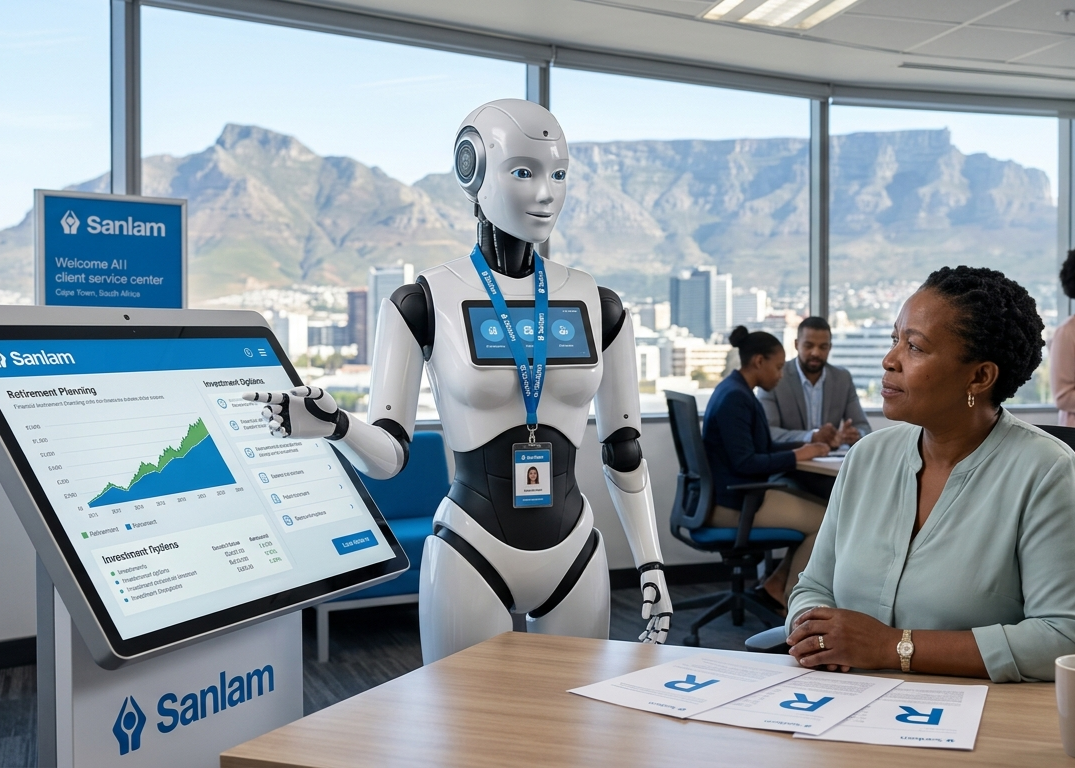
The appointment of Theo Mabaso as group chief AI officer of Sanlam is a watershed moment for AI. He spoke to ARTHUR GOLDSTUCK.

AI has reached the one place where corporate experiment ends and institutional responsibility begins: the executive committee. In financial services, that positioning speaks directly to people’s financial health and long-term security. When AI moves to that level, the challenge migrates from what artificial intelligence can do to what a company is prepared to let it do.
That is the broader significance of Sanlam announcing the appointment of Theo Mabaso as Group Chief AI Officer last week, along with his existing role as group chief technology and information officer. The move places AI at exco level across a financial services group that operates in 29 countries and spans insurance, asset management, health, corporate services, banking partnerships, Pan-African operations and India.
“AI has moved beyond experimentation,” said Sanlam Group CEO Paul Hanratty of Mabaso’s extended role. “It is now central to how financial services companies compete, innovate and deliver to their clients.”
In an exclusive interview, Mabaso told Gadget that conviction had shifted materially in the organisation.
“At Sanlam, this started at the top. When the group CEO repositions AI as a commercial priority rather than a technology one, the organisation moves with it. For us, AI stopped being an interesting experiment and became a disruptive force with real commercial consequence. Early on, the delivery was largely tactical – learning, pilots. As AI matured, it became obvious that its real value lies in transforming entire value chains: underwriting, claims, advice, service, distribution. At that point, fragmented ownership becomes a competitive liability.”
That describes a turning point many large organisations have been inching towards as they moved AI outside innovation hubs, digital projects and IT labs.
“Sanlam is not a company that’s still figuring out what it wants to be,” said Mabaso. “It is a multi-market, multi-product, full ecosystem financial services group… that requires enterprise-wide prioritisation, disciplined investment and clear accountability – not isolated pockets of activity.”
The title itself says something about that shift. A CIO protects the backbone. A chief digital officer usually focuses on channels, platforms and customer experience. An AI chief carries a wider brief that reaches across the business.
“The CAIO together with the CEO owns how AI reshapes how the organisation thinks, decides and delivers value. That goes well beyond technology. It’s value chain redesign, customer experience transformation, change management and commercial discipline.”
Sanlam’s own footprint makes that mandate harder to contain inside a traditional technology function.
“Within insurance specifically, the biggest gains will come from reengineering the high-volume, high-friction areas – underwriting, claims, servicing – to deliver faster experiences with lower fraud rates and more accurate pricing. AI improves decision accuracy, reduces turnaround times and drives consistency, particularly through agent-based systems under human oversight.
“Complex claims, cover assessments, disputes, and advice conversations require empathy, judgement and accountability. AI can support these decisions with insight and consistency, but the responsibility must remain human.”
That principle becomes critical when bias enters the picture.
“Bias isn’t something AI introduces; it’s something it exposes. But humans are biased too, so this isn’t a new problem. What changes is the scale at which unchecked models can amplify it. Prevention requires intentional design, continuous monitoring and explicit fairness checks throughout the model lifecycle – plus clear escalation paths and human review.
“For a group with the reach and diversity of Sanlam – serving mass-market clients in rural India and Pan-Africa through to corporate institutions in South Africa – getting this wrong is not just a reputational risk, it’s a betrayal of the inclusion agenda we’re built on. Responsible AI isn’t about avoiding the technology. It’s about deploying it with discipline and humility.”
South Africa remains a market where cost and complexity still keep many people at the edge of formal financial tools. Mabaso believes AI can widen access.
“This is one of its most important opportunities. AI dramatically reduces the cost to serve, simplifies processes and enables tailored guidance for people previously excluded by complexity or affordability.”
By 2027, says Mabaso, the divide in South African business may have less to do with access to AI tools than with the ability to use them across an organisation.
“Leaders will be the organisations that move beyond pilots and scale AI into how work actually gets done – and crucially, bring their people along for it. The other shift is moving from finding AI use cases to using AI to solve your biggest problems.”
* Arthur Goldstuck is CEO of World Wide Worx, editor-in-chief of Gadget.co.za, and author of “The Hitchhiker’s Guide to AI – The African.