



GadgetWheels
Signpost: Freelander finds
new road in China’s fast lane
While Auto China dazzled with tech, a car launch in Wuhu opened a different road, writes ARTHUR GOLDSTUCK.

Auto China 2026 was the centre of gravity of the automotive world last week, pulling in more than 900,000 visitors and 181 world premieres among 1,451 vehicles on display.
Beijing’s vast exhibition halls were packed with electric vehicles, self-driving concept cars, new shapes and sizes, and enough battery claims to power a small country.
It came as a surprise, then, that one of the most interesting unveilings took place 1,100km away, at Chery’s headquarters in Wuhu, during the group’s International Business Summit. While the Chery brand is the 6th most popular in South Africa, the Chery Group also presides over Jetour, Jaecoo and Omoda. In combination, they outsell all car manufacturers in this country aside from Toyota. That means that big news from Wuhu becomes big news for South African motorists.
At the centre of that news was the return of a name with unfinished business, and a rethink of how a global car brand comes together.

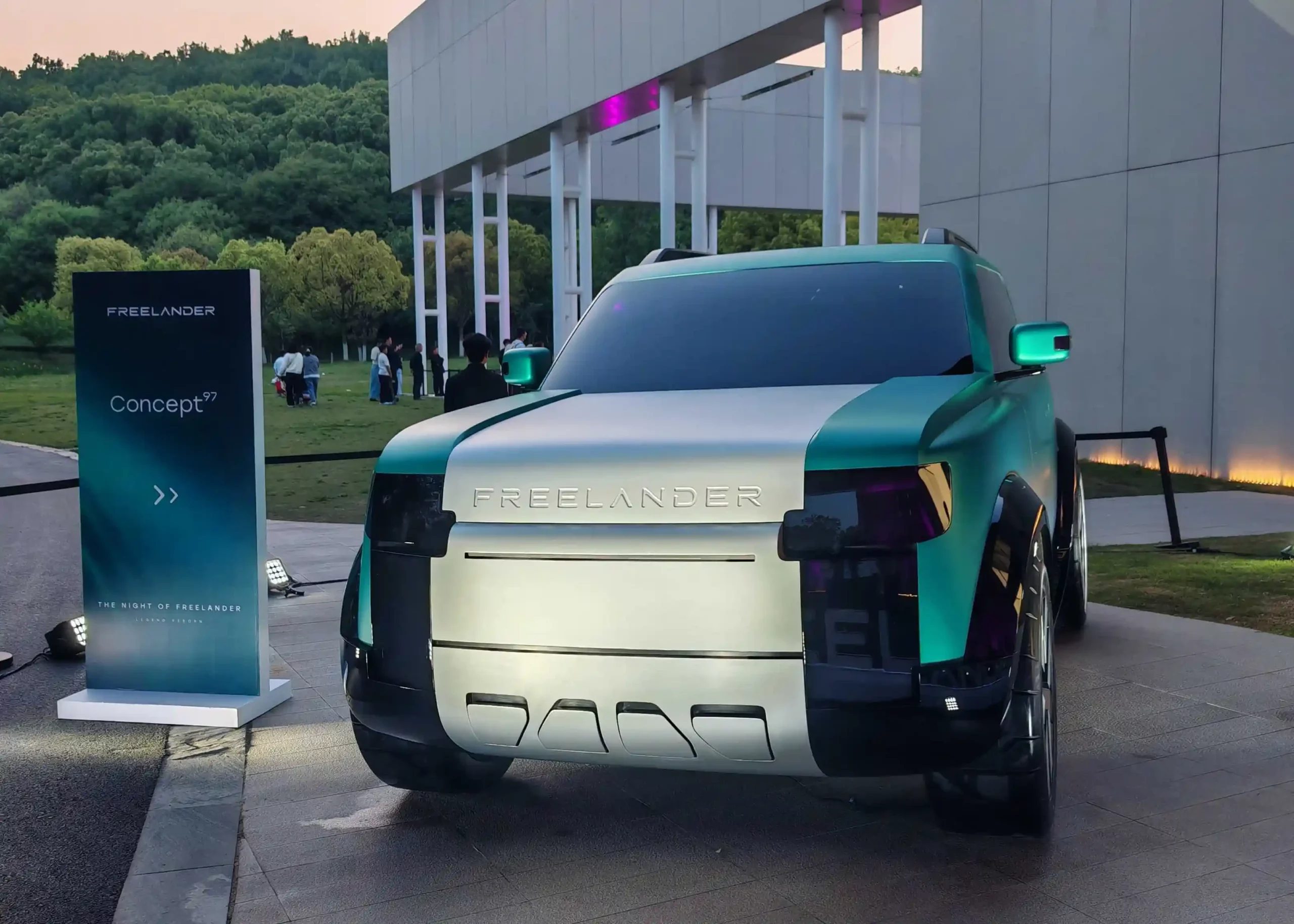
That name is Freelander, originally introduced by Land Rover in 1997 as a compact SUV that opened the brand to a broader audience. Now, it has been revived through a joint venture with Chery as a standalone automotive brand.
The Freelander 8, the first production model to emerge from a partnership between the two manufacturers, draws on Jaguar Land Rover for design direction and heritage, and on Chery for the technology, platforms and manufacturing scale.
That combination of British legacy and Chinese manufacture tells a larger story than the badge suggests.
The original Freelander built its reputation on approachability. It gave buyers a way into the Land Rover world without the size or cost of the larger models. That positioning earned it a loyal following among drivers who wanted versatility without the full off-road persona.
The new Freelander 8 places electrification at the centre of its identity. It has been conceived as a new energy vehicle from the outset, based on a platform that supports battery-electric, plug-in hybrid and range-extender versions. An EV version of the Freelander marks a decisive break from the past and places it squarely in the fastest-growing segment of the global market.
Its size reinforces that shift. At more than five metres in length, it moves into the territory of large family SUVs, with three rows and a six-seat layout that replaces the traditional bench with individual “captain’s chairs”. The move from entry-level access to full-scale presence mirrors a broader transition taking place across the industry.
Inside, the cabin reflects how quickly priorities have changed. A full-width Mini LED display stretches across the dashboard, turning the vehicle into a digital platform as much as a means of transport. Processing power comes from a Snapdragon chip from American chipmaker Qualcomm, underlining how closely the automotive and consumer electronics industries now intersect – and the global nature of automotive partnerships.

Battery supply comes from Chinese manufacturer CATL, and an 800-volt electrical system enables rapid charging. Driver assistance is handled through Huawei’s Qiankun ADS platform, supported by LiDAR hardware that expands assisted driving capability well beyond lane control.
Rather than incremental upgrades, these all point to a shift in where innovation is taking place: China has moved from production base to development hub, setting the pace in batteries, charging, style and in-car software.
The Jaguar Land Rover influence is still visible, however, providing a vague sense of continuity. Design hub director Phil Simmons, whose previous work includes the Defender and Velar as well as the Freelander – leads the styling, giving the vehicle a visual link to its heritage. Chery provides the platform, the electrical systems and the supply chain, backed by years of investment in electric mobility.
The result stands apart from both parents. It carries no Land Rover badging and will be sold through separate channels, placing the burden of reputation on the new brand itself. The vehicle is, quite frankly, ugly, so this will also be a true test of marketers’ ability to sell.
For South Africa, the implications extend beyond a single model. The market continues to navigate the transition to electrified vehicles, balancing infrastructure limitations with growing consumer interest in sidestepping rising fuel prices. Models that offer a mix of powertrains, including plug-in hybrid and range-extender, align with current concerns.
Freelander began life with a key and a gearbox. Now it runs on chips and code.
* Arthur Goldstuck is CEO of World Wide Worx, editor-in-chief of Gadget.co.za, and author of “The Hitchhiker’s Guide to AI – The African Edge”.