


People 'n' Issues
‘System is down’ is a human rights issue
Continuous service delivery should be part of the Human Rights Day discussion, writes DOROS HADJIZENONOS, Fortinet regional director for Southern Africa.

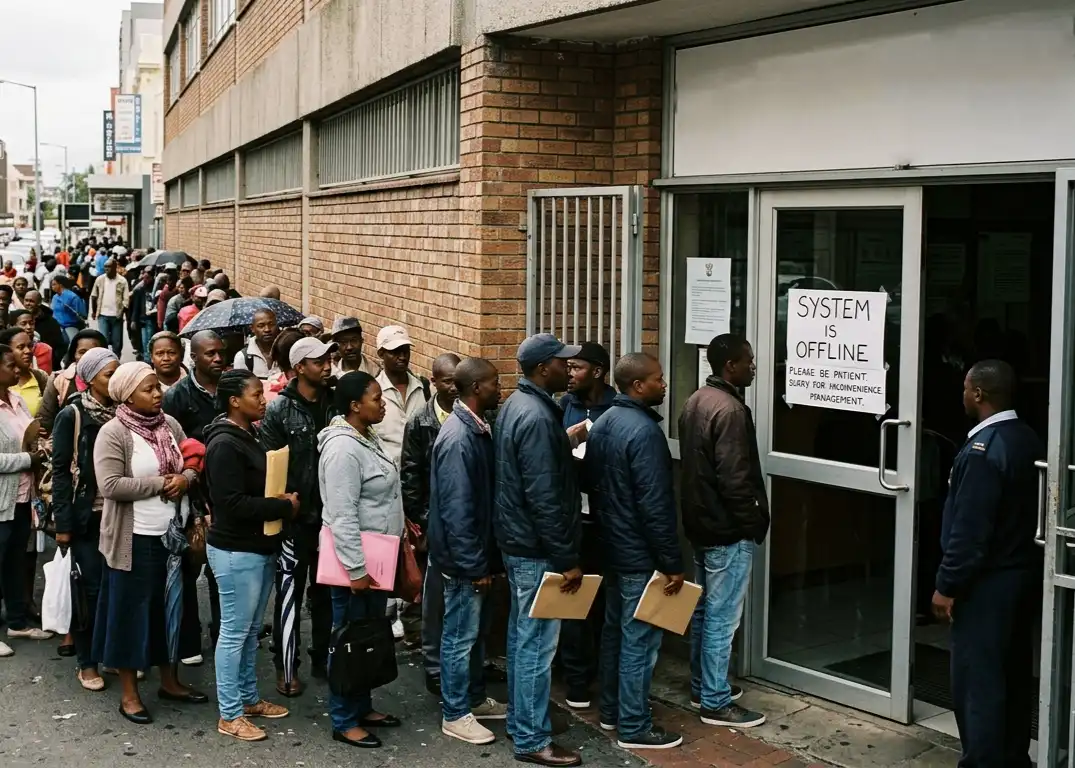
The phrase “the system is offline” has become a weary staple of South African life, often met with a shrug of resignation at too many institutions. Yet, as our national infrastructure and essential services migrate almost entirely into the digital realm, this phrase carries a weight that goes quite a bit beyond just being inconvenient. When government and essential services digitise, system availability becomes a very big determinant of whether citizens can exercise their constitutional rights.
As we approach Human Rights Day on 21 March, it is necessary to reframe our understanding of cybersecurity. In the public sector, the stakes have shifted. We have moved on from just protecting data or preventing the theft of identity records; we are defending the digital bridge that connects the citizen to the state.
Moving from data protection to service availability
Historically, the cybersecurity conversation has been dominated by privacy and data breaches. While these remain critical, they represent a too narrow view of the threat landscape. For a public hospital, a municipality, or a social grant portal, the most immediate danger is the loss of access.
A distributed denial-of-service (DDoS) attack that takes a provincial health portal offline does not need to exfiltrate a single byte of data to be catastrophic. Similarly, a ransomware event that locks a municipality out of its billing or maintenance systems acts as a digital blockade. These attacks effectively deny citizens the right to healthcare, water, and social security. When the digital infrastructure of a nation is compromised, the “system is offline” reality translates into delayed medical care, stalled applications, and longer queues for those who can least afford to wait.
The digital divide includes uptime
Discussions regarding the digital divide in South Africa usually focus on the hardware gap – who has a smartphone and who has data. However, there is a second, more insidious divide: the reliability of the services at the other end of that connection.

Providing a citizen with a digital portal for a grant or a housing application is only half the battle. If that portal is frequently inaccessible due to poor security posture or unmitigated cyber-risks, the digital divide remains unbridged. Uptime is a matter of equity. Those with the means can often find workarounds for systemic failures, but for the majority of the population, the state’s digital interface is the only point of entry. Robust security is the only way to ensure this bridge remains open and functional for everyone.
Cybersecurity as civic fencing
We understand the necessity of physical security for our national assets. We do not question the need for a fence around a water reservoir or a power substation; we recognise these as essential measures to ensure the continuous delivery of a service. Cybersecurity must be viewed through the same lens. A firewall or an intrusion prevention system is the digital equivalent of that physical fence.
When cybersecurity is treated as a fundamental component of civic infrastructure, it changes how service delivery is designed. Resilience cannot be an afterthought or a “patch” applied later. It requires a “security-by-design” approach that accounts for the sprawling, complex environments of the public sector. These environments often involve a fragile mix of legacy systems, cloud services, and operational technology (OT) sitting side-by-side.
In these complex settings, fragmented and disconnected tools are a liability. They create “blind spots” that attackers exploit to move laterally across a network. Securing a nation requires an integrated platform approach – what we refer to as a security fabric – that provides visibility across the entire ecosystem.
Restoring public trust through digital resilience
Beyond the practical delivery of services, there is the matter of public trust. The social contract relies on the state’s ability to provide for its citizens – and there are bad actors that threaten this synergy unless coordinated efforts are made.
The “system is offline” joke is a symptom of a deeper erosion of confidence. To restore that trust, organisations in the public and private sectors must prioritise the availability of their digital interfaces. For critical infrastructure, especially in the realm of operational technology, uptime is the mission.
Human rights are often discussed in the abstract, through the lens of legal frameworks and Constitutional Court rulings. In a 21st-century society, however, these rights are upheld through the practical ability to apply, book, register, and be served. The more we rely on digital channels to facilitate life in South Africa, the more cybersecurity becomes a cornerstone of protecting human dignity.