


People 'n' Issues
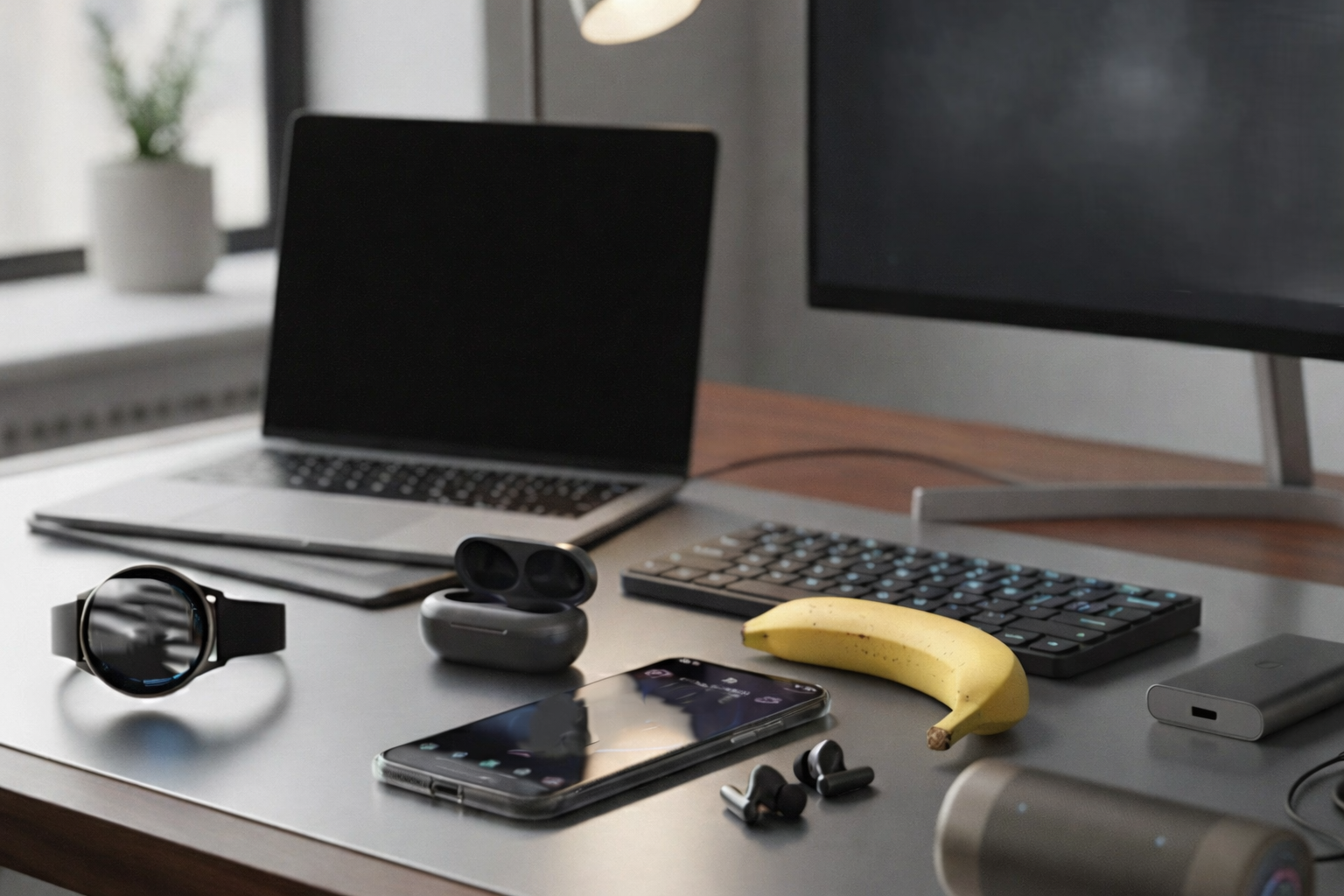
What do bananas and brand names have
in common?
After a recent disappointment with a brand name laptop, SHERYL GOLDSTUCK explains why a name is not what matters.

There is something deeply comforting about buying a shiny, name brand electronic item. The logo alone promises quality, longevity, and the subtle suggestion that life will immediately become more organised, efficient, and possibly more successful. Whether it is a television, smartphone, laptop, or kitchen gadget, big brands have perfected the art of declaring, “Trust me,” while the credit card surrenders.
However, behind the polished marketing and sleek packaging lurks an inconvenient truth: most modern electronics are not designed to last much beyond five years. Some barely manage that. And when they do fail, repairing them can feel like embarking on an epic quest with no treasure at the end.
The first hidden danger lies in expectations. When consumers buy a well known brand, they naturally expect longevity. After all, the price suggests durability, innovation, and premium quality. Paying top rand surely means the device will be supported for years to come. Unfortunately, reality often disagrees. Many manufacturers quietly plan product lifecycles that conveniently end shortly after warranties expire. Software updates slow down, compatibility fades, and one day the device develops a fault that renders it more decorative than useful.
This leads directly to the second danger: repairability, or rather the lack of it. Even if the five or six year old device has served one loyally, a minor fault can turn into a major headache. Replacement parts are frequently discontinued, unavailable locally, or priced so high that repair makes no financial sense. Authorised service centres may shrug politely and recommend an upgrade, while independent repair shops struggle to source components that are locked behind proprietary designs.
Modern electronics are increasingly glued, sealed, and digitally protected. Batteries are fused in place, screens are bonded like industrial artwork, and specialised tools are required just to open the device without causing further damage. Even something as simple as a worn charging port or failing battery can become a deal breaker. The irony is painful: the product still works, except for the part that does not.
There is also the emotional cost. Consumers feel betrayed when an expensive, trusted brand lets them down. The disappointment is greater because the expectation was higher. No one is shocked when a bargain device gives up after a few years. When a premium product does the same, it feels personal, as if the logo itself has broken a promise.
This is where no name brands watch while they sip their tea and smirk. These products usually cost significantly less, and expectations are refreshingly realistic. Buyers understand that they may not last a decade, but the price reflects that reality. If a budget tablet or speaker survives five years, it feels like a victory rather than a right. When it fails, replacement is less painful because the initial investment was modest.
Interestingly, some no name brands also embrace simpler designs and more generic components. This can make repairs easier and cheaper, assuming anyone bothers to attempt them. While they may not boast cutting edge features, they often deliver solid, functional performance for everyday needs.
None of this means that name brands should be avoided entirely. They often offer excellent performance, refined user experiences, and strong after-sales support during the early years. The danger lies in assuming that high price equals long life and easy repair. In the modern electronics landscape, this assumption can be expensive.
The best defence is informed scepticism. Buy with eyes open, not just the heart. Ask how long software support is promised, whether parts are available locally, and what repairs typically cost. Sometimes the smartest choice is not the brashest logo on the shelf, but the sensibly priced alternative that does exactly what is needed and nothing more.
When electronics age faster than bananas, managing expectations may be the most valuable feature of all.
* Sheryl Goldstuck is general manager of World Wide Worx and editor of GadgetWheels. Follow her on Bluesky on @crazycatbuzz.bsky.social.