



Product of the Day
MWC 2026: 5G’s ‘killer’
app arrives
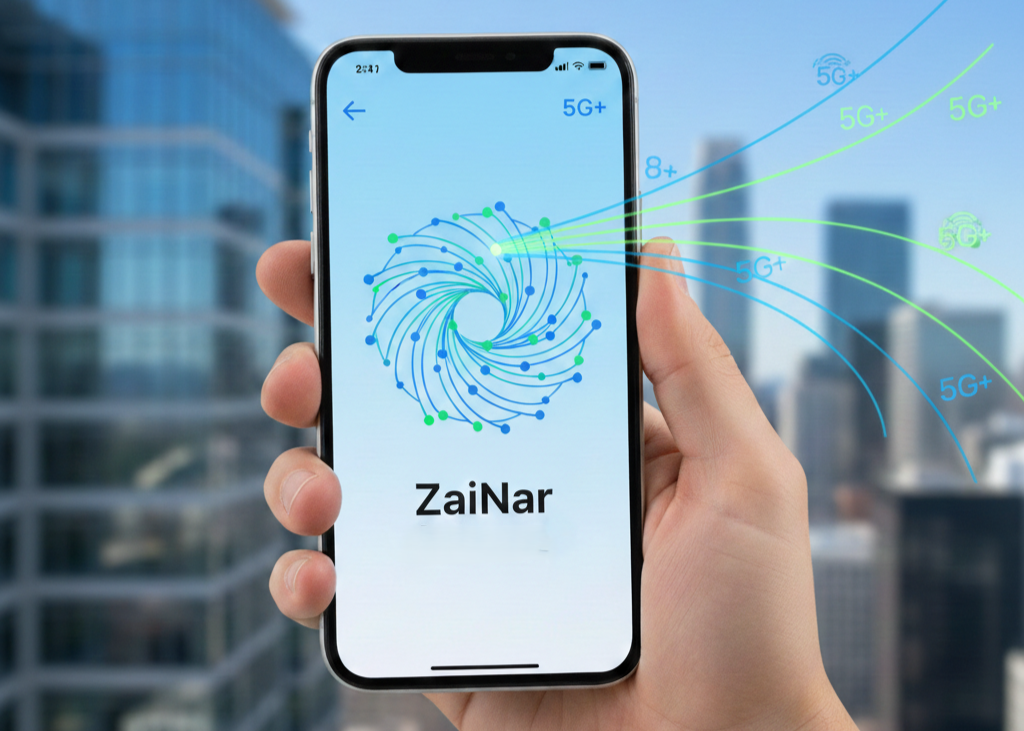
Highly accurate location without GPS? ZaiNar says its positioning technology can manage positioning directly through 5G infrastructure.

Technology company ZaiNar has launched a 5G location system that operates independently of device makers. The 5G positioning technology uses the network as a sensor, analysing connectivity signals that devices already transmit to deliver sub-10cm accuracy at distances of up to 1.5km.
The ZaiNar system was revealed at Mobile World Congress (MWC) 2026 in Barcelona this week.
“5G’s killer app has finally arrived, and it’s not theory, it’s deployed,” says Daniel Jacker, ZaiNar CEO and co-founder. “We’re proving sub-10cm accuracy in real-world deployments across healthcare, construction, logistics, and smart city applications. This technology turns 5G from a faster pipe into genuine infrastructure for Physical AI.”
The company says the platform achieves a high level of accuracy without requiring software on user devices or dedicated positioning hardware, and does not consume additional battery power. It operates on 10MHz of spectrum and is designed for use on private 5G and low-power 5G IoT networks, including bandwidth-constrained environments.
ZaiNar board advisor Nishant Batra, a former Nokia CTO, says: “ZaiNar’s submetre location is the unlock for Physical AI. It brings forward telcos as a key piece of the Physical AI ecosystem by providing the missing data layer, both for real-time coordination and training grounded in real-world 2D and 3D vectors.
“The enterprise applications span traffic management, advertising, logistics, and healthcare. ZaiNar’s solution outperforms alternatives and works across both Wi-Fi and 5G, including wide-area carrier networks and private deployments. Due to the size of the opportunity, I have joined as a board advisor.”
A new utility for 5G
Unlike conventional approaches that rely on dedicated positioning reference signals (PRS or PSRS), ZaiNar’s patented technology uses the connectivity signals (SRS) that devices already transmit. PRS and PSRS signals can only be sent once per second, limiting them to stationary use cases. SRS signals are transmitted 100 to 500 times per second, enabling ZaiNar to track fast-moving objects, such as vehicles, drones, robots, mobile workers, in real time.
Today, mobile operating systems made by Apple and Google determine whether a device shares positioning signals with the network. In practice, both deny PRS and PSRS requests by default, granting access only where legally required, such as E911 emergency services. This means carriers have invested billions in 5G infrastructure but cannot offer location services on the handsets connected to their own networks.
ZaiNar says the SRS-based approach changes this equation entirely. Because SRS is a connectivity signal, the device must transmit it to maintain its network connection – positioning becomes a network function, not a handset function. According to the company, carriers and enterprises gain direct access to sub-10cm location data on every phone, robot, car, or IoT device, with no dependence on operating system permissions, app-level access, or device manufacturer co-operation. ZaiNar says that in terms of power, compute, and security, this shift from device-side to network-side positioning represents a significant improvement in 5G utility.
Physical AI
Physical AI is artificial intelligence that operates in the physical world, rather than behind a computer screen. Just as digital AI required the internet’s data to work well at scale, physical AI requires continuous, hyper-accurate data on where everything is, for both AI training and AI co-ordination of movement in three-dimensional space.
ZaiNar says that unlocking Physical AI’s potential requires sub-metre accuracy and real-time awareness across all connected devices, within tight power, compute, and latency constraints. In practice, this means no added hardware or software on the device. ZaiNar says it meets this challenge and solves for all of these requirements.
5G networks as physical AI infrastructure
ZaiNar positions 5G networks as spatial infrastructure for physical AI. The company’s AI RAN capabilities integrate artificial intelligence and location sensing directly into 5G networks, enabling the network itself to function as a sensing platform. This approach is designed to provide continuous, real-time spatial context to connected devices, expanding the functional role of the network beyond connectivity.
In robotics, ZaiNar says that its technology enables autonomous navigation with sub-metre accuracy, including indoors and in environments without line of sight. Conventional indoor robotic navigation typically relies on cameras and simultaneous localisation and mapping. These systems depend on visual input and require increasing memory, compute and power resources over time to maintain positional accuracy and manage drift.
ZaiNar’s system shifts a portion of this localisation and sensing workload to the 5G network. According to the company, this reduces on-device processing demands and allows onboard resources to be allocated to higher-level operational tasks. The network can provide real-time positional data on other connected robots, workers and equipment within the same environment, supporting coordinated and multi-agent operations.
The company reports that its technology has been deployed commercially across healthcare, construction, smart city and industrial environments on multiple continents. ZaiNar has secured more than $450-million in contracts and memoranda of understanding. Additional carrier and enterprise partnerships are expected to be announced in the coming weeks.