



Movie of the Week
‘Wildwood’ chases stop-motion danger
A determined teenager enters a dark, sprawling fantasy world in a project that has taken over 16 years to develop, writes JASON BANNIER.

Shifting trees, pulse-raising chases and heartbreak shape Wildwood, a new handmade stop-motion fantasy movie.
The film was released in South Africa last Friday (23 October 2026) and is screening at Ster-Kinekor and Nu Metro cinemas, as well as The Bioscope. Wildwood took more than 16 years to develop at Laika, the studio behind Coraline.
An early scene of poison ivy absorbing blood signals a dark tone for Wildwood. Moments later, a murder of crows snatches baby Mac from his older sister, Prue McKeel. Mac’s cries echo through the cinema, making the kidnapping deeply unsettling. Prue’s expressions and shouts make her panic equally clear, allowing fear to register before the hidden world fully emerges.
Prue’s pursuit leads towards the Impassable Wilderness, a forbidden forest beyond Portland which residents are warned against entering. Talking animals, armed groups and unfamiliar communities make Mac’s rescue feel less like a chase and more like stepping into a conflict already in motion. The shift gives the story far greater scale without immediately losing the urgency of locating Mac.
New characters bring personality and humour, while political disputes add layers to the plot. Old grievances, rival factions and competing motives give the rescue greater scope and make the wilderness feel like a world with problems far older than Prue’s arrival.
Emotion remains easy to read even as the plot expands. Prue’s heavy eyes communicate exhaustion, while small changes in posture and expression convey fear, anger and determination without exaggerated animation. Mac’s eerie cries cut through the wider conflict, keeping the frightened child emotionally present even when the story moves elsewhere.
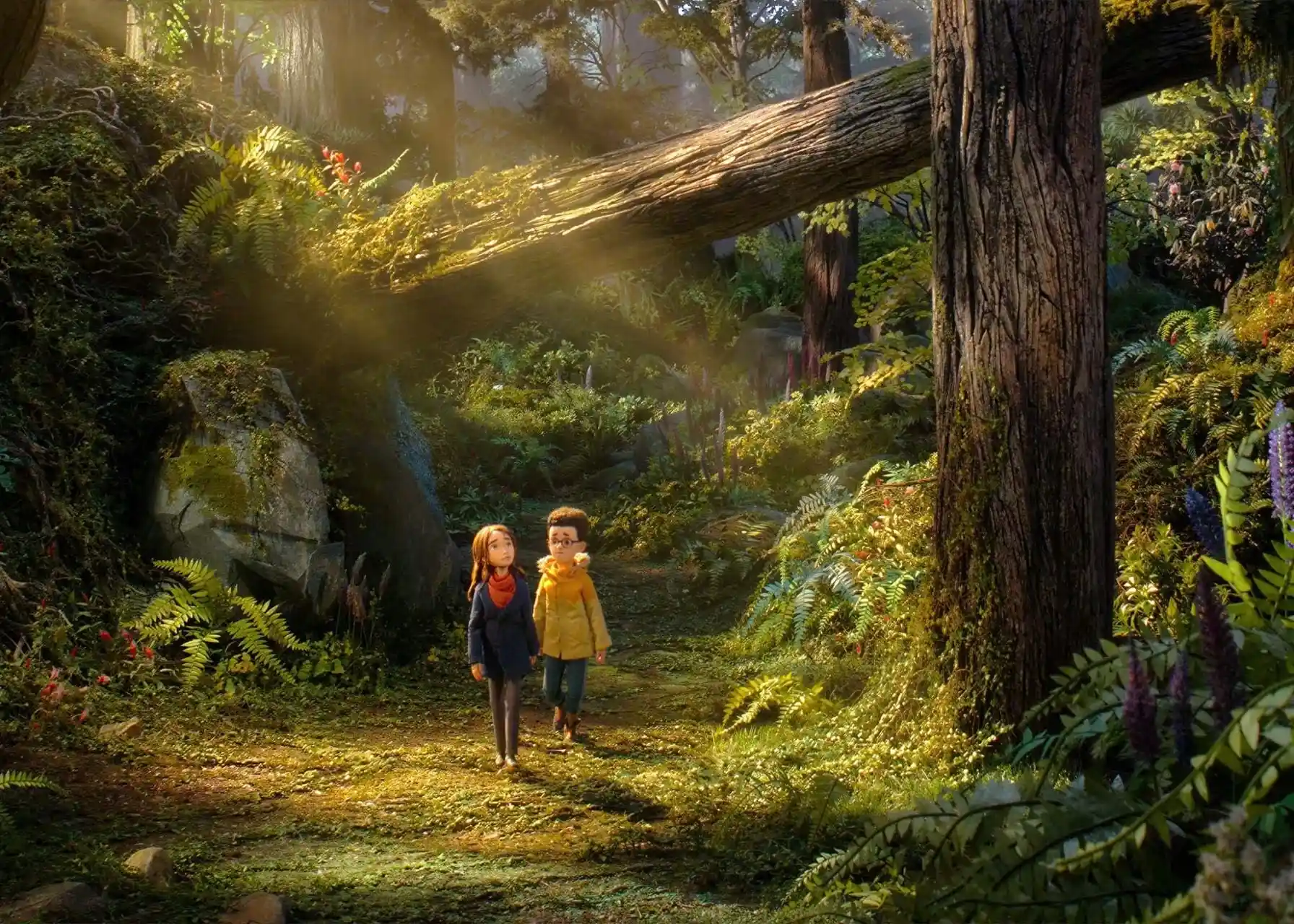
Prue’s classmate Curtis Mehlberg enters the forest alongside her, bringing a lighter energy to the journey. His uncertainty and initial cowardice contrast with Prue’s headfirst approach, allowing humour to grow naturally from his discomfort rather than a stream of jokes.
Curtis grows more convincing as the danger increases. His confidence develops through what he survives rather than through a sudden transformation. Being handed a weapon before he is ready gives his growth more weight and pushes his journey into Wildwood’s darker territory.
“I think stop motion, more than any other form of filmmaking, is an art form that leaves its fingerprints on the final product,” director Travis Knight said in a YouTube video.
Those fingerprints give Wildwood a tactile quality, from moss-covered logs to individually crafted eagle feathers. Fabric bends naturally around moving characters, while buildings carry the weight and texture of real objects. Careful lighting gives the textures added depth, while shadows across faces, foliage and interiors reinforce the darker mood. Close-ups reveal folds in clothing, subtle facial movements and shifts in posture.
Crows caw as they crowd the sky, armies occupy broad landscapes and chases tear through constantly changing environments. Some sequences grow large enough for the miniature production to disappear from mind, before a close-up exposes the physical construction again. Moving between spectacle and fine detail makes Wildwood feel enormous without sacrificing the handmade texture of stop-motion.
Laika pushed the puppets towards subtler performances. Tiny internal rigs allow small changes in posture, breathing mechanisms create visible breaths and animated muscles sit beneath some puppet bodies. More than 142,000 replacement faces were produced for Wildwood, compared with about 20,000 for Coraline.
The technical work helps explain why the emotions register so clearly. Expressions can shift in small increments rather than jumping between broad reactions, giving fear, exhaustion and uncertainty room to develop naturally. The puppets appear less like intricate objects being animated and more like characters responding to events around them.
Attention to detail extends across 117 unique locations, from Portland streets and homes to dense forests and magical battlefields. Cracked pavements, roof shingles and foliage may seem insignificant beside an army filling the frame, but those details make the larger world easier to believe.
Later scenes build on the unease established early in the film, with grief, death and sacrifice becoming more prominent as the story develops. Several characters are shaped by loss, and the colourful creatures and elaborate scenery never fully disguise the grief and danger underneath.
Wildwood is often most affecting when the film trusts performance over explanation. A look, a pause or a frightened cry can communicate more than another account of the wilderness’s history, giving the sprawling story emotional clarity.
Peyton Elizabeth Lee voices Prue, while Jacob Tremblay voices Curtis. Both performances deepen the emotions already carried by the animation. The wider voice cast also delivers strong performances, including Carey Mulligan, Mahershala Ali, Angela Bassett, Awkwafina, Jake Johnson, Charlie Day and Amandla Stenberg.
* Watch the trailer for ‘Wildwood’ here.
* Jason Bannier is a data analyst at World Wide Worx and deputy editor of Gadget.co.za. Follow him on Bluesky at @jas2bann.