



GadgetWings
Travel tech: Passenger the maths left out
The flight boarding challenge has been solved by maths, but people are not numbers, writes ARTHUR GOLDSTUCK.

In 2008, astrophysicist Jason Steffen published a mathematical answer to one of air travel’s most persistent irritations: the slow movement of passengers from the boarding gate into their seats.
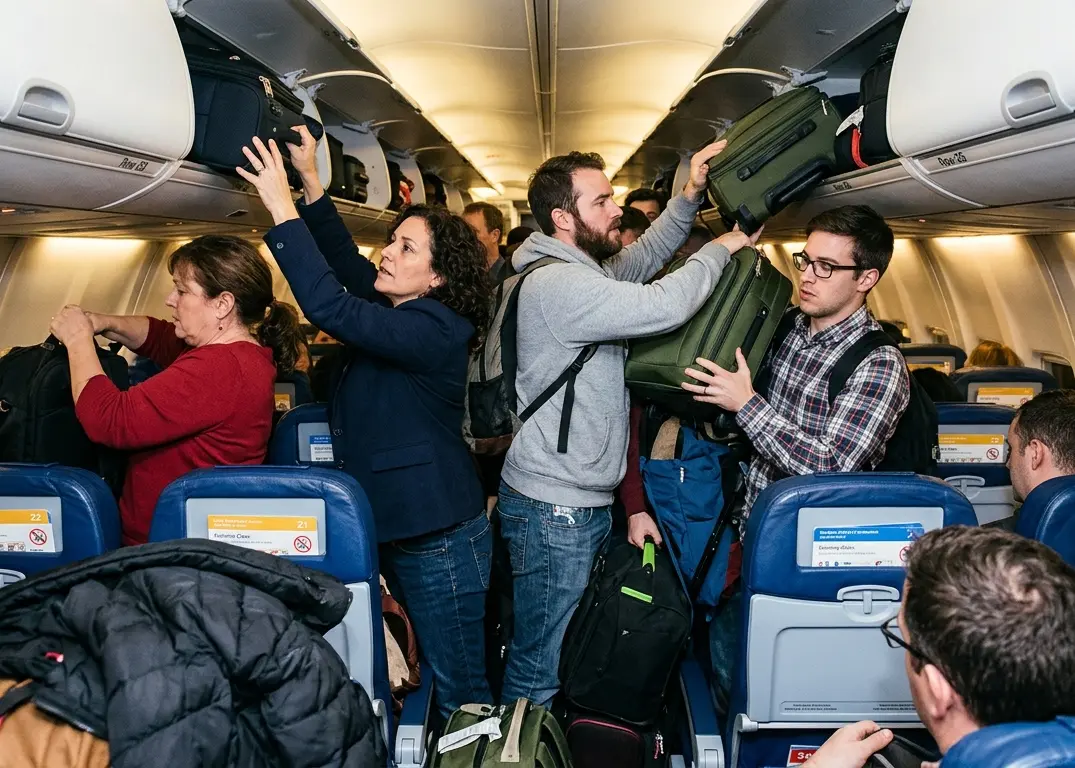
He modelled the aircraft cabin as an optimisation problem. He found that the main delay came from people blocking one another while lifting bags into overhead bins. So his solution placed passengers in alternating rows, with window-seat travellers boarding ahead of those booked into aisle seats. The spacing, in theory, allowed several people to load luggage at the same time.
By the rules of the model, boarding had been solved. It took a few years for it to be tested in physical trial with volunteers in a mock aircraft cabin. The trial supported the calculation: Steffen’s method beat the boarding systems commonly used by airlines by a few minutes.
Since then, however, very few passengers have ever heard a gate agent call them according to an astrophysicist’s sequence. Airlines borrowed parts of the idea, especially the preference for window seats before aisle seats, but the pure version has never been spotted in the real world.
The problem? Steffen’s passenger was an abstract concept: a unit with a seat number and a walking speed. That works well in an optimisation model , because it strips away detail until the remaining elements can be measured and rearranged.
In the real world, all the removed detail returns, and the unpredictable intervenes. A parent wants to remain with a child, while a passenger with limited mobility needs time and assistance without pressure from the queue behind. And, of course, as this column has noted previously, there is always THAT passenger who rearranges their wardrobe while fitting luggage into the overhead bin.
And then the airline has its own reasons for breaking the optimal process. Priority access forms part of premium tickets and loyalty programmes. Early boarding also carries a value for customers who fear losing overhead-bin space. An airline seeking the fastest possible process would weaken products that produce revenue and reward frequent customers.
That means the airline is solving a broader problem by the time boarding begins. Steffen’s maths remains correct within its assumptions, but the airline operates under a different set of obligations.
This isn’t merely a travel issue The same reduction from humans to numbers is built into credit scoring. A model can estimate the probability that a borrower will repay, so the score contains selected facts about a household while it leaves the rest outside the calculation.
A person with irregular income may look risky even when years of informal records show reliable payment, or their bank balance is bulging while reflecting no recurring income. Someone who has never used formal credit may be difficult to assess because the system reads a lack of data as a lack of evidence. So the model produces a defensible number, and the applicant is rejected.
Same with CV screening tools, increasingly common in the AI world: it can compare qualifications, employment history and the language used by previous successful applicants, but is baffled by an unusual career path and rejects the best applicant.
A company that optimises for lower cost and faster processing therefore creates pressure to treat anyone needing extra consideration as a defect in the process. The language of data hides the reduction..
Steffen’s work remains a sharp piece of optimisation. It identified a better way to move a particular set of assumed passengers through a particular cabin under a particular definition of success. Managers create the same kind of risk when they promote a precise answer into a complete account of human activity.
A responsible manager or system should allow for sight of what the model has left out. At the gate, that may require a slower process so that a parent and child can board together. In a bank, it may require human review of a thin credit file.
The difference between travel and finances is that, at the boarding gate, the gap between the calculation and the passenger is visible. Staff can see who needs help and adjust the sequence. In automated lending, recruitment or workplace assessment, the gap is hidden inside a score. The lesson from travel is obvious but increasingly rare: human being should be allowed to override the algorithm:
* Arthur Goldstuck is CEO of World Wide Worx, editor-in-chief of Gadget.co.za, and author of “The Hitchhiker’s Guide to AI – The African Edge”.
…