



GadgetWings
Starship goes where no Enterprise went before
Boston-bound Trekkies have six months to see the rediscovered 1964 original model of the Enterprise at MIT, writes GINA CASE.

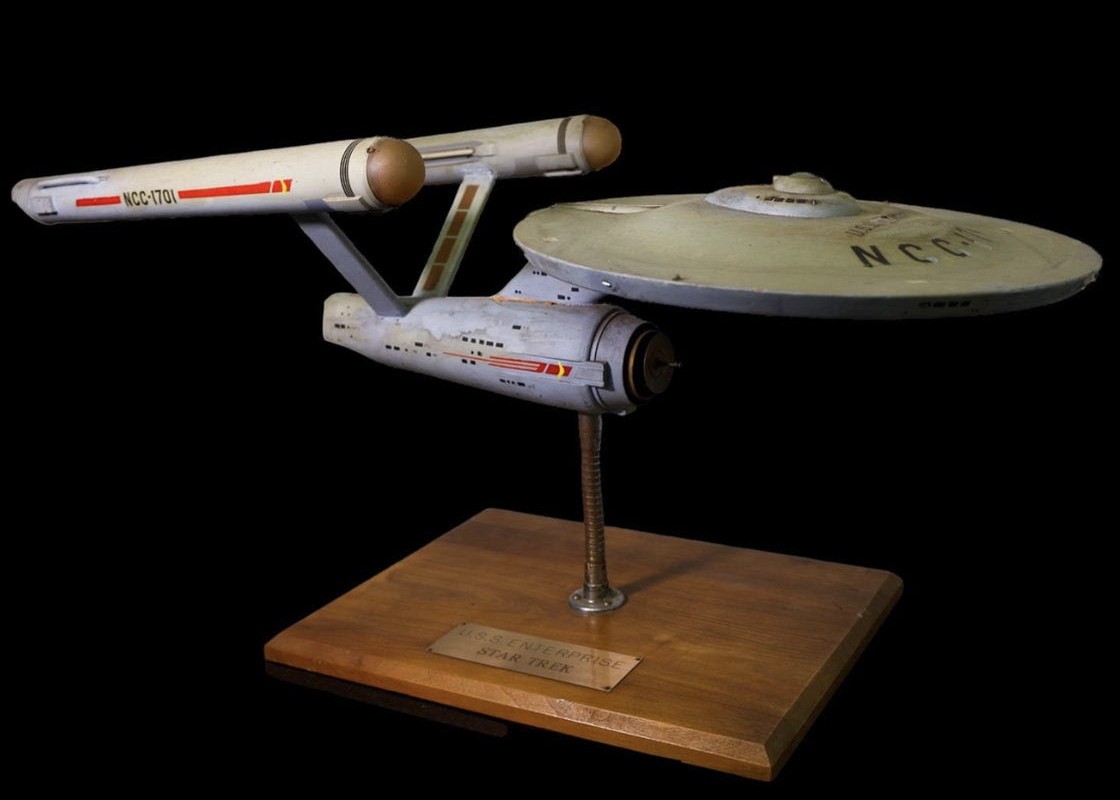
The original 33-inch model of the Starship Enterprise, missing for 45 years before turning up in a storage unit, is about to begin a six-month museum run at MIT in Cambridge, Massachusetts.
From 30 September 2026 to 28 March 2027, the restored model will be on public display at the MIT Museum. It was built in 1964 for the original Star Trek television production and appeared in the opening title sequences of Star Trek: The Original Series, which began broadcasting 60 years ago this month.
Its first post-recovery public appearance came in San Diego in July during Comic-Con and lasted five days. At MIT, visitors will have almost six months to see one of the most recognisable pieces of television science-fiction history.
Model maker Richard C Datin Jr built the 33-inch Enterprise from designs by production designer Matt Jefferies. Known as the “3-footer” or pilot model, it established the look of the ship that would carry Captain James T Kirk and his crew through three seasons of the original series.
From the late 1960s into the mid-1970s, the model was kept on Star Trek creator Gene Roddenberry’s desk. He later loaned it to Paramount Studios during production of Star Trek: The Motion Picture in the late 1970s. After that, it disappeared.
For the next 45 years, one of the most famous missing props in television history remained unaccounted for. Then, in 2023, it turned up in a storage unit and was listed on eBay. Heritage Auctions became involved and helped return it to the Roddenberry family.
Roddenberry’s son, Eugene “Rod” Roddenberry Jr, was reunited with the model in 2024. It subsequently underwent preservation and restoration before making its brief public appearance in San Diego this year.
MIT has its own history with Star Trek. Fifty years ago, in 1976, Gene Roddenberry addressed a packed Kresge Auditorium on the campus and thanked students for helping campaign to keep the television series on air. Their efforts included putting “SAVE STAR TREK” bumper stickers on network executives’ cars at Rockefeller Center.
“We are thrilled to have the opportunity to show this unique model at the MIT Museum,” said museum director Michael John Gorman. “Star Trek represents an optimistic, hopeful vision of the future which is desperately needed right now.”
Gorman said ideas from the series had inspired scientists and technological advances, including work at MIT.
“This model is not merely a prop; it’s a time capsule of human aspiration,” he said.
The exhibition opens during MIT Future Fest, which runs from 30 September to 4 October. Rod Roddenberry will take part on 3 October in a panel called The Next 250 Years, alongside robotics pioneer Rodney Brooks, MIT Computer Science and Artificial Intelligence Laboratory director Daniela Rus and former NASA astronaut Jeff Hoffman.
Visitors during Future Fest get free admission to the museum. From 5 October, general adult admission is $20. The MIT Museum is at 314 Main Street in Cambridge and opens daily from 10am to 5pm.
Cambridge is directly across the Charles River from Boston, and the museum is beside the Kendall/MIT station on the MBTA Red Line. Its location in Kendall Square also makes the exhibition an easy addition to a visit to the MIT campus.
Trekkies willing to extend the trip can find another Enterprise in Washington DC. The later 11-foot filming model, made after the 33-inch version and used extensively in the original television series, is on display at the Smithsonian National Air and Space Museum.
That creates a rare two-city Star Trek trail: the model that established the Enterprise design in Cambridge and the much larger studio version that followed it in Washington.
The Cambridge exhibition also coincides with the 60th anniversary of Star Trek, first broadcast in September 1966. Few surviving props are as closely identified with the series, and even fewer have spent nearly half a century missing before returning to public view.
Rod Roddenberry said the family regarded the model as part of a legacy extending beyond television fandom.
“We see the Enterprise as an enduring emblem of optimism. That vision for a better future belongs to us all.”
* Gina Case is writer and contributor for Gadget.