



GadgetWings
‘First’ trans-USA autonomous flight
Joby’s converted Cessna Caravan covered more than 5,100km with a safety pilot aboard who never touched the controls, writes GINA CASE.

The pilot aboard Joby Aviation’s Cessna Caravan crossed the United States without touching the controls. The aircraft taxied, took off, changed course around thunderstorms and landed at successive airports between California and North Carolina. By the time it reached the Atlantic coast, it had travelled 5,148km under its own control.
Joby calls it the first autonomous flight across the country. The claim describes a journey made in stages, with a safety pilot in the cockpit and another pilot supervising from the ground. On some stretches, that supervision came from as far as 3,738km away. The pilot aboard made no control inputs during the trip.
At each airport, the system handled the taxiing and take-off as well as the approach and landing. The ground-based pilot remained in charge of the operation, could update the flight plan and spoke to air traffic control over the Caravan’s standard radios.
The aircraft, called the J208, began its eastbound trip at Concord in California. At Phoenix Deer Valley in Arizona, one of the busiest US airports for smaller aircraft, Joby demonstrated how it operated among other traffic. Further along the route, it diverted around severe weather. Fort Worth Alliance in Texas gave the company a setting to show its possible role in freight transport; Shaw Air Force Base in South Carolina provided a military demonstration before the final crossing to North Carolina’s Outer Banks.
The 5,148km figure adds up the stages of a month-long tour. Each stop brought another departure and arrival, with different traffic and weather to contend with. Joby says the Caravan had no prior familiarity with some of the airports it used.
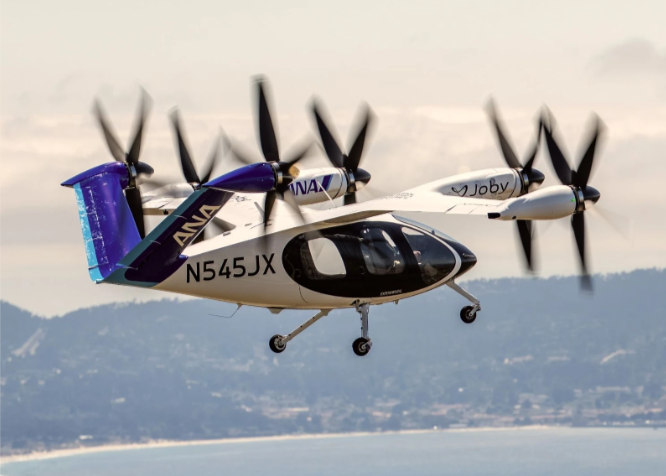
Joby is better known for its electric air taxi, designed to carry a pilot and four passengers on short urban and regional trips. For the cross-country journey it used a converted Cessna 208 Caravan with conventional propulsion. Joby fitted the aircraft with the autonomous system it acquired when it bought Xwing’s autonomy division in 2024, taking its cargo technology to airports across the country.
Xwing had developed its system, called Superpilot, around the Caravan before the acquisition. Its work included computer vision, systems to detect other traffic, route planning and ground control stations. At the time of the deal, Joby said Xwing had already completed 250 fully autonomous flights and more than 500 automated landings. The recent US crossing therefore built on years of flying, although it took the aircraft through a much wider range of operating locations.
Military exercises have provided some of the other demanding tests. In one US Air Force exercise, Joby says an autonomous cargo run delivered replacement parts roughly 24 hours sooner than conventional logistics would have done. During an exercise over Hawaii and the Pacific in 2025, ground crews supervised flights from Guam, more than 4,800km away. The aircraft flew in different classes of airspace and followed both visual and instrument flight rules, according to Joby. A safety pilot was aboard for those flights too.
“Autonomy has an important role to play in the future of flight,” said Joby founder and CEO JoeBen Bevirt. The company sees applications in medical supply deliveries, disaster response and freight links to communities where regular air services are limited. It says the system has accumulated more than 400 flights and 800 automated flight hours.
North Carolina offers one possible civilian use. Joby’s flights there supported a state initiative to develop air transport for healthcare logistics. The state has also been selected for a US aviation pilot programme that includes work on autonomous flights extending into neighbouring Virginia. Elsewhere, the programme brings together aircraft companies and state authorities to test cargo, passenger and emergency operations in ordinary airspace. The US Federal Aviation Administration says it will use data from the demonstrations to identify gaps in procedures and develop rules for wider use.
In the western states, Joby’s aircraft took part in a separate group of trials examining how autonomous flights work at high altitude, in desert temperatures and across different types of airspace. Those conditions put different demands on the aircraft and the people supervising it. They also give aviation authorities evidence from more than the familiar routes around a single test airport.
The safety pilot sat ready to intervene throughout the cross-country trip, while the remote pilot supervised the aircraft and spoke to air traffic control. Routine cargo flights with an empty cockpit would require Joby to demonstrate how that remote oversight could cover the safety pilot’s role and secure the necessary approvals.
After reaching the Outer Banks, the Caravan flew past the Wright brothers’ monument near Kitty Hawk. Joby had chosen the destination for its place in aviation history: Orville Wright’s first powered flight there covered about 37 metres in 12 seconds in 1903. The Caravan had crossed the country 123 years later with its safety pilot’s hands off the controls.
Joby’s return route includes Louisville, home to UPS Worldport, the world’s largest automated package facility. The stop puts the Caravan beside the kind of freight hub it could eventually serve, carrying cargo from smaller airports into a major sorting network under remote supervision.
* Gina Case is writer and contributor for Gadget.