


Artificial Intelligence
MWC 2026: Eskom takes industrial AI to Barcelona
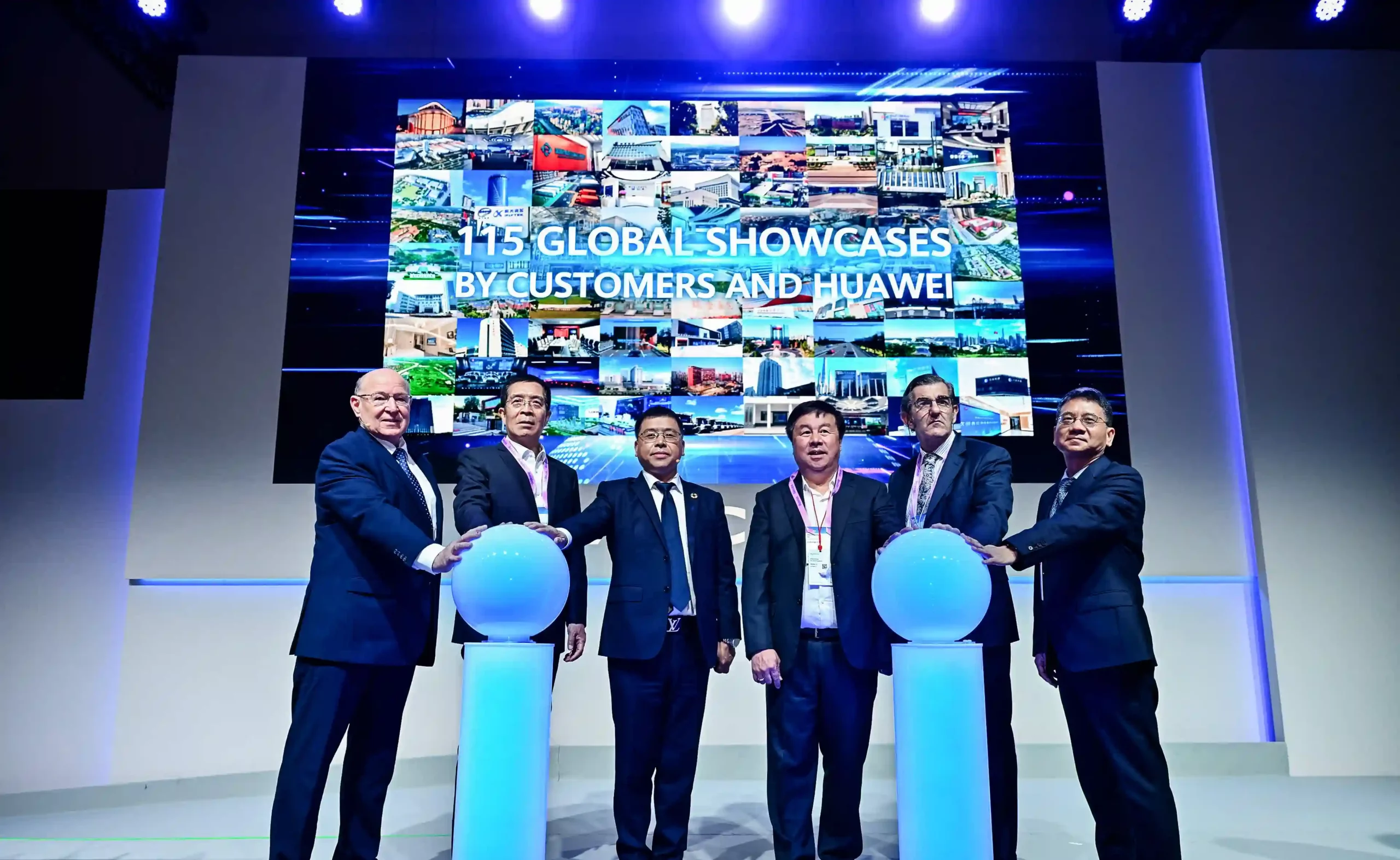
At Mobile World Congress this week, Eskom CTO/CIO Len de Villiers stood alongside global industry leaders as Huawei unveiled 115 industrial intelligence showcases, writes ARTHUR GOLDSTUCK.

Huawei used its Industrial Digital and Intelligent Transformation Summit at Mobile World Congress (MWC) in Barcelona this week to showcase scale: 115 industrial intelligence case studies developed with customers, and 22 new sector solutions launched with partners.
It was startling to learn that one of their sector success stories was South Africa’s much-maligned power utility, Eskom. However, Len de Villiers, chief technology and information officer of Eskom, shared a narrative that explained much about why the organisation is no longer under the shadow of load-shedding. Among other, he revealed that 220 AI pilot projects were under way in Eskom.
“Sustainable electricity supports economic growth, reduces poverty, and improves living standards,” he said. “Eskom remains pivotal in transforming lives through our significant contribution to South AfricaA’s economy.”
His appearance was tied to Huawei’s push into what it calls “industrial intelligence”: embedding AI into core production and operational systems rather than peripheral analytics. The summit itself was positioned as a working forum for customers and partners exploring practical deployment .
De Villiers was joined on stage by executives from Shandong Port Group, Converge ICT, HM Hospitales and PetroChina . For a South African utility in the midst of restructuring and system renewal, it was a high-visibility moment in a global technology forum.
The context is that South Africa’s energy sector is under intense pressure to modernise infrastructure, stabilise supply and fund a transition to a more diversified energy mix.
“Eskom’s strategy and turnaround plan is to pursue financial and operational sustainability, and to modernise power system and energy transition,” said De Villiers.
The modernisation agenda intersects with digital systems in several areas: grid visibility, predictive maintenance, system balancing, cybersecurity and operational resilience. AI-driven tools now sit closer to core production systems than pilot projects or isolated dashboards.
Huawei outlined a framework it calls the ACT Pathway: assessing high-value scenarios, calibrating AI models with vertical data and transforming business operations with AI talent . The company says it has already identified more than 1,000 core production scenarios where AI can play a role .
For utilities, those scenarios typically involve asset monitoring, load forecasting, outage management and infrastructure optimisation. Eskom’s unbundling process adds another layer of digital complexity.
“Through unbundling, Eskom will evolve to be more agile and attract the funding required to deliver the future energy landscape and economic growth,” said De Villiers.
Unbundling requires clearer data separation, stronger governance and improved interoperability between systems. It also increases the need for real-time operational intelligence across generation, transmission and distribution functions.
Huawei’s summit showcased use cases across electric power, manufacturing, retail, finance, transportation, oil and gas, ISP, media, public service and smart city sectors . Eskom’s presence placed South Africa’s power utility among global industrial players exploring similar transitions.
Huawei also announced upgrades to its SHAPE 2.0 partner framework, embedding AI into joint innovation, certification and ecosystem development . The framework includes AI-powered product upgrades, new certification programmes and plans to support more than 1,000 partners with AI credentials .
For utilities, industrial AI deployments depend on integration between hardware infrastructure, cloud platforms, cybersecurity frameworks and field operations. Certification programmes and standardised AI capabilities aim to reduce fragmentation across those layers.
Huawei says it is deploying more than 3,000 scenario-specific AI experts and launching “lighthouse projects” across 38 industries . On the exhibition floor, Huawei set up 98 exhibition stands and 51 interactive demonstrations in its enterprise business area . The physical scale matched the messaging: industrial intelligence is moving from proof-of-concept to operational deployment.
Huawei’s six-layer AI security framework, referenced in the ACT model , addresses another concern for utilities: security across the AI lifecycle. Power grids represent critical national infrastructure. AI integration must coexist with strict compliance, resilience and data protection requirements.
The summit featured customers from ports, healthcare, telecoms and energy sectors, each presenting sector-specific intelligence applications . The cross-sector format underscored a shared trajectory: core operational systems now incorporate AI models trained on vertical data.
For Eskom, vertical data includes plant performance histories, grid stability metrics, outage patterns and maintenance cycles accumulated over decades. Calibrating AI models against such data requires domain expertise as much as algorithm design.
* Arthur Goldstuck is CEO of World Wide Worx, editor-in-chief of Gadget.co.za, and author of The Hitchhiker’s Guide to AI – The African Edge.