



GadgetWheels
EV revolution slows
to evolution
Volvo’s plug-in hybrid, instead of being a halfway house, has become one of its strongest bets for an electrified future, writes ARTHUR GOLDSTUCK.
Carmakers once promised the electric future would land like a thunderclap. Petrol engines would fade from view, and charging stations would rise to take their place. The reality is slower. What was billed as a revolution has settled into an evolution.
Volvo was one of the most ambitious players. It declared it would be all-electric by 2030. Now, the nuance has changed. This week, at the Babylonstoren wine farm near Paarl, where Volvo unveiled the facelifted XC90 SUV, a sense of pragmatism emerged.
“We don’t know how fast customers will transition to fully EVs,” new Volvo South Africa CEO Grant Locke told Gadget during a media briefing. “We can’t risk the organisation on that. So we’re keeping the customers’ right to make a decision open by maintaining both of these model sets and investing in them for the foreseeable future”,
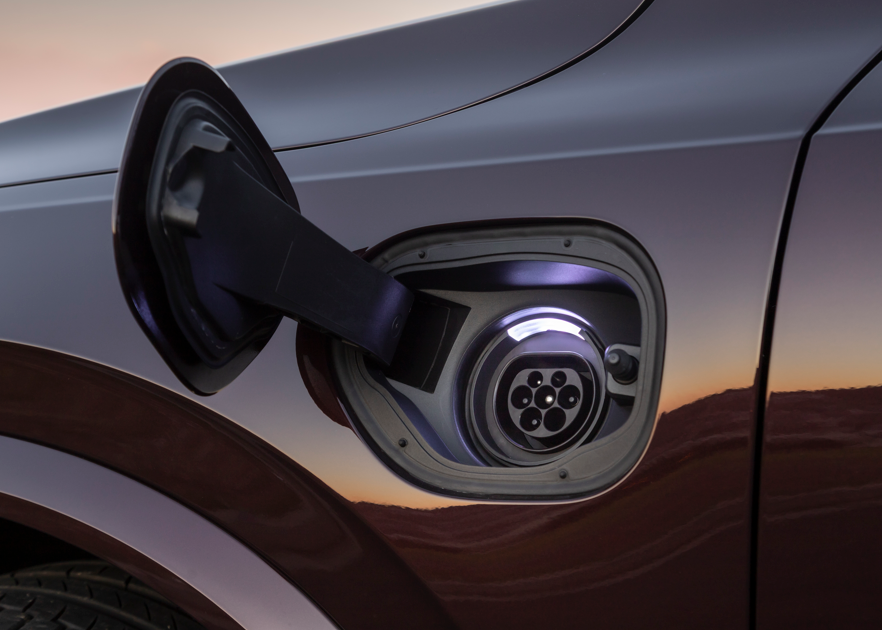
Three pathways now sit side by side: petrol, plug-in hybrid, and fully electric. The plug-in hybrid, instead of being a halfway house, has become one of Volvo’s strongest bets. Since it was introduced in 2015, more than a million hybrids have been sold. The latest carries an 18.8 kilowatt-hour battery, giving about 70 kilometres of range before the engine cuts in.

Globally, the numbers reveal the steady tilt. EVs account for 23% of Volvo’s sales, plug-in hybrids another 23%, and the rest petrol. When those categories are combined, Volvo says, almost half its sales are “electrified” – a word that incorporates hybrids.
Locke did not try to explain away the original 2030 target. He told Gadget. “From my perspective, there’s two reasons you set a target like that. One is external, signalling to the world where you’re going. The other is internal. For an organisation with 42,000 people across 34 countries, it creates urgency.
“Would we have ever got that target right? No, probably not, because at the moment we’re balancing generating revenue from customers’ existing behaviour, but also positioning for the future.
“You’re asking customers to change a mindset they’ve known their entire lives. They’re used to finding a garage to fill up with fuel. They’re used to hearing a certain noise from the car when they put their foot down. All of this behaviour is ingrained in the driving experience. And all of this behaviour is now changing, but the entire industry is trying to do it at the same time”.
This kind of change, he said, often comes through lived experience rather than advertising or research.
“The most important mind shift that happens for a customer when it comes to an EV is when they buy their first wall box. The moment you get home at night, plug the car in, and the next day it’s at 100% again – that is when your mind changes.
“At the moment, there are no plans to invest in charging infrastructure in South Africa. But it’s never off the table. If our entire product strategy is predicated on customers being able to charge, we have to keep that in mind.”
More urgently, the company needs to regain consumer trust following the closure earlier this year of 12 of its 19 dealerships in South Africa. The resultant backlash from both customers and the Motor Industry Staff Association cast doubts on the brand’s future in the country. Locke has his hands full restoring faith in the brand.
“The most important thing I need to do is to grow customer trust inside Volvo,” he said. That means expanding carefully: two new dealerships opened recently in Nelspruit and Gqeberha, with more to come.
The XC90 facelift itself reflects the incremental nature of the shift. Volvo’s head of product and pricing, Vusi Machie, ran through the changes: “We have new slimmer LED headlamps, a sunroof standard on all models, and a new infotainment system with Google built in”. Aside from a significant improvement in the Google user interface, there are no radical changes; only a steady refinement.
Taken together, Locke’s candour and Volvo’s strategy highlight how the early dream of an overnight revolution has given way to pragmatic evolution. EV adoption is happening, but through small shifts in behaviour rather than sudden leaps. As Locke put it, the tipping point arrives in the driveway, when drivers go to sleep at night with a depleted car in the garage and wake up with it fully charged.
* Arthur Goldstuck is CEO of World Wide Worx, editor-in-chief of Gadget.co.za, and author of “The Hitchhiker’s Guide to AI – The African Edge”.