



Sports Tech
Signpost: World Cup’s
indirect win for SA tech
While Bafana Bafana lost the opening game against Mexico, Lenovo’s technology underpinning the event was a big winner, writes ARTHUR GOLDSTUCK.

So the opening match of the World Cup did not go South Africa’s way. As always, we lived in hope, and then resigned ourselves to the inevitable.
But the one thing that worked seamlessly, and proved to be a winner for fans of both Mexico and Bafana Bafana, was the technology underpinning the tournament.
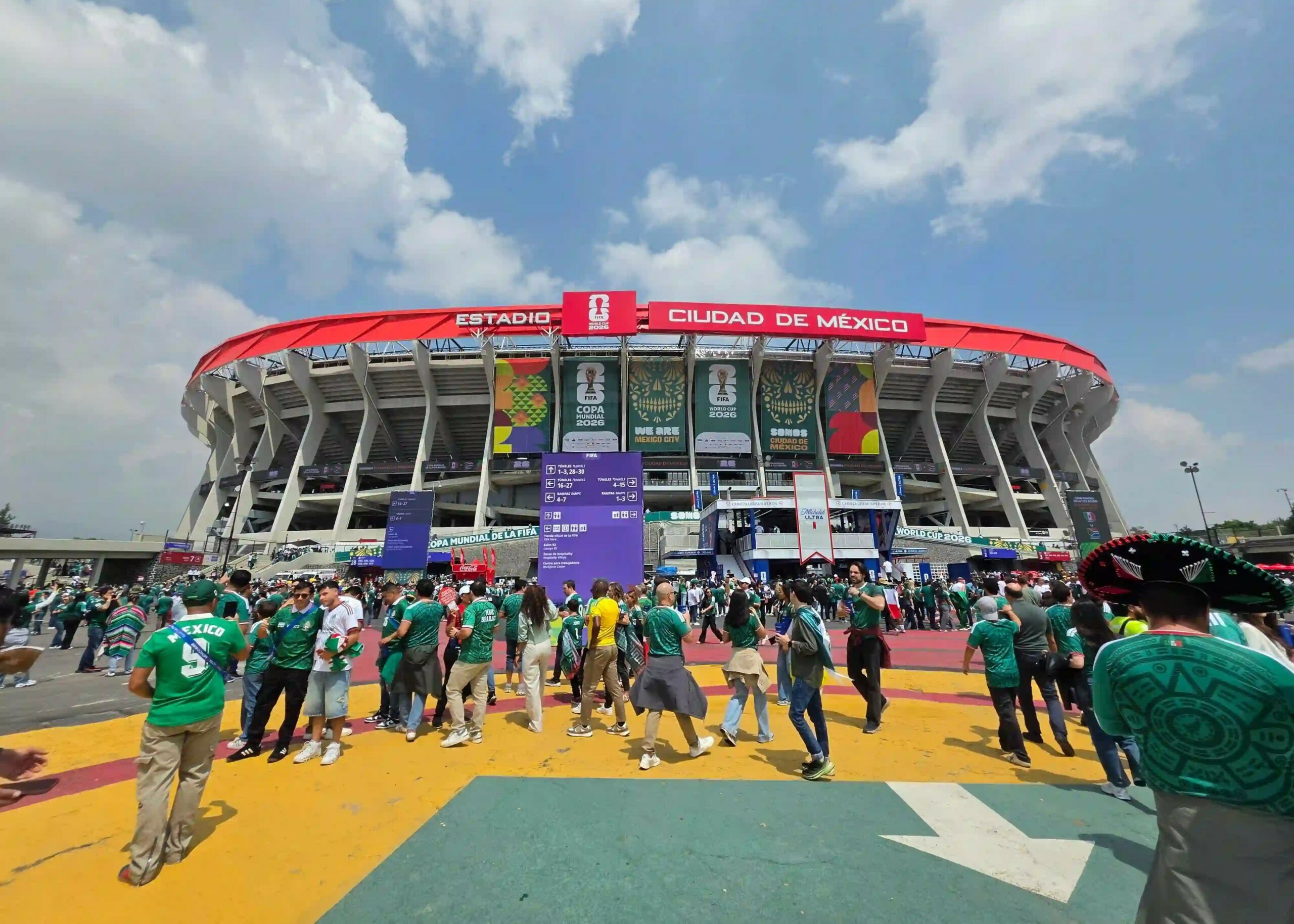
Having had the unique privilege of attending the match, I was surprised to find the ambitious ticketing strategy going off without a hitch. Tickets were strictly confined to QR codes delivered a few hours before the game on a phone app, and scanned at the entrance gates.
Given the scale of the event, the variety of devices in the hands of supporters, and the sheer volume of people converging on the stadium – 88,824 people filled the Azteca Stadium in Mexico City – I expected queues and confusion. Instead, tens of thousands of fans streamed through the gates with remarkable ease.
Behind the scenes, a complex network of systems supported everything from crowd security to analytics and fan engagement. Football’s biggest tournament had become one of the world’s biggest technology showcases, even if most supporters remain unaware of it.

This year’s World Cup carries an added dimension. It is the first under Lenovo’s stewardship as FIFA’s official technology partner.
For many people, Lenovo is a company that makes laptops, yet the role it plays at the World Cup reveals how far it has travelled from that perception.
“We’ve evolved from being just a PC company,” said Yugen Naidoo, Lenovo’s general manager for Southern Africa, during the company’s Accelerate 2026 conference in Johannesburg last week. “We are now a solutions-led company, wrapped around services.”
That transformation helps explain why South Africa has become increasingly important within Lenovo’s global operations.
In an interview with Gadget, Fiona O’Brien, vice-president for sales transformation and enablement in Lenovo’s international markets, said the company saw enormous growth opportunities here.
“There is no doubt that the Middle East and Africa region is becoming increasingly important to Lenovo,” she said.
According to Naidoo, Lenovo’s Southern African operation achieved 20% year-on-year growth in PCs, 20% growth in infrastructure solutions and 33% growth in services over the previous year. Services penetration has reached almost 11%, currently the highest in Lenovo’s Middle East and Africa region.
Those numbers tell only part of the story, said Naidoo.
“The biggest transformation has been transforming our programmes, people, and skills. A lot of our people were PC sellers. Today, we call them International Sales Organisation sellers, where they take a complete solution to customers and partners.”
That change reflects a broader movement across the technology sector. Selling products has become the easy part, but solving business problems is where the value increasingly lies.
O’Brien offered an unusual perspective on local projects: “The Southern Africa team has led some really interesting customer engagements that have produced tangible outcomes. Those are exactly the kinds of stories I’ll take back and use to challenge teams in other countries.”
That observation says a great deal about how global technology companies now view the region. Africa has traditionally been treated as a destination for products and services developed elsewhere. Increasingly, it is also becoming a source of ideas and use cases.
At the same time, modern technology deployments depend on global partnerships and collaboration acrossdisciplines. The same principle applies at the World Cup.

I saw a ticket on a phone. My colleagues in broadcasting saw video feeds. Referees saw decision-support systems. Coaches? Who knows what they saw, considering their strange tactics. But we do know they have instant access to an enormous depth of performance data.
Underneath those experiences, a vast technology infrastructure connects devices, applications, networks and data centres.
“We’re working closely with FIFA to bring AI use cases in sport to life,” said O’Brien. “Internally, we’re exploring digital assistants, configuration AI, natural language processing, and AI-assisted tender responses.”
The company has adopted a simple philosophy: it uses the technology internally before recommending it to customers.
“If we want our sales organisation and Lenovo as a whole to partner with customers on their AI journey, then we need to be living that experience ourselves,” said O’Brien. “We need first-hand experience of what works and what doesn’t.”
Naidoo took it a step further: “It is especially exciting because this will be the first AI-powered World Cup. We’re making history and we’re part of that history.”
* Arthur Goldstuck is CEO of World Wide Worx, editor-in-chief of Gadget.co.za, and author of “The Hitchhiker’s Guide to AI – The African Edge”.