


GadgetWings
Governments promise ‘seamless travel’
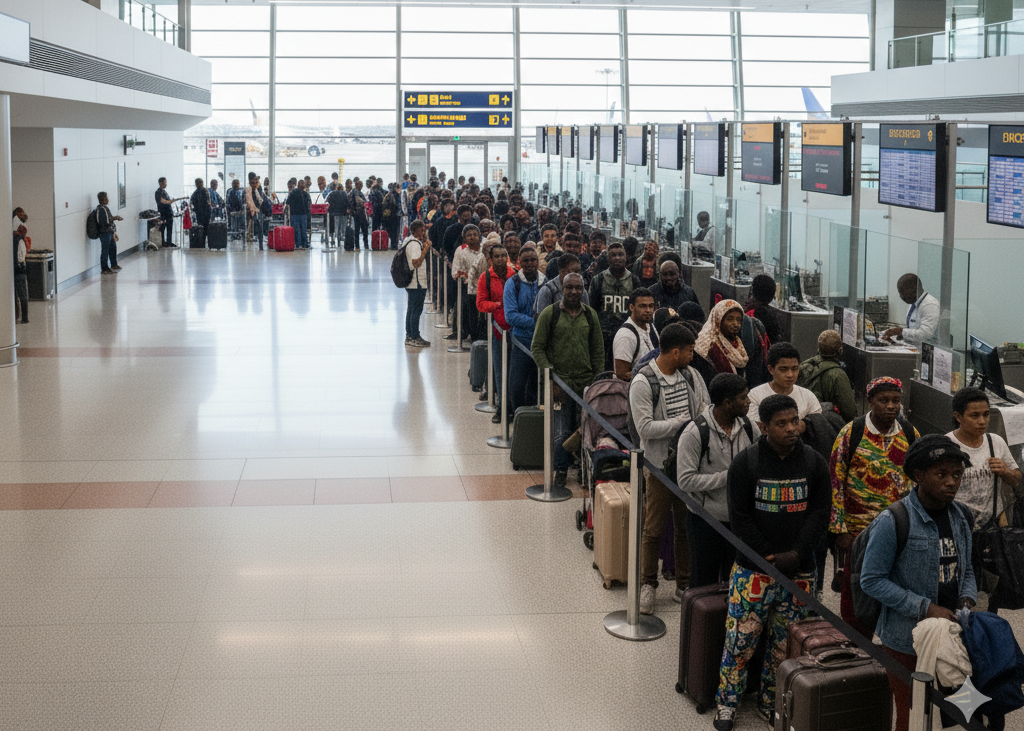
Tired of standing in emigration lines to have passports stamped with 100-year-old tech? Such pain may soon be passé, writes ARTHUR GOLDSTUCK.

The International Civil Aviation Organization (ICAO) is working to implement advanced identity technologies and standards to enable billions of individuals to securely prove their identity at borders and in daily life.
This was a key focus at its recent ICAO TRIP Symposium in Montreal, where governments deliberated steps to implement such standards.
ICAO is a United Nations agency which helps 193 countries to “cooperate together and share their skies to their mutual benefit”. TRIP, the Traveller Identification Programme, is part of the UN agency’s strategy to establish the goal and objectives of traveller identification management, and lead and reinforce a global approach.
“Everyone deserves secure proof of their identity, and everyone deserves the freedom to fly,” said ICAO council president Salvatore Sciacchitano during the opening of the event. “That is why billions of people are counting on the work we do at the ICAO TRIP Symposium.”
He said that automation, interoperability, and robust data exchange were now becoming foundational elements of border management, and progress was accelerating.
If you haven’t yet experienced this progress, it may only be a matter of time.
ICAO claims that 165 ICAO Member States have already issued a total of more than a billion electronic machine-readable travel documents. These can be validated instantly and worldwide through a platform called the ICAO Public Key Directory, which is intended to enable governments to confirm the authenticity of these documents.
New specifications for ICAO Digital Travel Credentials and barcodes are also promising expanded access to “seamless and contactless” journeys by providing solutions for all countries. This is clearly more of a [principle than an actual practise, as South African travellers to Europe will know only too well. However, ICAO says that such solutions will also be rolled out to countries with limited infrastructure, meaning we soon won’t have to stand in long emigration lines to get our visas examined under a magnifying glass and our passports stamped courtesy of 100-year-old technology.
To its credit, ICAO acknowledges that the stakes are considerable, as global passenger traffic is projected to triple within the next 25 years. While air transport will carry 4.6-billion passengers in 2025, ICAO forecasts 12.4-billion passengers annually by 2050.
Last month’s 42nd ICAO Assembly adopted binding resolutions to implement the ICAO Strategic Plan for 2050, which envisions “air transport for everyone, everywhere, with zero fatalities and net zero carbon emissions”.
A key element of this vision is “secure and inclusive identity management for all”, as a key to achieving this objective.
“These best practices will ensure that the global flight network has the capacity to process growing numbers of passengers while increasing the security and convenience of their trips,” says the organisation. “Achieving universal application of the most advanced technologies and processes will eliminate the digital divide and ensure accessibility for all travellers and inclusivity of all member states.”
* Arthur Goldstuck is CEO of World Wide Worx, editor-in-chief of Gadget.co.za, and author of The Hitchhiker’s Guide to AI – The African Edge.