

Hardware
Huawei straps on Watch GT 6 Series
Paris was the stylish venue for the launch of the most stylish smartwatch yet from the market leader, writes ARTHUR GOLDSTUCK.

The best time for any brand to launch a leading-edge device in a category is when it leads that category. That not only reinforces that lead but cements the brand’s credentials for claiming design and innovation leadership.
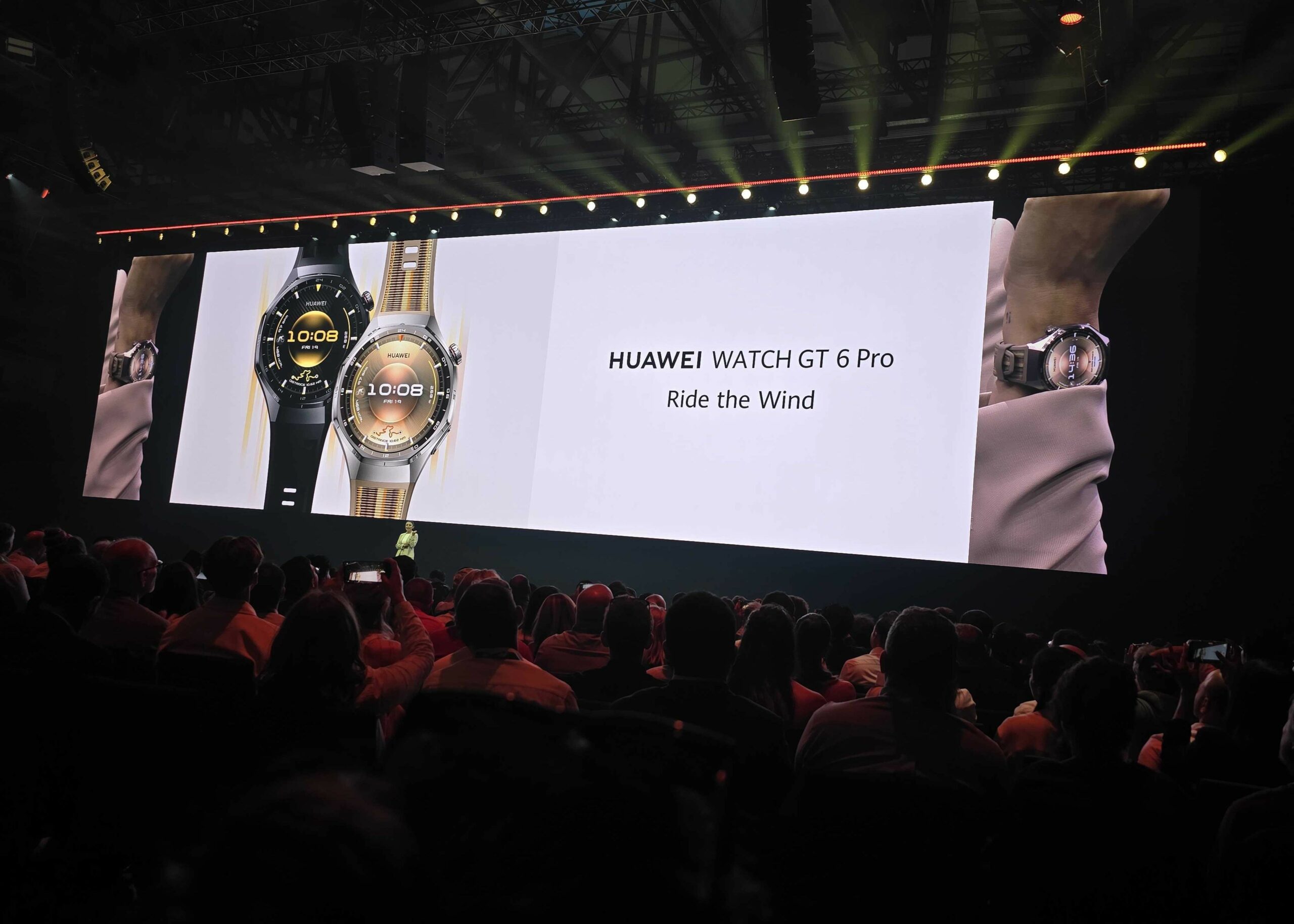
In this context, when Huawei unveiled the stylish new Watch GT 6 series at a global launch event in Paris today (Friday), its marketing messages were no longer seen as hype.
The launch, held under the poetic banner of “Ride the Wind”, was as much about reaffirming dominance in wearables as it was about reimagining what a smartwatch can represent. The Vélodrome National de Saint-Quentin-en-Yvelines in Paris provided the stage for a spectacle of both technology and theatre, where watches were the centrepieces of a fashion-meets-function narrative. The company used the moment to plant a flag in multiple categories, from health tracking to fitness monitoring, while setting out a philosophy that tied sport, style and longevity into a single device family.
The GT 6 is positioned as a smartwatch with endurance in its DNA. While it has long been a leader in longevity of use too, it has extended it to a claimed 21-day battery life.

This is nothing less than a signal of a new arms race where stamina is as important as features. Pinpoint positioning and the TruSense system for health metrics form the foundation, with cycling, trail running, golf and skiing modes receiving dedicated engineering upgrades. A virtual power meter for cyclists is a neat trick, delivering pro-level analytics without the wallet-emptying extra hardware usually required. Runners get altitude charts and grade analysis, promising new insights into how the mountain is punishing their lungs, and golfers are offered high-definition fairway maps to plot their next frustration.
The stage also introduced the Watch Ultimate 2, diving headlong into unexplored waters. Billed as the first smartwatch rated for 150 metres, it pairs diving credentials with audio functionality and sonar-based communication. Messaging underwater up to 30 metres and SOS alerts up to 60 metres can turn the watch into a lifeline as much as a logbook. Few outside the small circle of professional divers may ever use these features, but they are symbolic of Huawei’s strategy: use extreme capabilities to reinforce mainstream credibility.
On the health monitoring front, the Watch D2 made a return, dressed in blue and emphasising blood pressure tracking. Its combination of single and recurring reminders, individual measurements and ambulatory monitoring, suggest Huawei is edging closer to the medical device market, where consistency and accuracy are non-negotiable. The implications reach beyond gadgetry: in markets with strained healthcare systems, tools that can detect and track conditions before they become emergencies could lighten the load on clinics and doctors.
Smartphones and tablets also had their moment in Paris. The nova 14 series targeted younger consumers with an Ultra Chroma Camera and portrait-focused AI features. The emphasis on selfies, with a 50-megapixel front camera and 5x portrait zoom, underscored how personal branding and social presence are shaping the priorities of smartphone engineering. The MatePad 12 X PaperMatte edition, with stylus tricks and a visual comfort focus, carried the torch for paperless creativity.
Huawei launched new brand positioning under the slogan “Now is Yours”. It echoed through the GoPaint Worldwide Creating Activity 2025, an initiative aimed at encouraging digital artists across categories, from sci-fi to animation.
Clearly, Huawei is consolidating its hold on wearables, while signalling ambitions that stretch from fashion statements to health companions, and from everyday workouts to deep-sea dives. In Paris, it showed it is not content to play only in safe spaces. Instead, it is charting extremes to shape the middle ground, setting benchmarks that will ripple across the industry.
Whether the 21-day battery life claim stands up in the wild remains to be seen, but the intent is obvious: redefine expectations before rivals can.
* Arthur Goldstuck is CEO of World Wide Worx, editor-in-chief of Gadget.co.za, and author of “The Hitchhiker’s Guide to AI – The African Edge”.