


Gadget of the Week
Gadget of the Week:
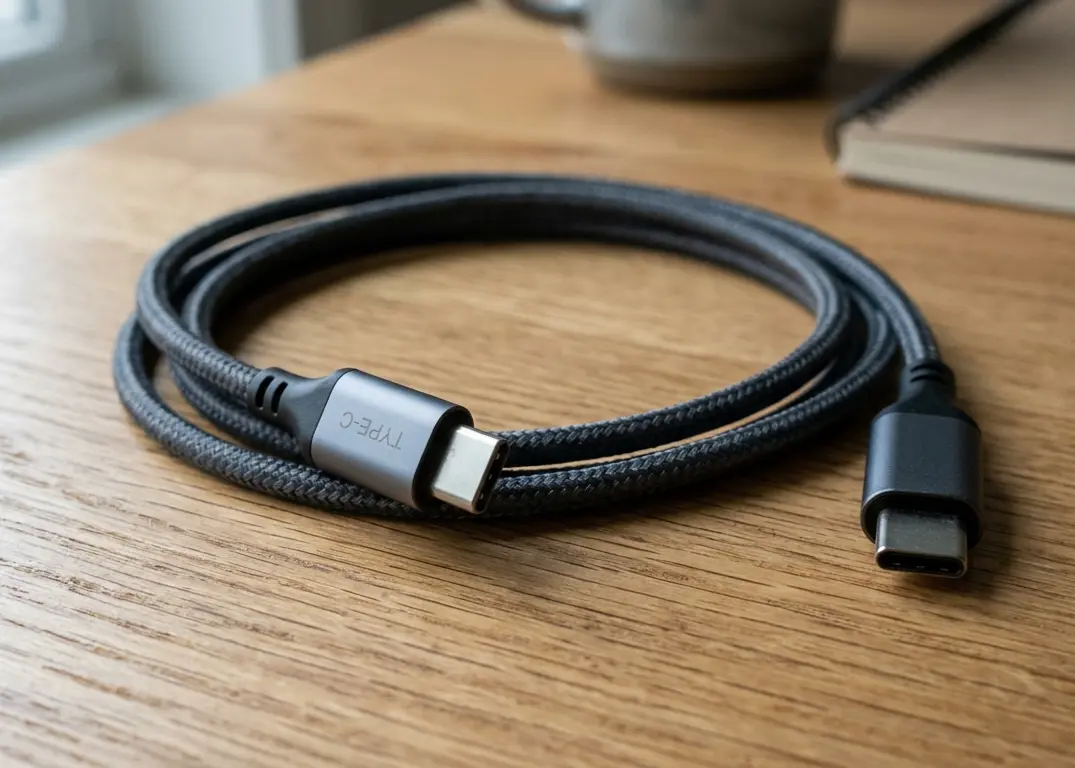
Ten years of USB-C
A decade after USB-C became mainstream on smartphones, the cable has won the standards war, but charging points still cling to yesterday’s connector, writes ARTHUR GOLDSTUCK.

What is it?
Ten years ago this month, I found myself accidentally attending the launch of the Samsung Galaxy Note7 in New York, thanks to being in the neighbourhood for another event. As a result, I witnessed the arrival of USB-C on a mainstream smartphone produced by a mainstream manufacturer.
It is doubtful whether anyone there would have imagined that the connector would outlive the phone itself. The Note7’s battery problems brought its life to an abrupt end, but USB-C went on to become one of the most enduring technology standards of the past decade.
Within a few years it had spread across Android smartphones, tablets, laptops, headphones, cameras and power banks. Apple held onto its proprietary Lightning connector for another seven years before finally adopting USB-C with the iPhone 15 in 2023. That completed the transition to a single charging standard for almost every mainstream mobile device.
That should have been the complete story.
Except, USB-A refuses to disappear. And it still hangs on stubbornly, as the people who should know best – those anchoring the travel industry – cling on stubbornly to an ancient standard.
The irony has become more obvious with every trip. This week my hosts in London booked me into a so-called super boutique hotel that opened only five years ago. Every charging point built into the room, from the bedside radio to the wall sockets, offered USB-A. Not a single USB-C port.
The hotel is hardly alone. New cars continue to appear with USB-A ports sitting alongside, or in placcha of, USB-C. Airports, aircraft seats, trains and conference venues often present the same surprise. Travellers who have embraced USB-C find themselves carrying an ageing cable simply because the world around their gadgets has failed to catch up.
You could argue that aircraft deserve some sympathy, since cabin interiors are designed to last decades. So maybe airlines do not rip out thousands of seats every time a connector standard changes, but let’s get real: they do get the occasional refurbishment.
While many aircraft flying today entered service long before USB-C had established itself, airlines owe it to their passengers to keep seat accessories, err, current.
Hotels have far less excuse. A five-year-old building fitted with USB-A sockets was already using yesterday’s technology when construction began. The cost difference between installing USB-A and USB-C modules was marginal compared with the cost of refurbishing rooms later.
Cars present an even stranger contradiction.
Many manufacturers now expect drivers to connect Android Auto or Apple CarPlay via cable, from phones using USB-C, while placing USB-A ports in the cabin for passengers. Some still offer USB-A as the primary data connection. That leaves families carrying multiple cable types for devices that increasingly rely on only one.
Part of the problem comes from the surprisingly long life of infrastructure. While phones change every few years, buildings, vehicles and aircraft remain in service for decades. Designers also tend to specify components early in a project, and those choices often survive unchanged until completion.
There is another reason. USB-A has become shorthand for “USB” in the minds of many designers and procurement teams. They specify what they know, even when the market has moved on. By the time someone notices, thousands of sockets have already been ordered and installed.
The connector itself has also evolved well beyond charging. USB-C can carry high-speed data, drive external displays and deliver enough power to charge many laptops. The latest versions support up to 240W of power delivery. Yet many public installations still treat USB as little more than a place to plug in a phone overnight.
Ironically, many people no longer want to plug directly into public USB ports anyway. Security experts warn about the possibility of malicious charging stations. The result is that travellers increasingly carry their own chargers and simply need a convenient mains socket. Where built-in charging is provided, USB-C has become the expectation.
Even powerbanks mostly still use USB-A as the outlet port. Has no one noticed…?
How much does it cost?
USB-C in itself costs nothing. It has become standard on almost every new Android and Apple smartphone. The hidden cost comes from having to buy old USB-A accessories, or carrying extra cables because hotels, vehicles and public spaces have not kept pace.
Does it make a difference?
Connectors influence everyday convenience far more than most people realise. A universal standard reduces electronic waste, simplifies travel and removes one of the small but persistent irritations of modern technology. That benefit becomes universal when the infrastructure catches up with the devices.
What are the biggest negatives?
- Hotels and public venues continue installing USB-A years after USB-C became the dominant standard.
- Many new vehicles still mix connector types, forcing passengers to carry multiple cables.
- Legacy infrastructure will take years to catch up.
What are the biggest positives?
- USB-C has become the closest thing consumer technology has ever had to a universal connector.
- One cable can now charge phones, tablets, laptops, headphones, cameras and countless accessories.
- The move towards a common standard reduces cable clutter and, over time, unnecessary electronic waste.
* Arthur Goldstuck is CEO of World Wide Worx, editor-in-chief of Gadget.co.za, and author of “The Hitchhiker’s Guide to AI – The African Edge”.