


GadgetWings
Travel tech: Confessions of a power-mad traveller
The great in-flight charger crackdown has come in for landing. ARTHUR GOLDSTUCK reads the fine print.

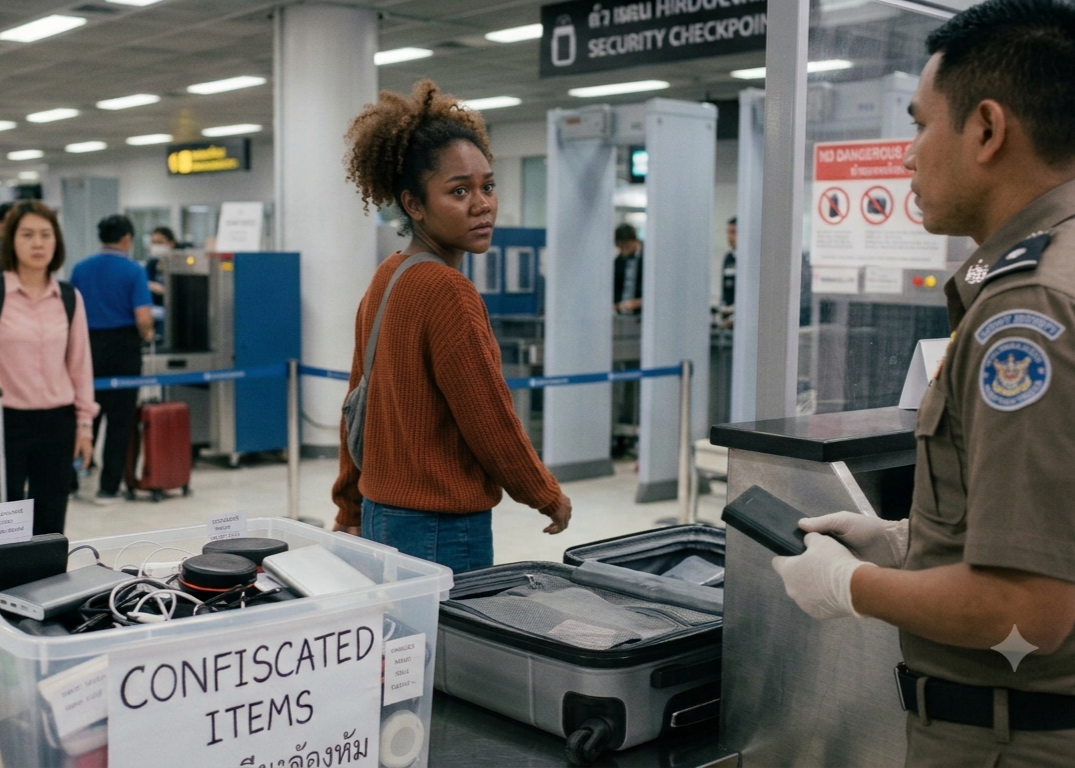
The security officer at Shanghai’s Pudong airport two weeks ago was staring down passengers’ power banks the way a jeweller studies a suspect diamond.
Power banks had to come out of the bag along with laptops, and were inspected for the specifications printed on their casings. Two passengers near me lost theirs on the spot: one because it lacked China’s mandatory 3C safety certification mark; the other because its power capacity exceeded 160Wh.
My own bag contained no power bank at all. Other travellers had warned me, before I left, that theirs had been confiscated on the same route. In these unstable travel times, I keep constant watch on changing rules.
First, a confession: I am power-mad. I am never knowingly under-charged and rarely more than an arm’s length from a top-up. Going charger-free was an act of painful self-denial. Watching the power banks being dumped into a bin, it felt more like foresight.
The message from the checkpoint was clear: the world has declared war on the power bank, and the power bank is losing.
China earned its right to stringency the hard way. In June 2025, its civil aviation authority banned power banks without a clear 3C mark from all domestic flights, along with recalled models and batches. Then, in October, a power bank ignited in an overhead locker on Air China flight CA139, in mid-air. The crew doused it and the plane landed safely – coincidentally in Shanghai – but the incident confirmed the regulator’s fears on its own flag carrier.
However, a fire that set the global crackdown in motion came nine months earlier, in South Korea. In January 2025, a charger in an overhead bin set fire to an Air Busan Airbus A321 on the ground at Gimhae airport. All 176 people on board got out, seven with minor injuries. The aircraft was written off after flames spread across half the fuselage roof.
Meanwhile, the US Federal Aviation Administration logged 97 lithium battery incidents on aircraft in 2025, and reports a 388% surge in such fires since 2015.
The International Air Transport Association told its safety conference in October 2025 that passengers carry up to four lithium battery devices each on average, meaning a full Airbus A380 flies with more than 1,800 batteries in the cabin. Around 44% of passengers travel with a power bank, and IATA’s own survey found that 45% of passengers think power banks can go in the hold, while half believe small lithium-powered devices are fine in checked baggage.
The International Civil Aviation Organisation approved the first coordinated global standard for portable batteries in the cabin, with unanimous backing from the 36 states on its council, and the rules took effect on 27 March this year in all 193 member countries.
The new global rules of flying with a power bank:
- Two per passenger, maximum. The ICAO global limit, with some airlines cutting it to one.
- No recharging in flight. Passengers may no longer recharge a power bank from the aircraft’s USB ports or seat power outlets at any point during the flight.
- Out of the overhead bins. The power bank must stay on your person, in the seat pocket, or in a bag under the seat in front of you, where crew can see and reach it if it overheats.
- Carry-on baggage only. Power banks are banned from checked luggage. If your carry-on bag is checked at the gate, you must remove the power bank and take it into the cabin with you.
- 100Wh is the magic number. Anything up to 100Wh can fly without question, 101 to 160Wh needs airline approval, and anything bigger is banned from passenger aircraft outright, as one of my fellow travellers discovered in Shanghai.
Airlines are adding their own house rules on top, and some are ruthless. Emirates and flydubai allow exactly one power bank per passenger, under 100Wh, and ban any use of it on board, a policy in force since October 2025. The Lufthansa group applied a two-bank limit and total use ban across all its airlines, from Swiss to Austrian to ITA, in January. Qantas and Singapore Airlines have banned in-flight use. In the US, United evicted power banks from overhead bins in March, American and Delta capped passengers at two chargers in May, and Southwest allows precisely one.
South African carriers are gentler, for now. SAA, FlySafair and Airlink all follow the international baseline. SAA already instructs passengers to stow power banks under the seat, and removes any it finds in checked bags. FlySafair says the checked-bag rule catches out more passengers than any other.
That 100Wh figure takes ten seconds to decode. Most power banks state it on the casing. If yours only shows milliamp-hours, multiply the mAh by 3.7 and divide by 1,000. A 10,000mAh bank comes to 37Wh and a 20,000mAh unit to 74Wh, both comfortably legal. The ceiling is around 27,000mAh. If the label has worn off, assume an officer somewhere will rule against you.
The survival strategy is simple. Board with everything fully charged. Carry one good power bank instead of three suspect ones, with the rating clearly printed on it. Keep it in the seat pocket, and never feed it from the seat’s power supply. For destinations with a reputation for strict enforcement, consider the Shanghai option: travel without one, and let the airport charging stations earn their keep.
Above all, check your airline’s policy before every trip, because these rules are being rewritten faster than at any time since a failed 2006 plot gave us the 100ml liquids limit.
The power bank is this decade’s water bottle.
* Arthur Goldstuck is CEO of World Wide Worx, editor-in-chief of Gadget.co.za, editor of GadgetWings, and author of “The Hitchhiker’s Guide to AI – The African Edge”.