


GadgetWheels
Haval puts usability
at the centre
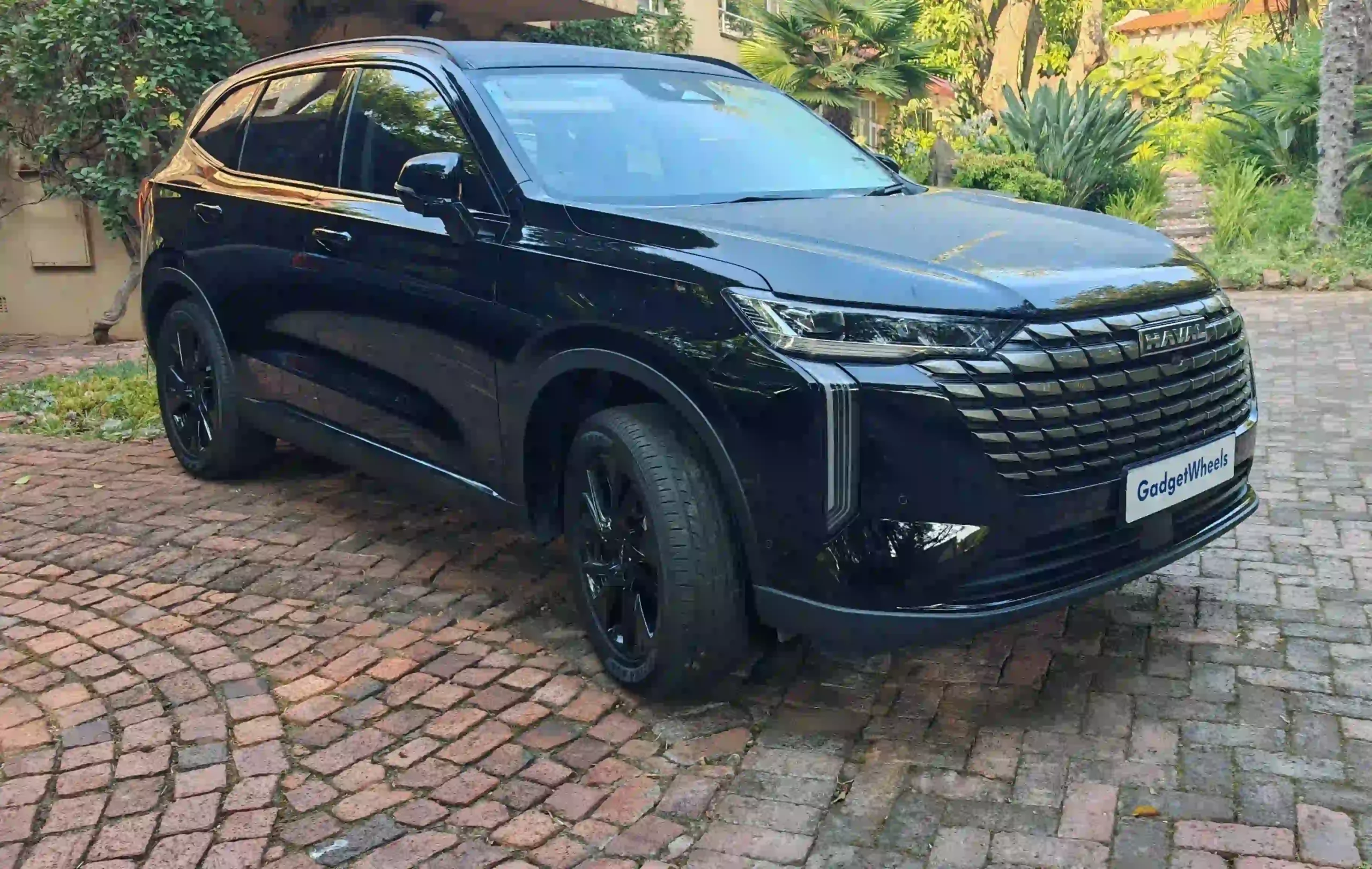
The H6 HEV shows how much everyday usability shapes the driving experience, writes ARTHUR GOLDSTUCK.

Hybrid SUVs have reached a point where the mechanical arguments are largely settled. Petrol-electric combinations, regenerative braking and extended driving range are now expected in this part of the market. However, in daily use, vehicles are still separated by how comfortably their technology fits into the act of driving.
The Haval H6 HEV builds its case through those details.
Connectivity becomes the clearest marker of how far the H6 has moved on. Three years ago, using the infotainment system meant working around it. Onboard connectivity barely functioned, built-in mapping struggled to remain usable, and the system never quite developed into something one could rely on day to day.

An app called CarbitLink introduced phone mirroring, but the improvement stopped short. Screen mirroring limited access to apps and navigation was, to be polite, awkward. It worked in theory, but only if one was prepared to accept its limits and live with a degree of frustration.
More recently, as recognition dawned that the typical Haval driver would also be likely to be an Android user – ie they are not buying their tech based on luxury brand appeal – Android Auto became more directly integrated. However, as recently as last year, Android Auto connectivity was buggy, with constant disconnection.
The H6 HEV marks the point where that progression reaches a proper conclusion.

Pairing an Android phone now takes seconds. The car appears immediately on the phone’s Bluetooth list, the phone is recognised just as quickly by the car, and a single confirmation code appears on both screens. Tap once on each, and the connection is complete. Start the car again later and Android Auto reconnects without intervention. There are no retries and no cables. Most important, no menu hopping. And most satisfyingly, the connection remains stable throughout a long journey.
That shift changes how the system fits into daily driving. Navigation, music and messaging move from being something I managed to something I assumed would work each time I got behind the wheel.

The central infotainment screen reinforces that change. Its size allows navigation to function as the primary visual reference rather than a compressed overlay. With Google Maps or Waze running, directions remain clear even when music playback and message notifications share the display. I glanced once and knew where the next turn lay, without having to narrow your focus or lean forward.
Turn-by-turn directions also appeared on the digital instrument cluster behind the steering wheel. The display remains readable across different seating positions, and the simplified view of surrounding traffic adds awareness without turning the cluster into a moving graphic exercise. Information appears where the eye already goes, which reduces the need to divide attention between screens.
Climate control follows a similarly grounded approach. Instead of burying key functions inside layered menus, Haval has kept a dedicated control area below the infotainment screen. Temperature, fan speed, airflow direction, seat heating and steering wheel heating are within immediate reach. A clear on-off function and a direct route to detailed settings on the display screen shorten the distance between wish and command, making adjustments straightforward while driving.

Wireless phone charging is within comfortable reach, integrated into the console without competing for space. System responses are quick across functions. Most audio controls sit on the steering wheel and become familiar within a short time behind the wheel. A physical volume control on the centre console would have improved passenger access, but the existing layout avoids confusion in everyday use.

Under the bonnet, the H6 HEV combines a turbocharged petrol engine with an electric motor to deliver a combined output of 179 kW and 530 Nm. Official fuel consumption is rated at just over five litres per 100 km, according to Haval’s published specifications. Power delivery unfolds smoothly, with the hybrid system managing transitions in a way that keeps attention on the road rather than the drivetrain.

Time spent in the H6 HEV highlights how much difference these accumulated choices make. Connectivity works without intervention, displays present information where it is needed, and controls behave in ways that require little thought once familiarity sets in. Across repeated journeys, that ease becomes more noticeable than any single feature on the specification sheet.
* Arthur Goldstuck is CEO of World Wide Worx, editor-in-chief of Gadget.co.za, and author of “The Hitchhiker’s Guide to AI – The African Edge”.