


Product of the Day
Oracle AI World: AI Data Platform unveiled
The new platform aims to turn sprawling enterprise data into fuel for generative AI, with governance and automation built in, writes ARTHUR GOLDSTUCK.

More than 6-million terabytes of data are created worldwide every day, but only a fraction of it is organised in a way that can be used. At Oracle AI World in Las Vegas this week, the company put its spotlight on that bottleneck, unveiling the Oracle AI Data Platform. The platform is designed to connect enterprise data with generative AI models, applications and workflows, and to manage the entire process in a single system.
The platform combines automated data ingestion, semantic enrichment and vector indexing, meaning that it gathers data from multiple sources, adding context, and making it searchable by keywords as well as meaning. In effect, it shortens the path between raw data and production-ready AI.
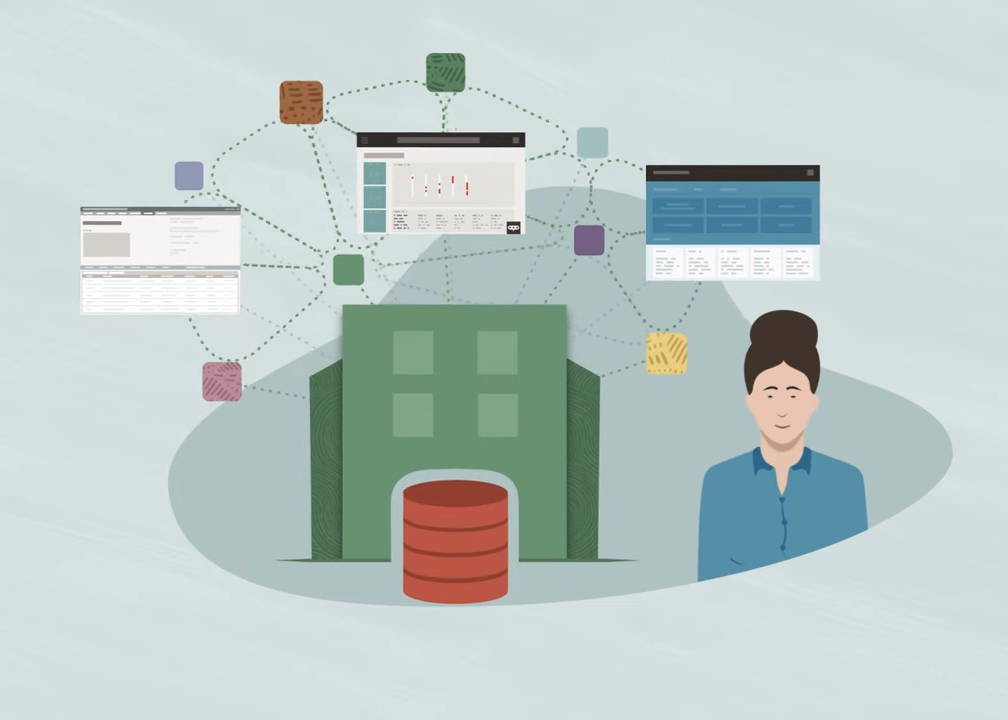
Data scattered across multiple systems is a universal business problem. Finance, human resources, supply chain and customer service all use different databases and formats, often duplicating information. Oracle highlights “zero-ETL and zero-copy” as solutions, which mean data can be connected directly where it lives rather than duplicated and reshaped each time it is needed. This addresses AI’s requirement for continuous, consistent access to information, rather than one-off extracts.
Oracle executive vice president TK Anand presented the launch as a foundation for business process change: “Oracle AI Data Platform enables customers to get their data ready for AI and then leverage AI to transform every business process.” The language points to two audiences: developers who need a technical workbench, and business users who expect AI insights to be delivered directly inside the tools they use every day.
For developers and data engineers, the platform offers a single environment to build and scale AI systems. For non-technical staff, the system includes AI agents that recommend actions, flag risks and automate routine processes. These agents operate within workflows, so staff do not have to leave their existing applications to use them.
Oversight is addressed through a central catalogue of all data and AI assets. This gives organisations a consolidated view of how data is stored and used, while also enforcing governance and compliance standards. The catalogue supports open data formats such as Delta Lake and Iceberg, which allow companies to manage large data sets without duplication. Standards like Agent2Agent and Model Context Protocol are also included, allowing AI agents to interact with one another and share results.
The Agent Hub feature acts as the user-facing layer. It interprets requests, selects the right AI agent, and presents recommendations in a way that can be acted upon immediately. This avoids requiring business users to navigate complex technical interfaces.

The platform sits on Oracle Cloud Infrastructure and the Autonomous AI Database, with generative AI services and NVIDIA processors providing the scale to handle demanding workloads. In Oracle’s view, the combination ensures both high performance and enterprise-level reliability.
Oracle frames the platform around four priorities: turning data into intelligence by bringing data and AI into the same environment; accelerating innovation by giving developers and data teams a shared space; automation, using AI agents to run processes and trigger responses; and preparing for enterprise adoption with governance, compliance and scalability built in.
The relevance of these priorities is best understood through potential applications. A hospital could integrate patient records, laboratory data and medical imaging, with AI agents highlighting anomalies. A financial institution could connect customer and transaction data, using AI to monitor fraud patterns in real time. A retailer could link supply chain logistics with sales data to predict demand more accurately.
Limitations remain clear. Specialist skills are required to set up and monitor AI systems, and most organisations need to adjust their culture before adopting automation at scale. Regulation adds pressure, with demands for evidence of governance and transparency in AI decisions.
Other technology providers have taken a similar approach. Microsoft, Amazon and Google each offer platforms that combine data management and AI. The differences lie in how open the systems are, the extent of governance features, and how tightly they integrate with existing applications.
For enterprises in South Africa, the announcement reflects a global trend. Local organisations often face fragmented data, a mix of cloud providers and strong compliance requirements. The success of AI projects depends on whether data is prepared and governed effectively.
* Arthur Goldstuck is CEO of World Wide Worx, editor-in-chief of Gadget.co.za, and author of “The Hitchhiker’s Guide to AI – The African Edge”.