
GadgetWheels
Software takes the wheel in $755bn vehicle shift
New research reveal that the rise of software-defined vehicles is transforming car design and revenue models, writes SHIHAO FU, technology analyst at IDTechEx.

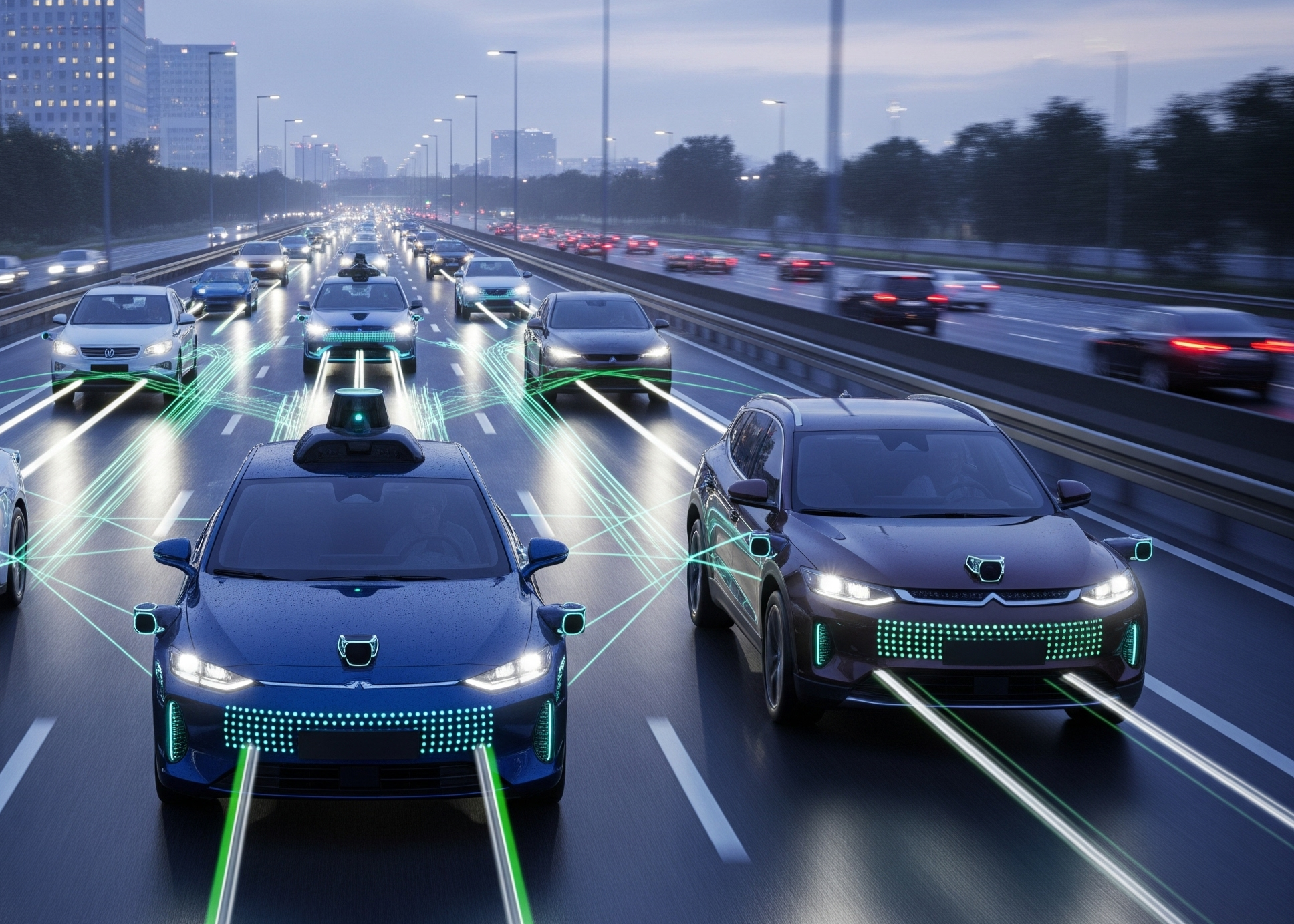
The automotive industry is undergoing a foundational shift toward software-defined vehicles (SDVs), where vehicle functionality, user experience, and monetisation opportunities are governed increasingly by software rather than hardware.
This evolution, captured comprehensively in the latest IDTechEx report, Software-Defined Vehicles, Connected Cars, and AI in Cars 2026-2036: Markets, Trends, and Forecasts, highlights how central compute and zonal platforms will redefine automotive competition, generating an estimated US$755-billion in hardware revenue by 2029.
Distributed ECUs to central compute + zonal architectures
Vehicles are moving beyond legacy electronic control unit-based architectures interconnected by controller area networks (CAN) and local interconnect networks (LIN), toward centralised computing models built around high-performance compute (HPC) nodes. Emerging central compute + zonal topologies, as exemplified by BMW’s upcoming Neue Klasse, Tesla’s refreshed Model Y, and Rivian’s next-gen vehicles, are driving this transformation forward.
The transition is propelled by bandwidth-intensive applications such as advanced driver assistance systems (ADAS), immersive infotainment, and AI-enabled cabins. Traditional CAN-FD networks capped at 8 Mbps are now inadequate, accelerating the adoption of 100 Mbps to gigabit automotive Ethernet with Time-Sensitive Networking (TSN). Simultaneously, automakers recognise significant economic and sustainability benefits: zonal wiring architectures reduce cable length by at least 30% and save kilograms of copper per vehicle.
The benefits of the zonal approach extend beyond bandwidth and weight. Abstracting physical I/O into logical services simplifies over-the-air (OTA) feature updates across sensors and actuators, while integrated solid-state power distribution supports 48 V architectures, eliminating heavy fuses and mechanical relays.
Zonal controllers streamline cybersecurity management, diagnostics, and future hardware expansions, consolidating multiple legacy gateways into fewer high-speed network trunks.
OEMs and tech giants accelerate SDV hardware development
BMW is positioning its Neue Klasse platform at the forefront, collaborating with Qualcomm to integrate centralised compute nodes capable of supporting advanced driver assistance, rich infotainment, and dynamic feature monetisation.
Similarly, Tesla’s refreshed Model Y and Rivian’s forthcoming models leverage highly integrated central compute architectures, enhancing efficiency, performance, and scalability.
SDV Level Chart: Major OEMs compared. Courtesy: IDTechEx
Leading Chinese OEMs, including BYD, NIO, and Li Auto, are rapidly deploying their own SDV solutions, emphasising central computing and extensive OTA capabilities.
Meanwhile, tech giants such as Nvidia and Qualcomm provide critical hardware underpinning these developments, offering powerful, AI-optimised system-on-chip (SoC) solutions that enable real-time AI inference directly within the vehicle, fundamentally redefining user experience and vehicle interaction.
Monetisation shifts to features-as-a-service
SDVs enable automakers to explore innovative revenue streams through features-as-a-service (FaaS) and OTA monetisation. Industry leaders including BMW, Mercedes-Benz, and Ford are embedding monetisable functions such as advanced ADAS, infotainment subscriptions, and seat heating into their SDV platforms. This unlocks recurring revenues and enhances customer retention.
IDTechEx forecasts feature-based monetisation revenues to experience substantial growth, achieving a 30–34% compound annual growth rate through 2035.
Connected cars, AI-enhanced cabins, and future mobility
Connectivity remains integral to SDVs, with vehicle-to-everything (V2X) communication technologies like C-V2X and 5G enabling safer and more co-ordinated mobility ecosystems.
Coupled with generative AI integration from Nvidia and Qualcomm, SDVs deliver adaptive, personalised user experiences through intelligent in-car assistants, immersive full-width displays, and customisable digital environments, setting new benchmarks for brand differentiation and user engagement.
Forecasts to 2036: SDV market acceleration
IDTechEx provides detailed 10-year forecasts (2026–2036), including global vehicle sales by SDV architecture levels, central and zonal compute platform revenues, and feature-related monetisation.
By 2029, SDV platforms will generate $755-billion in hardware revenue alone, underlining the rapid industry shift towards centralised compute architectures.
* Download full report or sample pages on the IDTechEx website here.