



GadgetWheels
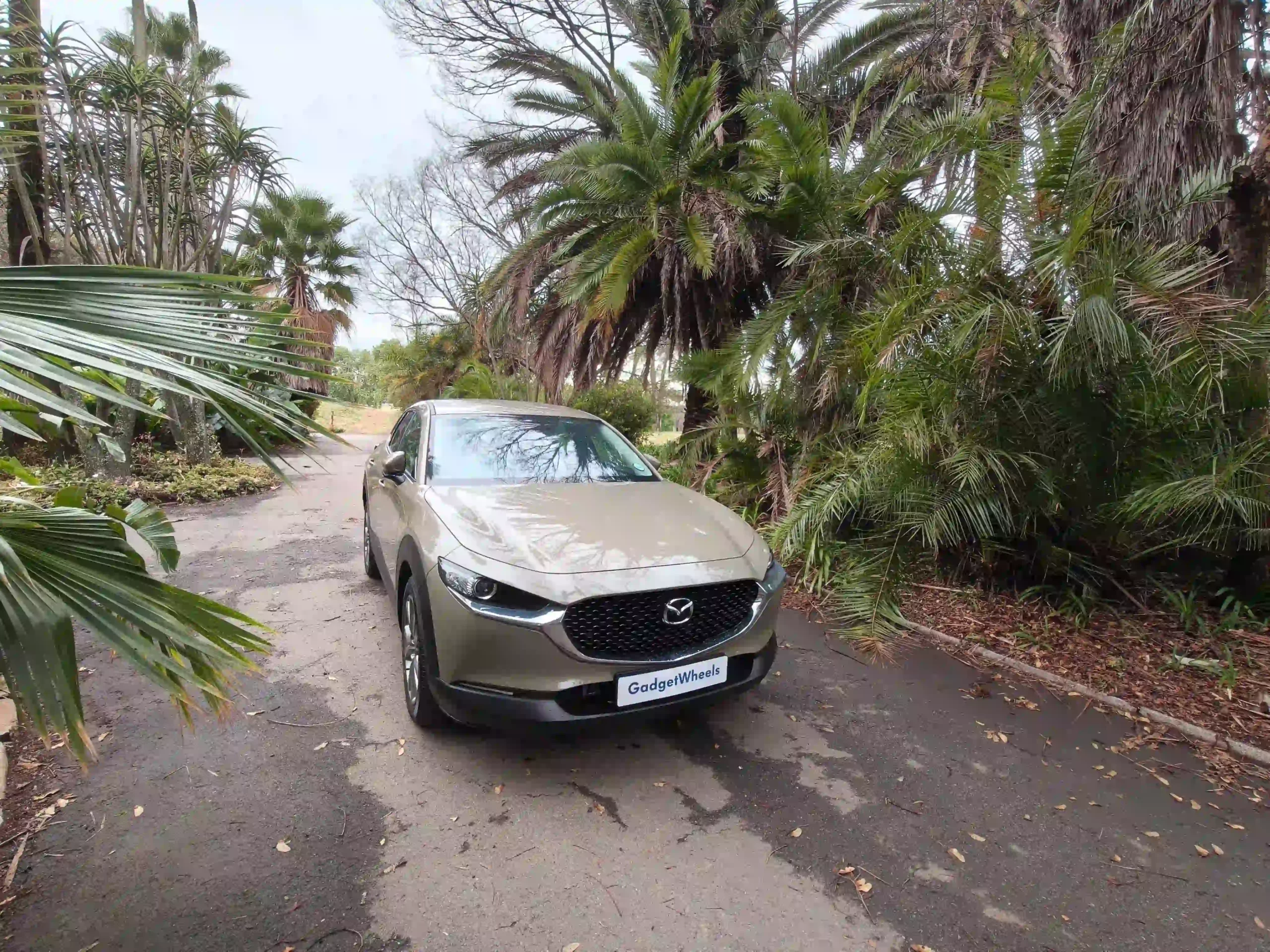
Mazda CX30: Yesterday meets tomorrow
The Mazda CX30 takes its safety seriously while avoiding the tech trap, writes SHERYL GOLDSTUCK.

Modern vehicles can be impressively clever, but there is a point where I start wondering whether I am driving a car or operating a particularly expensive tablet. The Mazda CX-30 avoids that trap. It has the basic technology I expect from a modern compact SUV, but it still feels as though somebody remembered that I am supposed to drive it.
The CX-30 range consists of Active, Dynamic, Carbon Edition and Individual derivatives, all powered by a naturally aspirated 2.0-litre petrol engine developing 121 kW and 213 Nm. A six-speed automatic transmission sends the power to the front wheels.

Inside, the CX-30 has a 10.25-inch infotainment display integrated into the dashboard. It is a sensible size and, more crucially, it does not appear to have been fitted because Mazda had a vacant piece of dashboard that needed filling.
The system uses cables for Android Auto, which is a bit yesterday. This means remembering to connect my phone to the ca but, more significantly, remembering to pack the right cable if I want to have access to my familiar navigation, music and other compatible applications. Quite yesterday. USB Type-C connections and Bluetooth connectivity are included.

Mazda has retained physical controls, allowing me to operate important functions without stabbing at a screen while trying to negotiate traffic. This may sound like a small thing, but after driving cars where changing a setting involves several taps and a brief prayer, I appreciate it.
The safety technology is considerably more extensive than the CX-30’s relatively restrained appearance might suggest. Mazda’s i-Activsense suite includes systems designed to assist with braking, stability and collision avoidance, while the CX-30 also has ABS, Dynamic Stability Control, Hill Hold Assist and Emergency Brake Assist.

Blind Spot Monitoring is available on the higher-specification Individual derivative, while Rear Cross Traffic Alert is included in the safety package. These are features that are important to ensure safety for all.
Depending on the derivative, the CX-30 gets front and rear parking sensors and a reversing camera. Compact SUVs are not exactly enormous, but parking bays have an uncanny ability to shrink whenever I arrive at a shopping centre, so I am happy to accept all the assistance I can get.

Mazda has not ignored the more domestic side of technology either. The Dynamic and higher derivatives get dual-zone climate control, so I could have my preferred temperature without starting a diplomatic incident with my passenger. The Carbon Edition adds a powered tailgate and sunroof, while the Individual gets power-adjustable seats and an auto-dimming rear-view mirror. The manual seat adjusters are so yesterday.

Mazda’s SKYACTIV philosophy covers the engine, transmission and vehicle dynamics, and the CX-30 uses technologies such as i-Stop, which can switch the engine off when stationary and restart it when necessary. G-Vectoring Control adjusts engine torque in response to steering inputs to help make the car feel more settled when cornering. This is very tomorrow.
- Pricing for the Mazda CX30 starts at R539,800.
* Sheryl Goldstuck is general manager of World Wide Worx and editor of GadgetWheels. Follow her on Bluesky on @crazycatbuzz.bsky.social.